Irish Taoiseach Defends Starmer as Trump Attacks UK Over Iran War Stance
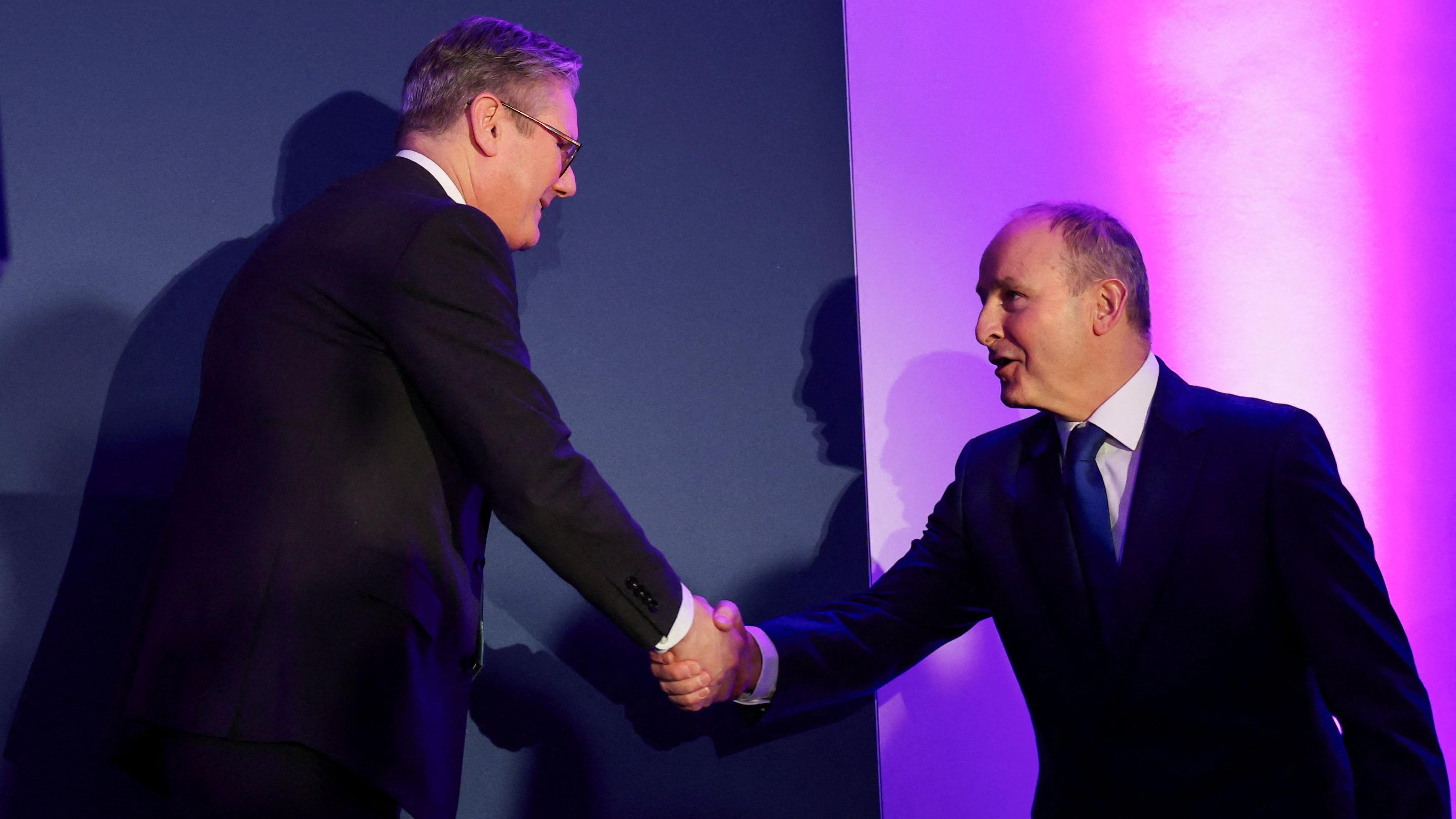
Taoiseach Micheál Martin delivered a notable diplomatic intervention during a St Patrick's Day meeting at the White House, defending UK Prime Minister Keir Starmer after Donald Trump attacked Starmer's stance on the Iran conflict and declared that he was "no Winston Churchill" — a moment that was widely praised as a masterful piece of diplomacy and as evidence of the strengthened relationship between Ireland and the United Kingdom in the post-Brexit era.
Trump's criticism of Starmer centred on the UK Prime Minister's perceived lack of support for the joint US-Israeli military operation against Iran, which Trump described as a "big mistake" that had weakened the traditionally close relationship between Washington and London. Martin countered by describing Starmer as a "very earnest, sound person" and subtly deflecting the Churchill comparison from an Irish perspective.
Background
The St Patrick's Day meeting between the Irish Taoiseach and the US President is a long-standing diplomatic tradition, providing the Irish government with a unique annual opportunity for direct engagement with the White House. The meeting typically involves the presentation of a bowl of shamrock and a series of bilateral discussions, and it has historically been used by successive Taoisigh to advance Irish interests on issues ranging from immigration to trade and the Northern Ireland peace process.
The backdrop to this year's meeting was a significant military escalation in the Middle East, with the United States and Israel having conducted a joint air assault on Iran. The operation was a point of sharp contention among international allies, with European governments — including the UK — taking a more cautious position than Washington on the appropriate level of support for the military action. Starmer's government was perceived by Trump as insufficiently supportive of the US-Israeli operation, a perception that the President made no effort to conceal during his meeting with the Taoiseach.
The Churchill comparison was particularly loaded. Trump has repeatedly invoked the wartime leader as a benchmark for the kind of resolute, unconditional allied support that he expects from the UK, and his suggestion that Starmer falls short of that standard was a pointed criticism of the Prime Minister's foreign policy approach. A bust of Churchill was present in the Oval Office during the meeting, adding a visual dimension to Trump's rhetorical point.
Key Developments
Martin's response to Trump's criticism was carefully calibrated. He defended Starmer directly, noting that the two leaders had recently hosted a productive bilateral summit that had advanced Anglo-Irish relations and produced a significant investment deal. He described Starmer as a "very earnest, sound person" and reminded Trump that the two had previously gotten along well — a gentle but clear pushback against the President's characterisation.
Martin also addressed the Churchill comparison from a distinctly Irish perspective. While acknowledging Churchill as a "great wartime leader," he noted that for Ireland, Churchill's legacy is more complex, pointing out that he had "created his own bit of difficulties for us" during Ireland's War of Independence — a reference to Churchill's role in authorising the Black and Tans. This allowed Martin to defend Starmer without directly confronting Trump's admiration for Churchill, while also gently reminding the President that historical figures are rarely as straightforwardly heroic as they might appear.
Irish officials described the intervention as a deliberate strategy to provide "polite pushback" and to position the Taoiseach as a bridge between the United States and European allies — a role that Ireland, with its unique relationships on both sides of the Atlantic, is particularly well placed to play.
Why It Matters
Martin's intervention matters for several reasons. First, it demonstrated that Ireland is prepared to use its privileged access to the White House to defend its allies and to push back against characterisations that it regards as unfair or damaging. That is not a trivial thing: other European leaders have sometimes failed to defend their allies when criticised by Trump, and Martin's willingness to do so — calmly, diplomatically, and with a touch of Irish wit — was widely noted and praised. Second, the episode illustrates the value of the strengthened UK-Ireland relationship that has developed in the post-Brexit period. The bilateral summit that Martin referenced, which produced a £937 million investment deal and a series of agreements on energy, security, and technology, has created a foundation of goodwill that makes it natural for the Taoiseach to speak positively about the British Prime Minister in Washington. Third, the incident is a reminder of the complex diplomatic landscape that small nations must navigate in an era of great power competition and unpredictable US foreign policy.
Local Impact
For Northern Ireland, the strengthened UK-Ireland relationship that underpinned Martin's intervention at the White House is of direct and practical importance. The Good Friday Agreement depends on close cooperation between London and Dublin, and any deterioration in that relationship would have immediate implications for the political institutions and cross-border bodies that the Agreement established. The fact that the Taoiseach was willing to defend the British Prime Minister in the Oval Office is a signal of the depth of the current relationship — and of the shared interest that both governments have in maintaining stability and cooperation on the island of Ireland. For unionists and nationalists alike, a strong and functional UK-Ireland relationship is a prerequisite for the kind of political stability that Northern Ireland needs to thrive.
What's Next
The diplomatic fallout from Trump's criticism of Starmer is likely to continue to reverberate in the weeks ahead, as the UK government seeks to manage its relationship with Washington while maintaining its own foreign policy positions on the Iran conflict. For Martin, the White House meeting has reinforced Ireland's reputation as a constructive and trusted interlocutor in transatlantic diplomacy — a reputation that the government will seek to build on in the months ahead. The next bilateral summit between the UK and Ireland is expected later in 2026, and both governments will be keen to demonstrate that the momentum generated by the Cork summit continues to deliver tangible results for both countries.
Sources: Politico EU — Ireland's leader defends UK's Starmer versus Donald Trump | BBC News — Taoiseach defends Starmer after Trump attack