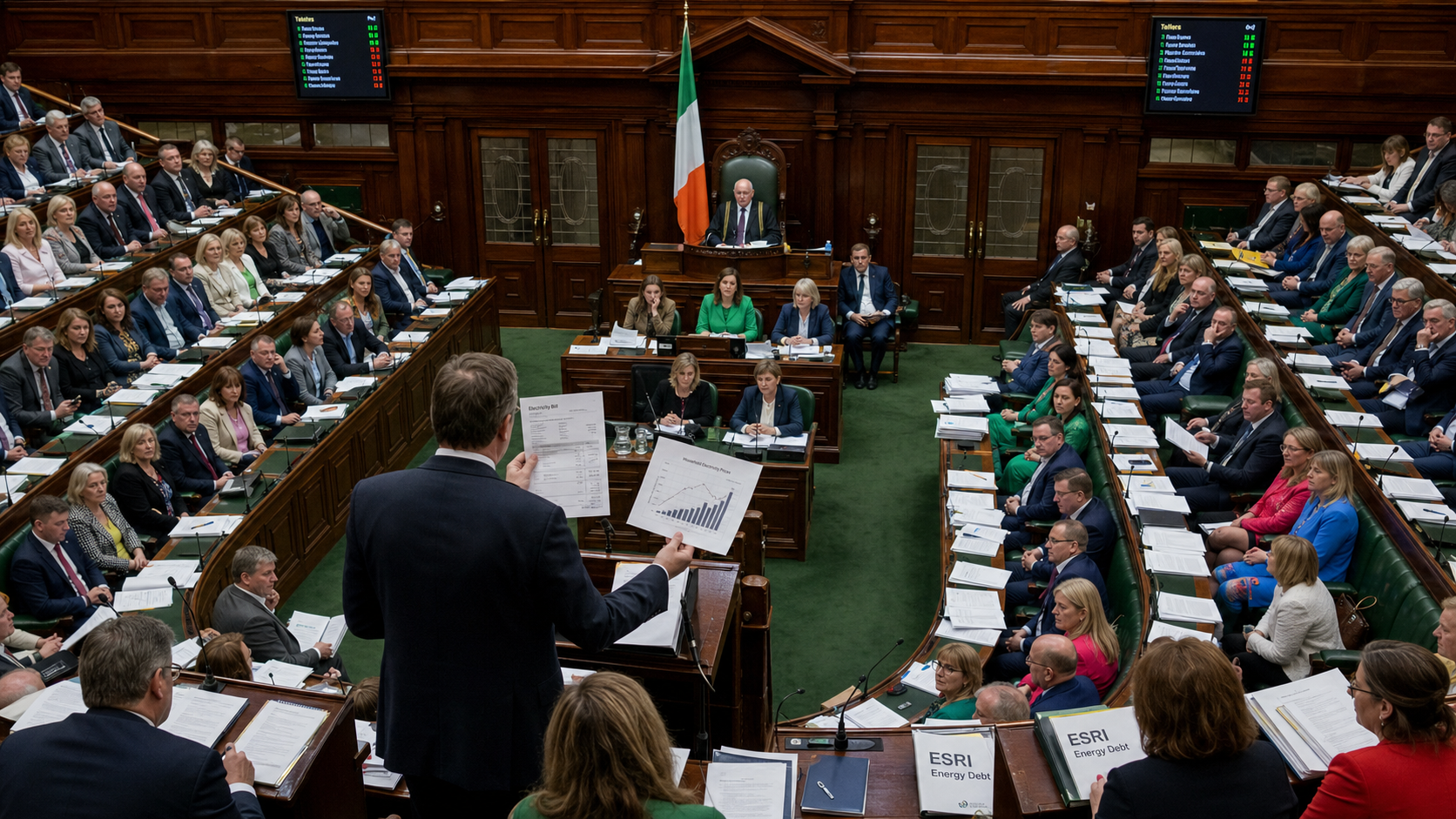
Irish Inflation Surges to 3.6% as Iran War Drives Energy Costs Up 11% in a Month
Ireland's inflation rate has jumped sharply to 3.6% in March 2026, up from 2.5% in February, as the ongoing war in Iran disrupts global oil and gas supplies and pushes energy costs to their highest level in years — a shock that economists warn could drive headline inflation past 4% before summer.
The Central Statistics Office (CSO) flash estimate, published on 30 March, showed energy prices rising by 11.1% in March alone and by 12.3% over the preceding 12 months. The figures were compiled in mid-March, before the Irish government introduced measures to mitigate the impact of rising fuel costs, meaning the full effect of the conflict has yet to be captured in official data.
Background
The Iran war, which began on 28 February 2026, rapidly escalated into a global energy crisis when Iran closed the Strait of Hormuz on 4 March. That strategic chokepoint facilitates the passage of approximately 20% of the world's oil supplies and 20% of its liquefied natural gas. The International Energy Agency described the resulting disruption as the "largest supply disruption in the history of the global oil market," with global oil production falling by over 10 million barrels per day in the initial phase of the crisis.
Brent crude, the international benchmark, surged past $120 per barrel following the closure, sustaining levels above $116 (€101) a barrel through late March — a 28% increase from pre-conflict levels. Ireland, as an open economy with high dependence on imported energy and limited storage capacity, is acutely exposed to such global price shocks. The country's energy import dependency means that geopolitical instability in the Gulf translates almost immediately into higher bills for households and businesses.
Ireland's economy had been performing strongly in early 2026, with the government running a significant budget surplus projected at €9.2 billion for the year. However, the Iran war has introduced a severe external shock, reversing the downward trend in commodity prices that had characterised 2025 and reviving concerns of stagflation across the eurozone.
Key Developments
The surge in energy costs is directly linked to the effective closure of the Strait of Hormuz. Economists from Davy noted that without the Middle East conflict, Ireland's headline inflation would likely have been around 2.3% in March. The Bank of Ireland has warned that inflation could rise to 4%, while the ESRI has projected an average of 3.2% for 2026 as a whole. The Department of Finance has gone further, warning that a severe scenario with sustained energy volatility could push headline inflation to 4.6%.
Food prices fell slightly by 0.3% in March, though they remain 2.3% higher than a year ago. Services prices rose by 0.9% in the month and 3.3% over the year. Core inflation — excluding energy, food, alcohol, and tobacco — held at 2.7% year-on-year, suggesting that domestically generated price pressures remain contained even as the external energy shock intensifies.
The European Central Bank, which had been expected to hold rates steady through 2026 following a series of reductions from the 2024 peak, has adopted a more hawkish stance in response. At its March 2026 meeting, the Governing Council formally postponed planned interest rate reductions, with its own staff projections now forecasting headline eurozone inflation averaging 2.6% for 2026. Markets have begun pricing in the possibility of ECB rate hikes, with some analysts speculating the first could arrive as early as June.
Why It Matters
Rising inflation erodes household purchasing power and puts pressure on the European Central Bank to reconsider its interest rate path. For Irish families already dealing with a housing crisis and high cost of living, the energy price surge represents a significant additional burden heading into spring and summer. The average Irish household's grocery bill already runs to €400–€500 per month, health insurance premiums have climbed to around €1,880 per adult annually, and rental prices continue to spiral amid chronically low housing availability.
If the ECB is forced to raise interest rates in response to sustained eurozone inflation, Irish households with variable-rate mortgages and businesses with floating-rate debt will face higher borrowing costs — a double squeeze at a time when energy bills are already elevated. Economist John FitzGerald has warned that Ireland faces a possible winter recession if the energy shock proves prolonged, even as the government has drawn down its fiscal reserves. The World Bank forecasts Brent crude will average $86 per barrel for 2026, but a severe scenario with prices hitting $130 could tip the domestic economy into contraction.
Local Impact
For households in the Republic, the March inflation figures represent a tangible deterioration in living standards that many families were already struggling to absorb. The government reduced fuel excise duties in response to the initial price surge, but Finance Minister Jack Chambers has signalled that broad-based short-term energy relief measures are "highly unlikely," with the government preferring to focus on longer-term budget interventions. A planned carbon tax increase in May 2026 will add further pressure to household energy bills, drawing criticism from opposition parties who argue the timing is deeply ill-judged.
Sinn Féin's energy spokesperson Pa Daly and Green Party leader Roderic O'Gorman have both called for additional cuts to fuel excise duties, the removal of planned carbon tax increases, and the reintroduction of targeted energy credits for households. The cost of living crisis is also being cited as a key driver of emigration among younger Irish professionals, with housing costs and energy bills among the primary reasons given for seeking opportunities abroad.
What's Next
The government is expected to announce further cost-of-living measures in the coming weeks, with Budget 2027 preparations already under way. The ECB's next rate decision will be closely watched for signals on whether the energy-driven inflation surge will prompt a tightening of monetary policy across the eurozone. Full CSO data and analysis are available at The Irish Times, with broader economic context provided by the Central Bank of Ireland and the World Bank's latest energy market assessment.