Ireland Fuel Protests: Fifth Day of Disruption as Taoiseach Calls Blockades 'National Sabotage'
Ireland's fuel price protests have entered their fifth day, with the army deployed to clear blockades as Taoiseach Micheál Martin called the obstruction of the Whitegate oil refinery "an act of national sabotage," while the government refused to negotiate until all protests cease and over 100 petrol stations ran out of fuel.
The demonstrations, which began on April 7, 2026, have escalated significantly, with protesters blockading fuel depots in counties Galway, Limerick, and Cork, as well as major roadways including the M50 motorway in Dublin and O'Connell Street in the city centre. Dublin's public transport has been severely disrupted, and the Irish Medical Organisation has raised concerns about delays to emergency services and missed healthcare appointments.
Background
The protests were ignited by a dramatic surge in fuel prices driven by the 2026 Iran war and the closure of the Strait of Hormuz, which disrupted global oil supply chains. Between January and April 2026, diesel prices rose by approximately 28% and petrol by 25%, placing enormous strain on farmers, hauliers, and transport-dependent workers who form the backbone of rural Ireland. The government's initial €250 million support package, announced in March 2026, cut excise duty by 15 cents per litre on petrol and 20 cents on diesel, but protesters argued it was wholly inadequate to offset the scale of the price surge.
The protests were primarily organised by grassroots groups including "People of Ireland Against Fuel Prices," composed largely of hauliers, farmers, and other transport-dependent workers. Their demands included a fuel price cap, suspension of carbon taxes, further reductions in excise duties, and direct financial supports. Some protesters also called for the resignation of Taoiseach Micheál Martin. While the protests were not far-right in origin, far-right figures and groups became involved from an early stage, with international figures including Tommy Robinson and Katie Hopkins amplifying the movement online.
Key Developments
The Irish Defence Forces were deployed to assist An Garda Síochána in clearing strategic blockades, using military heavy-lift recovery trucks to forcibly remove vehicles obstructing critical infrastructure. Justice Minister Jim O'Callaghan warned that blocking critical national infrastructure would not be permitted and that vehicle owners should remove them immediately to avoid damage during removal. By April 13, approximately 650 of Ireland's 1,500 filling stations had run out of fuel, causing considerable public anxiety.
Taoiseach Micheál Martin condemned the disruptive tactics in the strongest possible terms, calling the blockade of the Whitegate refinery "an act of national sabotage." An Tánaiste Simon Harris further characterised the blockades as "a despicable attack on Irish society." The government maintained its position that it would not negotiate with protesters while blockades remained in place, a stance that drew criticism from opposition parties who argued it was inflaming rather than resolving the crisis, according to Wikipedia's account of the 2026 Irish fuel protests.
Why It Matters
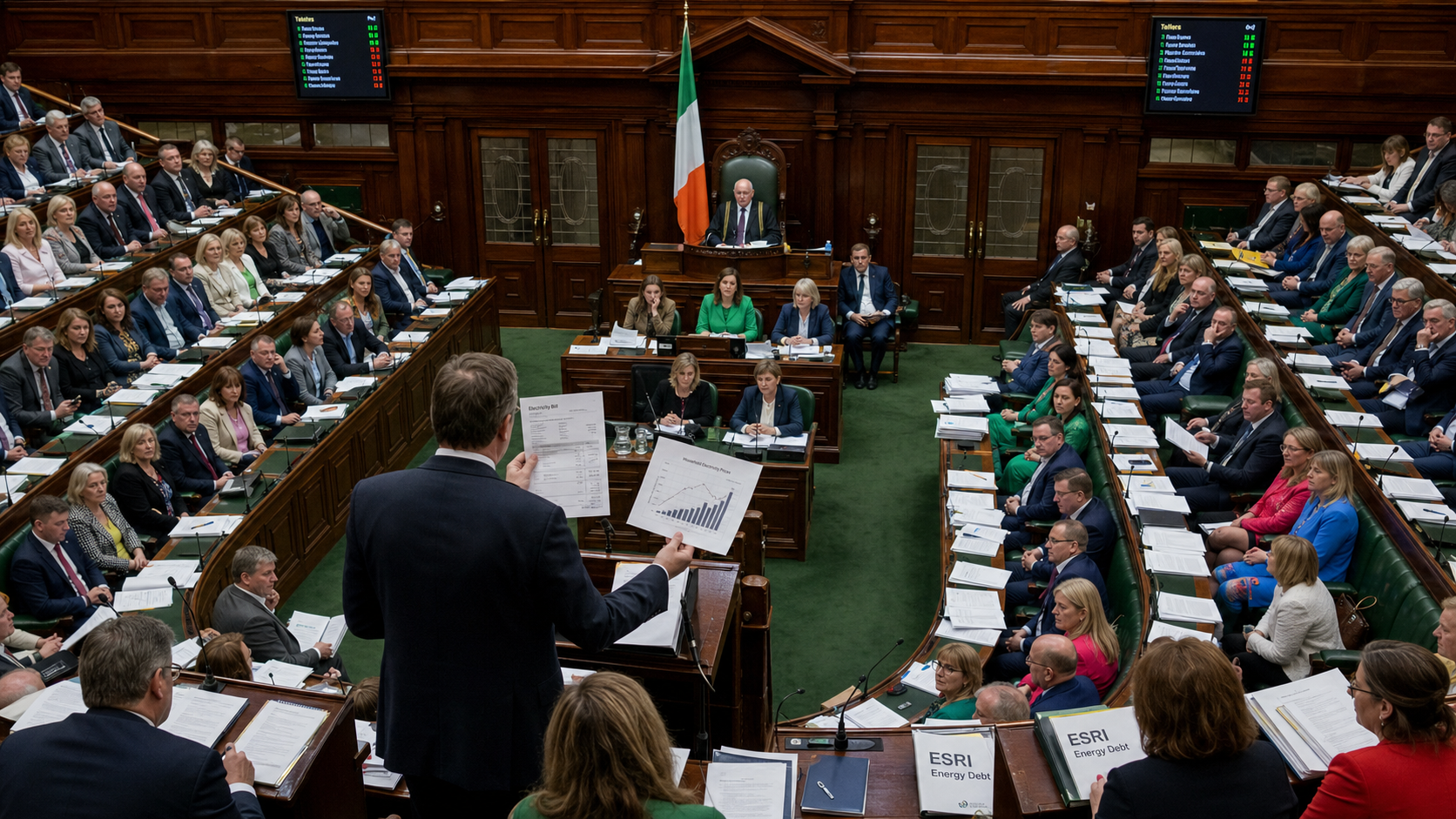
The fifth day of protests marked a significant escalation in the government's response, with the deployment of the army representing an extraordinary step in a modern European democracy. The blockade of the Whitegate refinery — Ireland's only oil refinery, responsible for approximately 40% of the country's fuel supplies — exposed the fragility of the nation's energy security and the profound strategic risk of having a single piece of critical infrastructure. The protests also revealed the depth of public anger at the cost-of-living crisis, with an initial poll suggesting 56% of the public supported the demonstrators, even as the disruptions mounted and sympathy began to erode. The government's handling of the crisis triggered a motion of no confidence, which it survived by 92 votes to 78, but the episode cost it the backing of Independent TDs Michael and Danny Healy-Rae.
Local Impact
In Northern Ireland, the crisis generated solidarity protests, with go-slow convoys of tractors and trucks disrupting traffic in areas including Strabane and around Belfast. A convoy briefly blocked traffic near Belfast City Airport. However, the demonstrations did not reach the scale seen in the Republic, partly because Northern Ireland's devolved government has no power over fuel taxation policy, and partly because major trade unions and farming groups distanced themselves from the blockades. The events nonetheless underscored the interconnected nature of the island's economy and its shared vulnerability to global energy shocks — a reality that will not be lost on policymakers in Stormont as they monitor fuel prices in the weeks ahead, as Al Jazeera reports.
What's Next
Following the enforcement operations, the government announced a new €505 million mitigation package, including extended excise duty reductions, a postponement of the planned carbon tax increase, a €100 million fuel subsidy scheme for farmers and fishers, and a Road Transporters Support Scheme for the haulage sector. The protest group "People of Ireland Against Fuel Prices" has threatened further action in May if their demands for more permanent solutions — including a fuel price cap — are not met. With global oil markets still volatile and the Strait of Hormuz situation unresolved, the underlying pressures that ignited these protests remain very much alive.