Ireland Fuel Protests Enter Day Five as Garda Declares Exceptional Event and 500 Stations Run Dry
An Garda Síochána has invoked an "exceptional event" declaration — a rare emergency measure allowing the force to double its available officers — as Ireland's fuel protests entered their fifth consecutive day on Saturday, with approximately 500 service stations across the country reporting empty tanks and the government finalising an emergency support package.
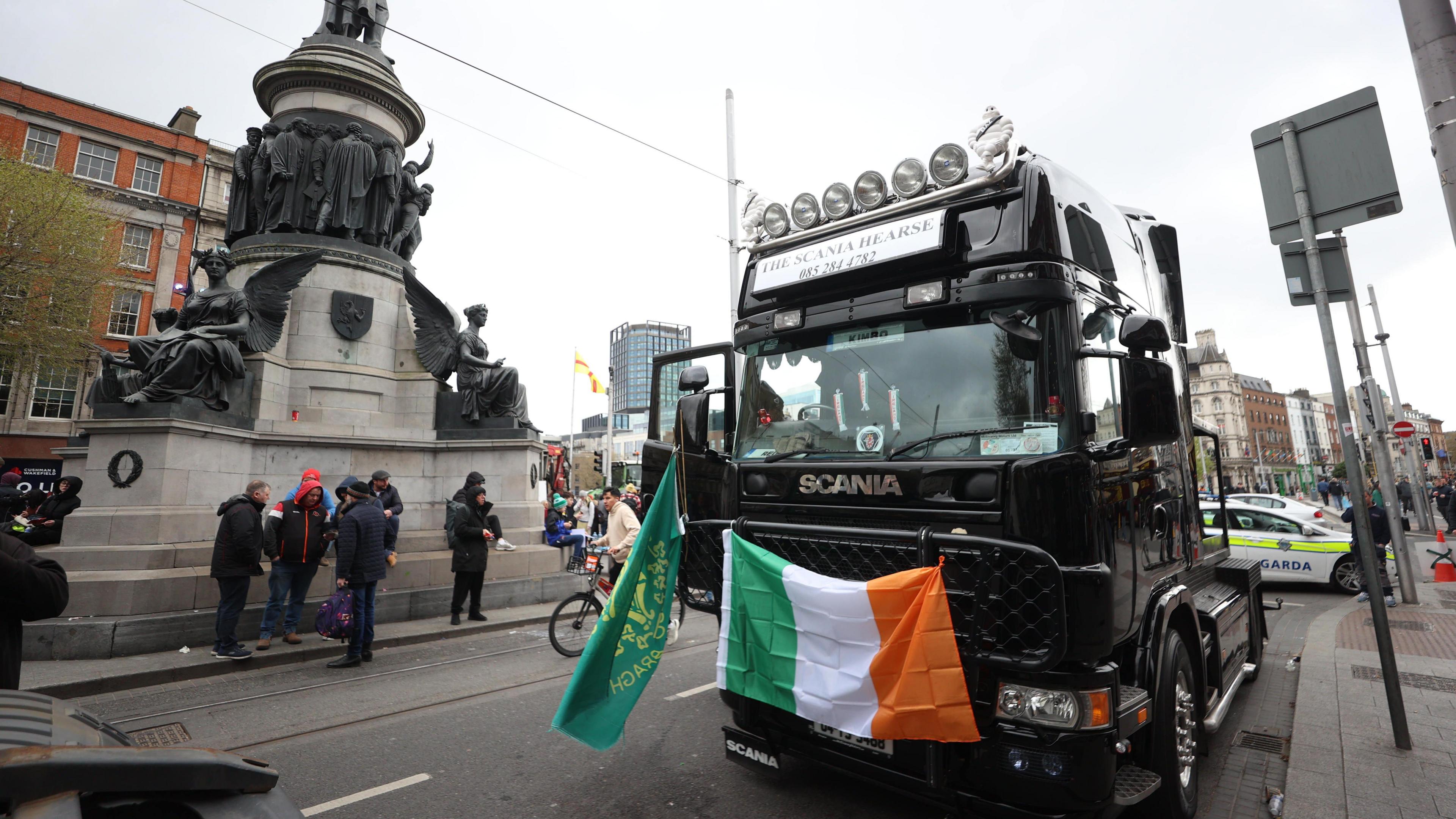
The protests, which began on 7 April 2026, have been driven by farmers, agricultural contractors, and road haulage operators furious at the surge in fuel prices caused by the Iran war and the closure of the Strait of Hormuz. Blockades of the Whitegate oil refinery in County Cork and fuel depots in Galway and Foynes have severely disrupted supply chains, with Taoiseach Micheál Martin describing the blockade of Whitegate as "an act of national sabotage."
Background
The protests erupted after fuel prices in Ireland surged dramatically following the outbreak of the US-Iran conflict in late February 2026. The Irish government had already announced a €250 million package in March to help mitigate rising fuel costs, including cuts in excise duty. However, protesters — primarily from the farming and haulage sectors — argued the measures were insufficient and demanded a fuel price cap, suspension of carbon taxes, and direct financial supports.
The protests are not organised by recognised industry bodies such as the Irish Farmers' Association or the Irish Road Haulage Association, but by independent groups. Protest organiser John Dallon has stated that demonstrators are prepared to remain in place for weeks if necessary. Social media analysis has identified accounts linked to Iran, Russia, and China posting about the Irish fuel protests, raising concerns about foreign interference in the crisis — a dimension that has added a geopolitical dimension to what began as a domestic economic dispute.
The government's position — that no deal will be announced while blockades remain in place — has been tested by protesters who show no sign of standing down. Minister for Justice Jim O'Callaghan has warned that those obstructing critical infrastructure will face legal consequences, and suggested that some protesters are being "manipulated" by "outside actors."
Key Developments
Garda Commissioner Justin Kelly returned from a pre-booked holiday on Saturday to take personal charge of the national policing response. The "exceptional event" declaration allows the force to cancel rest days, redeploy officers nationwide, and double the number of gardaí available to manage the crisis. The initial approach has been one of low-key engagement with protest leaders, though some protesters have refused to allow fuel tankers to enter or leave facilities despite earlier agreements.
The National Emergency Co-ordination Group has urged the public to conserve fuel and confirmed that national ambulance and fire services have implemented plans to manage restricted supplies, including limiting responses to non-life-threatening call-outs. Dublin Bus services are experiencing major disruptions, and Dublin Airport has advised passengers to allow extra travel time. Courier company DPD Ireland has temporarily suspended deliveries across the Republic.
The government confirmed on Friday that a "significant and enhanced fuel support package" is being finalised following constructive engagement with stakeholders. Tánaiste Simon Harris described the package as "substantial and significant" for key sectors including agri-food and supply chains. The package, which was ultimately announced at €505 million, included an extension of reductions in excise duty on petrol and diesel and the postponement of a planned carbon tax increase.
Why It Matters
The protests represent one of the most serious domestic crises in Ireland in recent years. With essential goods shortages anticipated if blockades continue, and emergency services already operating at reduced capacity, the human cost of the disruption is mounting. The Irish Medical Organisation has warned that slower emergency response times and missed healthcare appointments will harm patient welfare. The Health Service Executive reported that the disruption is causing patients to miss vital medical appointments for services including dialysis and cancer treatment.
Local Impact
The crisis has had a direct and immediate impact on Northern Ireland. A solidarity protest involving a slow-moving convoy took place in Strabane, County Tyrone, on 10 April, and by 14 April, demonstrations had spread to Belfast, with tractors causing significant traffic disruption on major routes around the city. The disruption to fuel distribution and transport networks in the Republic also had a knock-on effect on cross-border travel and supply chains, with hundreds of filling stations running out of fuel across the island. For communities in border counties such as Fermanagh, Armagh, and Down, the protests created particular difficulties, as many residents routinely cross the border for fuel, groceries, and services.
What's Next
Further meetings between government ministers and representatives of the haulage and farming sectors are scheduled. The resolution of the US-Iran ceasefire talks in Islamabad could ease global oil prices and reduce the underlying pressure driving the protests, but any relief is likely to take weeks to filter through to Irish forecourts. Live updates are available via RTÉ News and BBC News.