Ireland's Fuel Protests Enter Fourth Day as Army Called In to Clear Blockades
Ireland's widespread fuel protests entered their fourth consecutive day on Friday, with the Irish Defence Forces called in to assist in removing vehicles blockading critical fuel infrastructure as Taoiseach Micheál Martin described the situation as an "act of national sabotage" — with an estimated 600 of Ireland's 1,500 filling stations having run dry by mid-week.
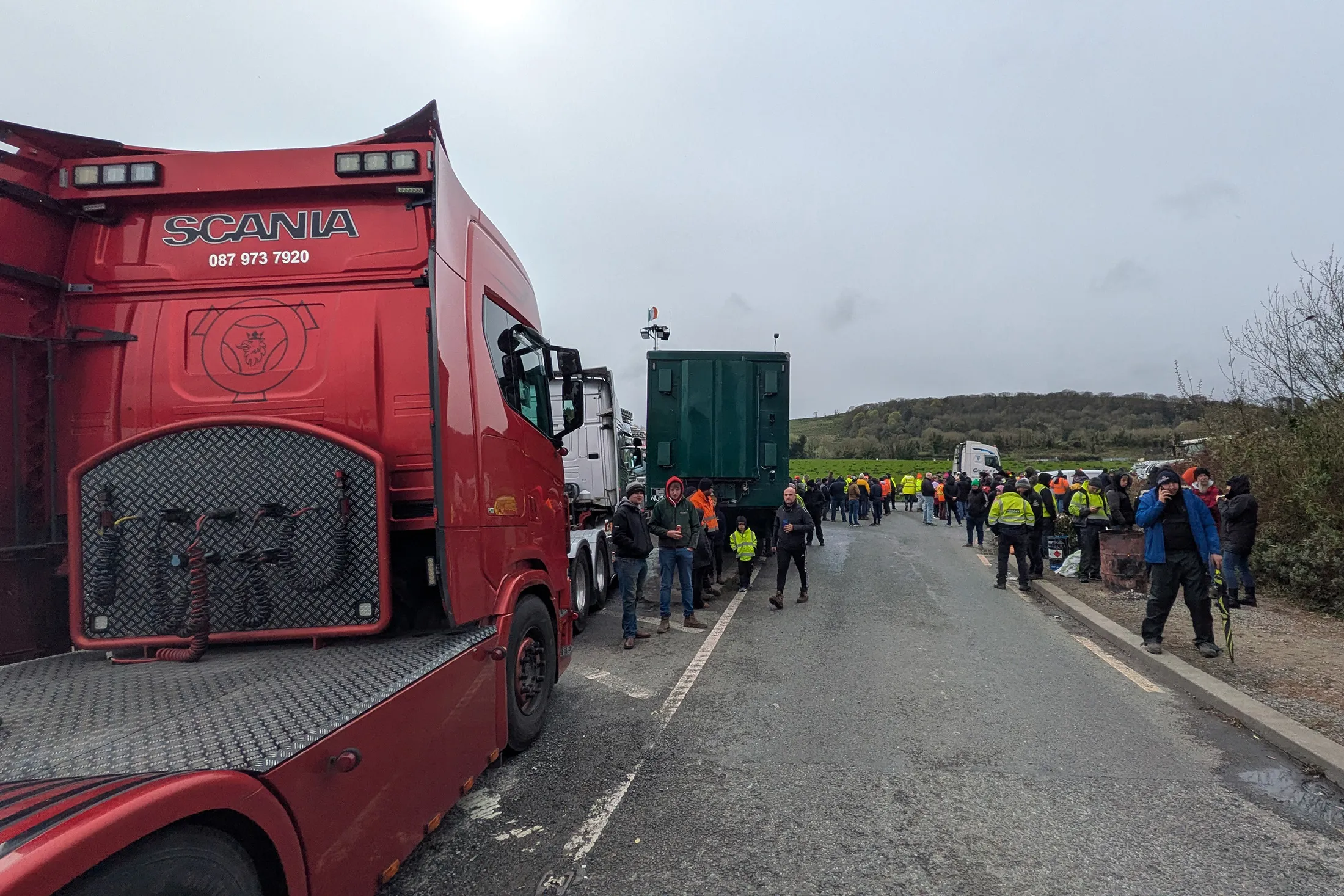
Hauliers and agricultural contractors have been blockading key fuel depots since Monday, including the Whitegate Oil Refinery in County Cork — Ireland's only refinery — as well as terminals in Foynes, County Limerick, and Galway Harbour. The blockades have prevented the distribution of approximately half of the country's fuel supplies, leaving over 100 forecourts dry, primarily in Munster and the west of Ireland.
Background
The protests were triggered by a dramatic spike in fuel prices driven by the closure of the Strait of Hormuz during the US-Iran conflict. By early April, diesel had reached approximately €2.14 per litre and petrol around €1.91 per litre — representing increases of approximately 28 per cent and 25 per cent respectively since the start of the conflict. Home heating oil prices jumped by 67 per cent, contributing to a 3.6 per cent inflation rate in March. Protesters, primarily farmers, hauliers, and agricultural contractors, are demanding a direct meeting with government ministers to discuss targeted fuel supports.
The protests began on 7 April with slow-moving convoys before escalating to full blockades of critical infrastructure. Protesters targeted major arterial routes including the M50 motorway in Dublin, key city centres, and fuel depots and ports including Dublin, Rosslare, and Galway. The most intense period of disruption occurred between 7 and 14 April, with the economic cost estimated at millions of euros per day.
The government announced a €505 million support package for affected industries, including a cut in excise duty on petrol and diesel and a postponement of a planned carbon tax increase — in addition to a €250 million package of measures announced in March.
Key Developments
Taoiseach Micheál Martin condemned the Whitegate blockade in the strongest terms, calling it "beyond belief" during a fuel crisis and describing it as an "outrage" that directly impacts businesses and livelihoods. Tánaiste Simon Harris called any attempt to block fuel distribution a "sinister and despicable attack on our economy and our society." Minister for Justice Jim O'Callaghan announced that the blocking of critical national infrastructure would not be permitted to continue and formally requested the assistance of the Defence Forces, which deployed four heavy-lift recovery trucks to clear blockading vehicles.
The Health Service Executive warned that the disruptions were causing people to miss scheduled medical appointments and impacting the provision of homecare and critical care, including dialysis and cancer treatment. Some surgical procedures were cancelled due to the disruption. Dublin Bus reported severe service disruptions, with several routes cancelled or diverted, and Luas Green Line services were also affected. Commuters travelling to Dublin Airport were forced to walk part of the way due to the M50 blockade.
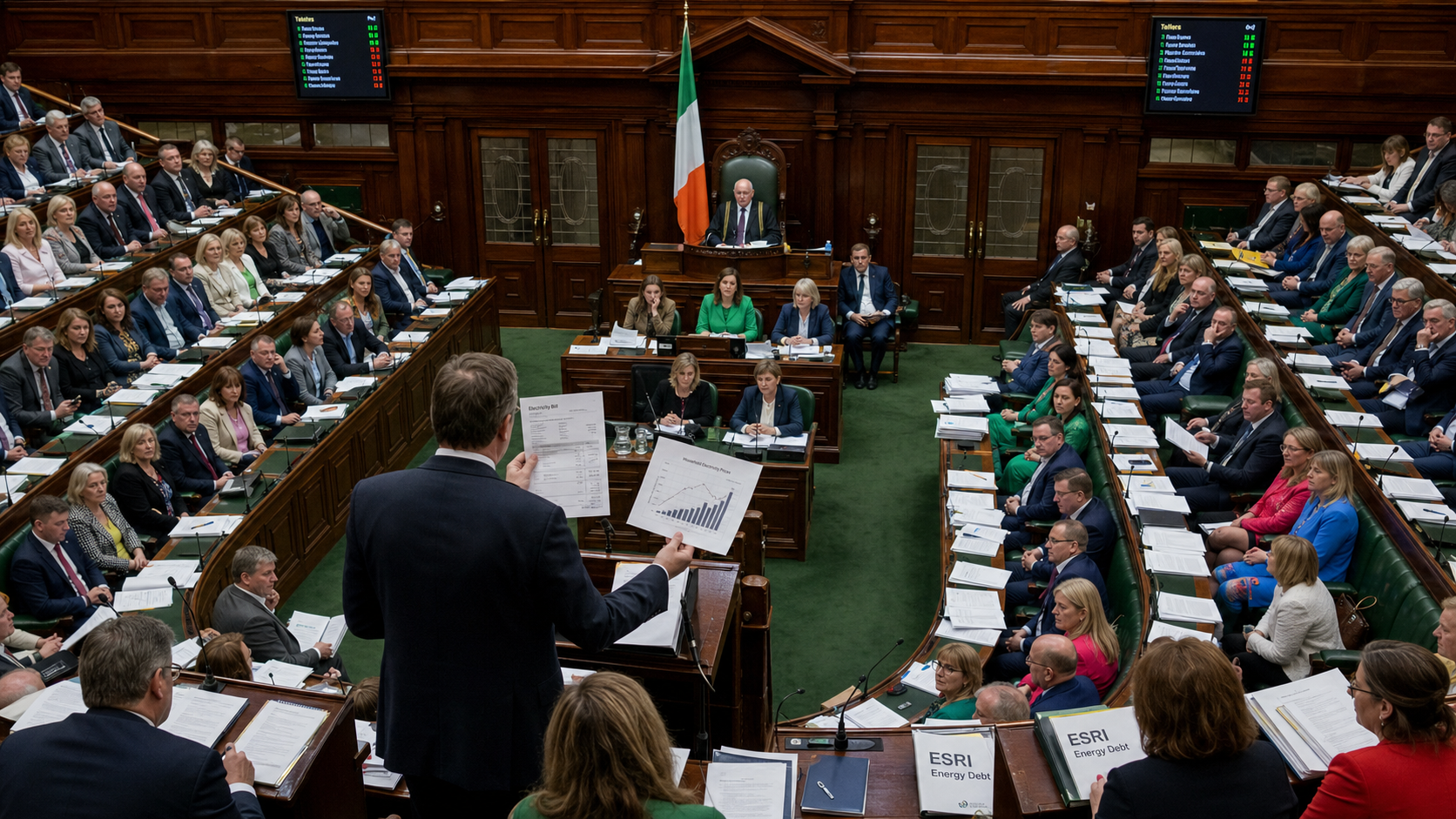
The government scheduled a meeting with representative bodies from farming, agricultural contracting, and the haulage industry on Friday. Sinn Féin leader Mary Lou McDonald urged the Taoiseach to "pick up the phone" to protesters, arguing the government should not escalate the situation. Minister O'Callaghan also suggested that some protesters were being "manipulated" by outside actors, referencing British right-wing activist Tommy Robinson.
Why It Matters
The protests have exposed Ireland's vulnerability to global energy price shocks and raised serious questions about the security of fuel supply infrastructure. With approximately half of the country's fuel supplies affected, the economic and social impact has been felt across multiple sectors, from agriculture to healthcare. Supermarket shelves were left half-empty as deliveries were impeded, and many businesses struggled to operate.
The crisis has also highlighted the deep economic pressures facing transport-dependent industries in Ireland, where the rising cost of fuel is a major input for farmers and hauliers already operating on tight margins. The government's response — a combination of enforcement action and financial relief — reflects the difficulty of balancing the legitimate grievances of protesters against the need to protect critical national infrastructure and essential services.
Local Impact
The protests in the Republic of Ireland have had a direct spillover effect in Northern Ireland, where solidarity protests took place in Belfast and the border town of Strabane, with slow-moving convoys of tractors and trucks causing traffic disruption. The shared economic pressures of rising fuel costs are felt acutely on both sides of the border, with farmers and hauliers in Northern Ireland facing the same squeeze on margins as their counterparts in the Republic.
For communities in border counties, the disruption to fuel supplies in the Republic has had practical consequences, with some residents crossing into Northern Ireland to fill up at forecourts where supplies remained available. The episode has underscored the deep economic interdependence of the island of Ireland and the importance of cross-border cooperation in managing shared crises.
What's Next
The government's meeting with industry representative bodies will be closely watched. Protesters indicated they would lift blockades if government leaders agreed to meet with them directly. The Defence Forces stand ready to clear blockading vehicles if required. The longer-term question of how Ireland manages its exposure to global energy price volatility — and whether the government's relief package is sufficient to address the underlying pressures — will remain a live political issue in the weeks ahead.
For the latest updates, see The Irish Times on the fuel protests and BBC News coverage of the Ireland fuel crisis.