Irish House Price Growth Falls to Two-Year Low as Market Cools Amid Affordability Pressures
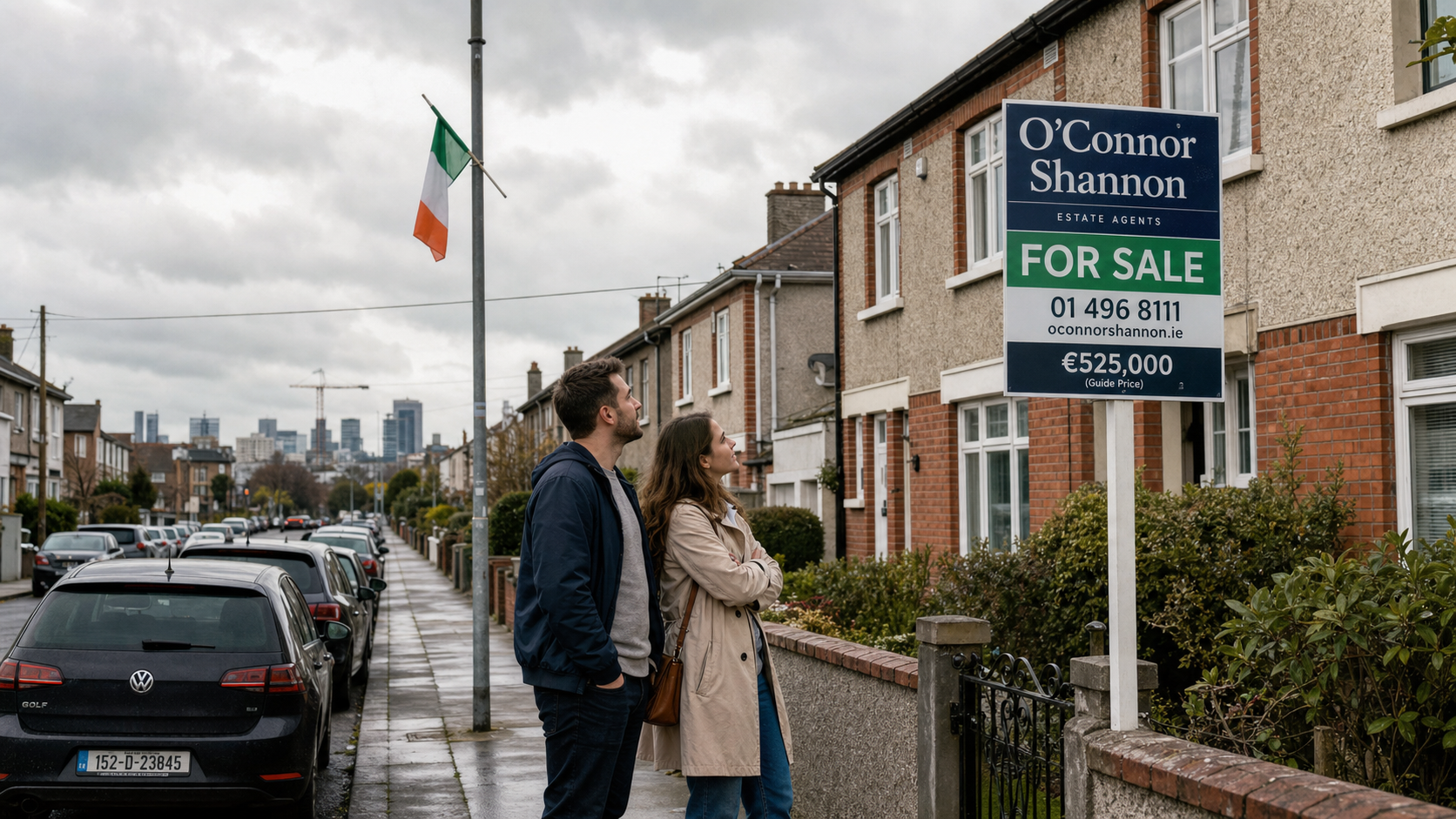
Irish residential property prices are growing at their slowest rate in more than two years, with the latest Central Statistics Office data showing a 6.5 per cent annual increase — a figure that, while still well above inflation, represents a meaningful moderation from the double-digit growth rates recorded in recent years and reflects the growing impact of affordability constraints on buyer behaviour.
Background
Ireland's housing market has been one of the most discussed topics in Irish public life for the better part of a decade. The combination of a severe supply shortage, strong demand driven by population growth and household formation, and the legacy of underinvestment in construction during the post-crash years has produced a market in which prices have risen sharply and affordability has deteriorated significantly for a large proportion of the population.
The CSO's Residential Property Price Index is the primary official measure of house price movements in Ireland. It tracks the prices paid for residential properties in actual transactions, providing a more accurate picture of market conditions than asking price indices, which can be distorted by the gap between what sellers hope to achieve and what buyers are willing to pay. The index is published monthly and is closely watched by policymakers, lenders, and market participants.
The moderation in price growth that has emerged in recent months reflects a combination of factors. Affordability constraints — the simple reality that prices have risen to a level where a growing proportion of potential buyers cannot afford to purchase — are the primary driver. Rising borrowing costs, as the European Central Bank has maintained interest rates at elevated levels to combat inflation, have added to the affordability pressure. And a gradual increase in the supply of second-hand homes coming to market has provided some relief on the demand side.
Key Developments
The CSO data for the most recent reporting period shows a 6.5 per cent annual increase in national residential property prices, down from 6.7 per cent the previous month. In Dublin, price growth has been more subdued, at 5.7 per cent annually — reflecting the greater availability of second-hand homes in the capital and the particular affordability pressures in a market where average prices are significantly higher than the national average.
Outside Dublin, price growth remains stronger, at 7.2 per cent annually, driven by severe supply shortages in regional markets. The midlands — Laois, Longford, Offaly, and Westmeath — has seen the strongest growth, at 13.4 per cent, as buyers priced out of Dublin and the commuter belt look further afield. The southwest — Cork and Kerry — has seen more modest growth of 3.6 per cent, reflecting a market that is somewhat better supplied than other regions.
Industry forecasts from the Bank of Ireland and the Society of Chartered Surveyors Ireland suggest that national price growth may hover around 4 per cent for the remainder of 2026, contingent on construction output and broader economic stability. That would represent a further moderation from current levels, though it would still leave prices rising faster than wages for many households.
Why It Matters
The moderation in price growth is, in one sense, welcome news — it suggests that the market is beginning to respond to affordability constraints in the way that economic theory would predict. But it is important not to overstate the significance of the slowdown. A 6.5 per cent annual increase in house prices is still a very rapid rate of growth by historical standards, and it is still well above the rate of wage growth for most workers. The affordability crisis is not over; it is simply becoming slightly less acute at the margin.
The persistent supply deficit is the fundamental constraint on the market. Even with the strong commencement figures reported for July 2026, the rate of new housing delivery is not sufficient to close the gap between supply and demand in the near term. Until that gap is closed — a process that will take years, not months — prices will continue to rise, albeit perhaps at a slower pace.
The two-speed nature of the market — with Dublin cooling faster than the regions — also has policy implications. The government's housing strategy has historically been focused primarily on Dublin, where the crisis has been most acute. But the strong price growth in the midlands and other regional markets suggests that the supply shortage is now a nationwide problem that requires a nationwide response.
Local Impact
In Dublin, the moderation in price growth is most visible in the second-hand market, where the increased availability of homes coming to market has given buyers slightly more choice and slightly more negotiating power. In areas like Clontarf, Ranelagh, and Rathmines, the gap between asking prices and final sale prices has narrowed, and the frenzied bidding wars that characterised the market two years ago are less common.
In Cork, Galway, and Limerick, the market remains tight, with strong demand and limited supply continuing to drive prices upward. First-time buyers in these cities face the same fundamental challenge as their counterparts in Dublin: prices have risen to a level where the deposit required to purchase an average home is beyond the reach of many young people without family support.
What's Next
The CSO will publish its next Residential Property Price Index in September, covering the most recent month of data. The government's October budget is expected to include further measures to support housing affordability, including potential changes to the Help to Buy scheme and additional funding for social and affordable housing. The Central Bank's mortgage lending rules, which limit the amount that borrowers can borrow relative to their income and the value of the property, are also under review, with a decision on any changes expected before the end of the year.