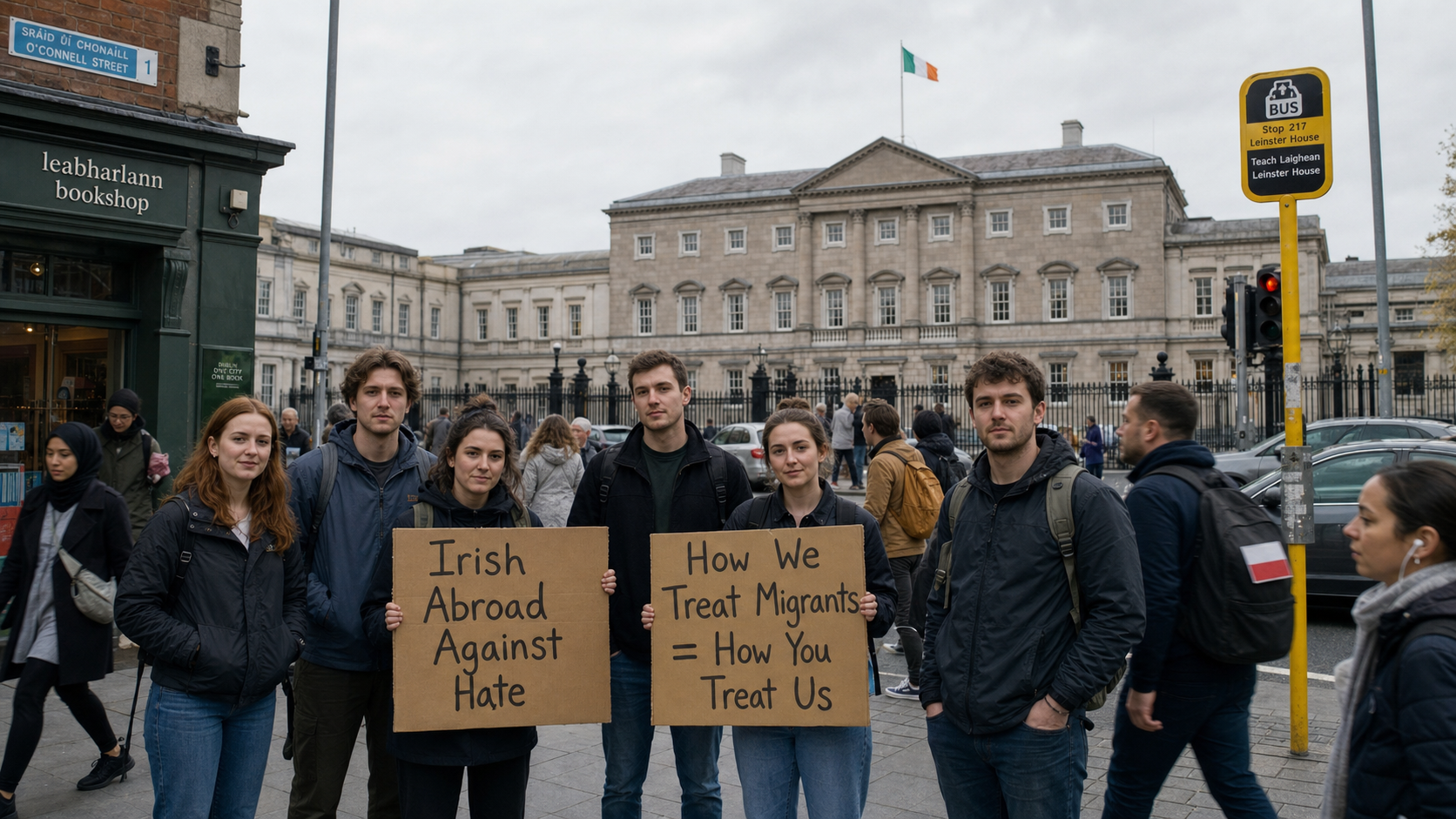
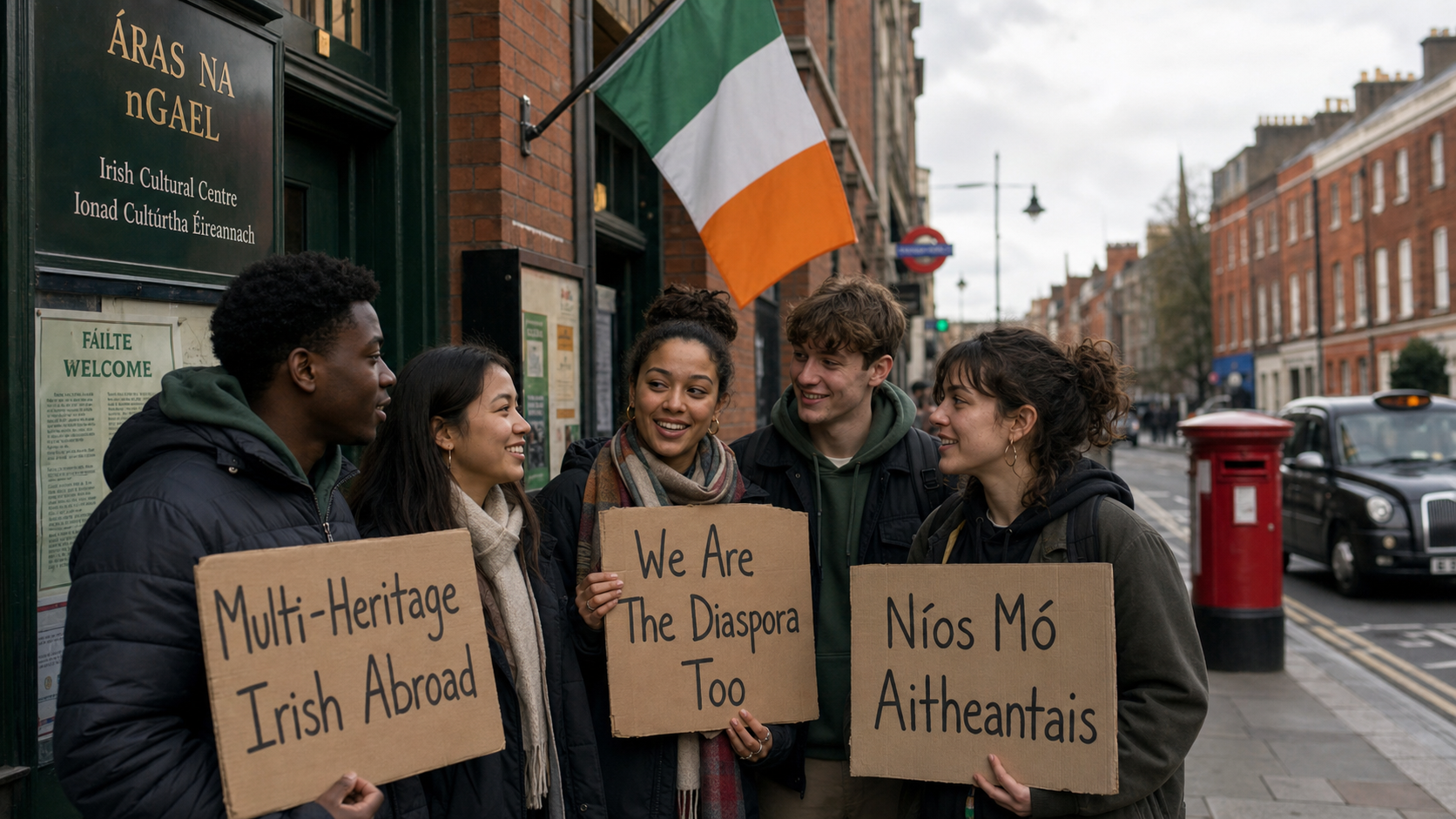
Irish Diaspora Strategy Shifts Towards Inclusivity as Affinity Irish and LGBTQI+ Communities Gain Recognition
The Irish government's new Diaspora Strategy 2026-2030 marks a fundamental rethinking of how Ireland engages with its global community, embracing a broader and more inclusive definition of Irishness that extends beyond ancestral heritage to encompass the LGBTQI+ community, those of mixed heritage, and the so-called affinity diaspora — people who have no Irish blood but who carry Ireland in their hearts.
Background
The Irish diaspora is one of the most extensive in the world relative to the size of the home country. An estimated 70 million people worldwide claim Irish ancestry, a legacy of centuries of emigration driven by famine, poverty, political upheaval, and economic necessity. The Irish-American community alone numbers approximately 35 million, and significant Irish communities exist in Britain, Australia, Canada, Argentina, and across continental Europe. This diaspora has been a source of enormous cultural, economic, and political influence for Ireland, from the financial support of the Famine era to the political lobbying that helped shape the peace process in Northern Ireland.
The Irish government's engagement with the diaspora has historically been focused primarily on communities with strong ancestral connections to Ireland — the Irish-American, Irish-British, and Irish-Australian communities that were formed by the great waves of emigration in the 19th and 20th centuries. The Department of Foreign Affairs has maintained a network of Irish embassies and consulates that provide services to Irish citizens abroad, and the government has funded a range of diaspora organisations through the Emigrant Support Programme.
However, the nature of the Irish diaspora has been changing significantly in recent decades. The pattern of emigration has shifted, with the UK and Australia now the primary destinations for Irish emigrants rather than the United States. The profile of emigrants has also changed — today's Irish emigrants are more likely to be highly educated, to maintain strong connections with Ireland through digital technology, and to return home after a period abroad than their predecessors. And the definition of who counts as "Irish" has become more complex, as Ireland has become a more diverse and multicultural society.
Key Developments
The Diaspora Strategy 2026-2030, published by the Department of Foreign Affairs, represents a significant evolution in how the Irish government thinks about and engages with the diaspora. The strategy explicitly embraces a broader definition of Irishness that goes beyond ancestral heritage, recognising three distinct groups that have not always been adequately acknowledged in previous diaspora policy.
The first is the LGBTQI+ diaspora — Irish people who emigrated, often in the decades before the legalisation of homosexuality in 1993 and the marriage equality referendum of 2015, because they could not live openly as themselves in Ireland. For many of these individuals, growing up queer in Ireland was a source of trauma, and their relationship with Irish identity is complex and sometimes painful. The strategy commits to creating more inclusive spaces for LGBTQI+ Irish people abroad and to acknowledging the specific experiences of this community within the broader diaspora narrative.
The second group is those of mixed heritage — people who have one Irish parent or grandparent alongside other national or ethnic backgrounds. This group has often felt marginalised by a diaspora narrative that emphasises pure Irish ancestry, and the strategy's recognition of their Irishness is a significant step towards a more inclusive understanding of what it means to be Irish abroad.
The third group is the affinity diaspora — individuals who have no Irish ancestry but who have lived, worked, or studied in Ireland and who maintain a strong, lifelong connection to Irish culture, values, and community. This group is growing rapidly as Ireland has become a more significant destination for international students, workers, and migrants, and the strategy's recognition of their connection to Ireland reflects a mature and confident understanding of Irish identity in the 21st century.
Why It Matters
The Diaspora Strategy 2026-2030 matters because it reflects a fundamental shift in how Ireland understands itself and its relationship with the world. The traditional narrative of the Irish diaspora — rooted in the trauma of the Famine, the hardship of emigration, and the longing for a homeland left behind — is giving way to a more complex, more diverse, and ultimately more honest account of what it means to be Irish in the world today.
The inclusion of the LGBTQI+ community is particularly significant. For decades, Ireland exported its LGBTQI+ citizens — people who left because the country they loved did not love them back. The strategy's acknowledgement of this history, and its commitment to creating more inclusive spaces for LGBTQI+ Irish people abroad, is a form of institutional reckoning with a painful chapter in Irish social history. It is also a recognition that the Ireland of today — which has legalised same-sex marriage, elected an openly gay Taoiseach, and become one of the most LGBTQI+-friendly countries in Europe — is a fundamentally different place from the Ireland that drove so many of its citizens away.
The recognition of the affinity diaspora is equally forward-looking. As Ireland continues to attract international talent and to build a more diverse society, the question of who belongs to the Irish community — at home and abroad — will become increasingly important. A strategy that embraces the affinity diaspora is a strategy that understands Ireland's future as well as its past.
Local Impact
The strategy has been welcomed by Irish diaspora organisations across the world, including the Irish Network in the UK, the Irish Australian Chamber of Commerce, and the Federation of Irish Societies in Britain. In London — home to the largest Irish community outside Ireland — the strategy's recognition of the LGBTQI+ diaspora has been particularly welcomed by organisations including the London Irish LGBT+ Network, which has been advocating for greater recognition of queer Irish experiences for many years.
In Ireland itself, the strategy has generated discussion about the relationship between the diaspora and the home country. The question of voting rights for Irish citizens abroad — a long-standing demand of diaspora organisations — is expected to be addressed in a separate constitutional referendum, which the government has indicated it will hold before the end of 2027. The strategy's publication has renewed calls for progress on this issue, with diaspora organisations arguing that the right to vote is the most fundamental expression of belonging to the Irish community.
What's Next
The Diaspora Strategy 2026-2030 will be implemented through the Department of Foreign Affairs' network of embassies and consulates, with dedicated diaspora officers in key locations including London, New York, Sydney, and Toronto. The Emigrant Support Programme, which funds diaspora organisations, will be reviewed in light of the strategy's priorities, with additional resources expected to be allocated to LGBTQI+ and mixed-heritage diaspora organisations. A diaspora forum, bringing together representatives of Irish communities from across the world, is scheduled for Dublin in October. The constitutional referendum on diaspora voting rights is expected to be announced before the end of 2026.