Irish Abroad Warn That Anti-Migrant Rhetoric at Home Could Have Consequences for Emigrants Overseas
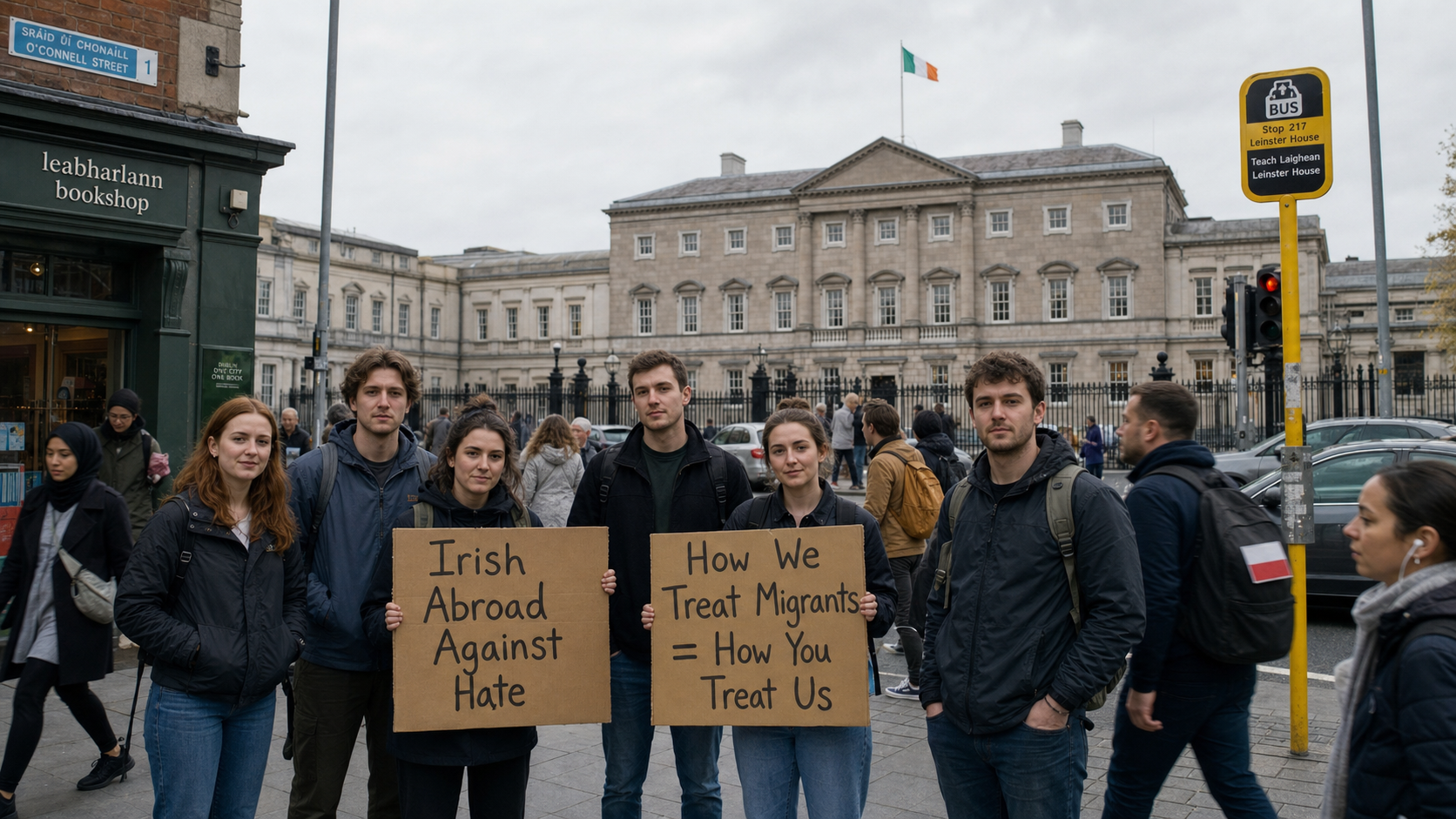
Members of the Irish diaspora living and working across Europe, North America, and Australia have issued a pointed warning to those promoting anti-migrant rhetoric in Ireland, arguing that the logic of 'remigration' — the demand that migrants leave their host countries and return to their countries of origin — would, if applied globally, affect the hundreds of thousands of Irish people who are themselves economic migrants in their adopted countries, and that the hypocrisy of celebrating the Irish diaspora while demonising migrants at home is not lost on those watching from abroad.
Background
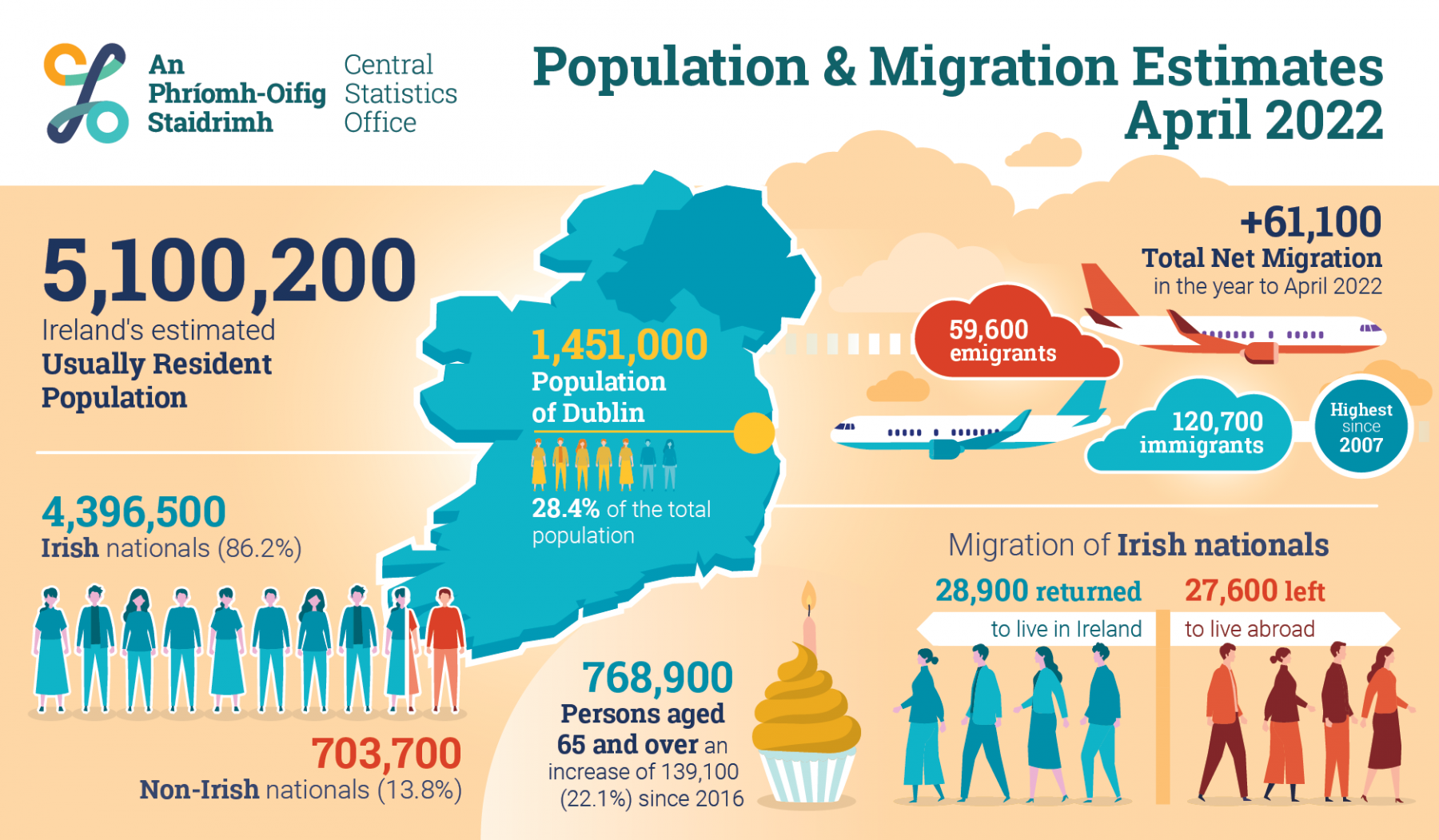
Ireland has a long and complex relationship with migration. For most of its history as an independent state, Ireland was a country of emigration rather than immigration, with successive generations of Irish people leaving for Britain, the United States, Australia, and elsewhere in search of economic opportunity. The Irish diaspora — estimated at over seventy million people worldwide who claim Irish ancestry — is one of the largest relative to population of any country in the world, and it has been a source of enormous cultural, economic, and political influence for Ireland on the global stage.
The transformation of Ireland from a country of emigration to a country of immigration, which began in the 1990s and accelerated during the Celtic Tiger years, has been one of the most significant social changes in the country's recent history. Ireland has welcomed workers from across the EU, from Asia, Africa, and the Americas, and has benefited enormously from the skills, energy, and cultural diversity that immigration has brought. The country's economic success over the past three decades has been built in significant part on the contributions of immigrants.
In recent years, however, a strand of anti-migrant sentiment has emerged in Irish public discourse, driven by concerns about housing, public services, and cultural change. This sentiment has been amplified by social media and by a small number of political figures and commentators who have adopted the language of the international far right, including the concept of 'remigration' — the demand that migrants leave their host countries and return to their countries of origin. The rise of this rhetoric has been a source of deep concern for many in Ireland, including members of the diaspora who are watching from abroad.
Key Developments
A number of Irish emigrants living abroad have spoken out publicly about the anti-migrant rhetoric they have observed in Ireland, drawing attention to the contradiction between Ireland's celebration of its diaspora and the hostility being directed at migrants at home. Kevin McCafferty, an Irish citizen living in Norway, wrote in a widely shared piece: "Do they realise that, if they get their way, other countries might start making their Irish immigrants — most of them, like myself, economic migrants — remigrate too?"
McCafferty's observation has resonated strongly with Irish people living abroad, many of whom are acutely aware of their own status as migrants in their host countries. In Norway, in Australia, in the United States, and across Europe, Irish emigrants have built lives, raised families, and contributed to their adopted communities — often in exactly the same way that migrants in Ireland are doing. The suggestion that migrants should be compelled to leave their host countries is, for these Irish emigrants, not an abstract political position but a direct threat to their own lives and livelihoods.
The Irish Times has reported on a growing conversation within the diaspora about the implications of anti-migrant rhetoric in Ireland, with many emigrants expressing a mixture of sadness, anger, and disbelief at the direction of some elements of Irish public discourse. Several diaspora organisations have issued statements condemning anti-migrant sentiment and calling on political leaders in Ireland to take a stronger stand against the rhetoric of the far right.
Why It Matters
The warning from the Irish abroad matters for several reasons. It provides a perspective on anti-migrant rhetoric that is grounded in lived experience — the experience of being a migrant in another country — and that cuts through the abstractions of political debate to expose the human reality of what is being proposed. It also highlights the profound inconsistency of a position that celebrates the Irish diaspora while demonising migrants in Ireland, an inconsistency that is particularly glaring given the historical experience of Irish emigrants, who faced significant discrimination and hostility in many of the countries to which they emigrated.
The international dimension of the issue is also significant. Ireland's reputation as a welcoming, open, and tolerant country has been an important part of its international brand, contributing to its attractiveness as a destination for foreign direct investment, tourism, and skilled workers. The rise of anti-migrant sentiment risks damaging that reputation and undermining the conditions that have made Ireland's economic success possible. For context, Ireland's tech sector — which employs tens of thousands of people and generates a significant proportion of the country's tax revenue — is heavily dependent on the ability to attract skilled workers from around the world.
Local Impact
The impact of the anti-migrant rhetoric debate is felt differently in different parts of Ireland. In Dublin, Cork, and other major urban centres, where immigration has been most visible and where the benefits of diversity are most apparent, the rhetoric has generally been met with strong opposition from community leaders, business groups, and civil society organisations. In some smaller towns and rural areas, where the pace of demographic change has been more rapid and where public services have been under greater pressure, the concerns that underlie the anti-migrant sentiment are more widely shared, even among those who reject the extreme positions of the far right. The challenge for political leaders is to address the legitimate concerns about housing and public services without legitimising the rhetoric of those who seek to exploit those concerns for political purposes.
What's Next
The debate about migration and anti-migrant rhetoric in Ireland is expected to continue to be a significant feature of political and public discourse in the months ahead. The Government has indicated it is developing a new integration strategy that will seek to address both the practical challenges of managing migration and the social and cultural dimensions of building a diverse and cohesive society. The Oireachtas Committee on Justice has indicated it will be holding hearings on the issue of hate speech and anti-migrant rhetoric, with representatives from diaspora organisations, civil society groups, and academic experts all expected to be invited to give evidence. The Irish diaspora organisations that have spoken out on the issue have indicated they will continue to engage with the debate, using their unique perspective as migrants themselves to challenge the logic and the humanity of anti-migrant positions.