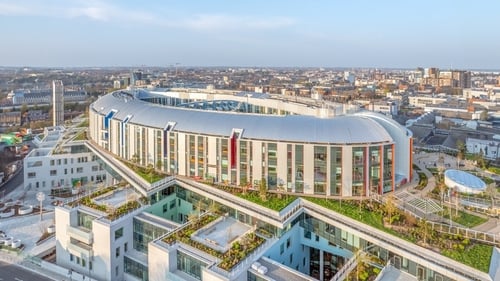
Ireland's New National Children's Hospital Faces 18th Missed Deadline as Opening Pushed to 2027
Ireland's new National Children's Hospital has missed its 18th construction deadline, with the project's contractor BAM unable to provide a confirmed completion date and the Minister for Health expressing only a cautious hope that the facility might open to patients by Christmas 2026 — a target that few observers believe is achievable given the scale of unresolved defects and ongoing contractor disputes.
Costs for the project, which is being built on the St James's Hospital campus in Dublin, have escalated from an initial estimate of €650 million to a government-sanctioned budget of €2.24 billion, with approximately €1.648 billion already spent. The National Paediatric Hospital Development Board is withholding 15% of payments from BAM due to non-compliance with the construction schedule, while BAM has lodged claims for €819 million in additional costs — of which the NPHDB has deemed only 7%, or approximately €52 million, to be valid.
Background
The National Children's Hospital project has been one of the most troubled public infrastructure projects in Irish history. Originally scheduled for completion in August 2022, the facility was intended to replace the three existing children's hospitals in Dublin — Our Lady's Children's Hospital in Crumlin, Children's University Hospital in Temple Street, and the National Children's Hospital in Tallaght — with a single, state-of-the-art facility capable of providing world-class paediatric care.
The project's difficulties began almost from the outset. Cost estimates escalated dramatically as the design evolved and construction challenges emerged, prompting a public inquiry and significant political controversy. The government declared a budget of €2.24 billion as the "maximum allocation" in February 2024, but the project has continued to consume resources without delivering the promised facility. As of early 2026, approximately €1.648 billion has been spent, and the end is not yet in sight.
The NPHDB has accused BAM of failing to adequately resource the project with staff and management. BAM, in turn, attributes delays to design changes and has lodged extensive claims for additional compensation. The dispute has created a deeply adversarial relationship between the client and contractor that has further slowed progress on a project already beset by technical difficulties.
Key Developments
The scale of the construction defects identified at the hospital has shocked even experienced observers of large infrastructure projects. An unprecedented 106,500 defects were identified across 5,728 rooms that BAM was required to rectify. As of April 2026, over 12,000 defects remained unresolved, including serious issues such as dust in ventilation systems and leaks in underfloor heating — problems that in a hospital environment are not merely inconvenient but potentially dangerous to vulnerable patients.
By August 2025, less than 15% of rooms were considered satisfactorily complete. The NPHDB has accused BAM of "significant over-claiming of time" in its €819 million claims submission, noting that the board has assessed only 7% of those claims as valid. The withholding of 15% of payments is intended to incentivise completion, but progress has remained painfully slow.
The Minister for Health has expressed a hope that the hospital might open to patients by Christmas 2026, but has stopped short of making a firm commitment. BAM has not provided an updated completion date, leaving the NPHDB and the government unable to plan definitively for the transition from the existing children's hospitals to the new facility. The 18th missed deadline has become a symbol of the project's dysfunction.
Why It Matters
The National Children's Hospital debacle matters for reasons that extend far beyond the immediate financial and logistical difficulties. Every month of delay means that Ireland's sickest children continue to be treated in facilities that were not designed for the volume or complexity of cases they now handle. The existing children's hospitals are ageing, overcrowded, and increasingly unable to meet modern standards of paediatric care. The human cost of delay is real, even if it is difficult to quantify.
The project has also consumed enormous political capital and public trust. The spiralling costs and repeated missed deadlines have fuelled a broader debate about the Irish state's capacity to deliver large-scale infrastructure projects on time and on budget. The National Children's Hospital has become a cautionary tale cited in discussions of every major public project, from transport infrastructure to housing, raising fundamental questions about procurement, project management, and accountability in Irish public life.
The financial implications are equally serious. Every euro spent on defect remediation and contractor disputes is a euro not available for other health priorities — reducing waiting lists, expanding community care, or investing in the digital transformation of the health service.
Local Impact
The National Children's Hospital, when it eventually opens, will serve children from across the island of Ireland, including from Northern Ireland. Families from Belfast and border counties have long travelled to Dublin's existing children's hospitals for specialist paediatric care unavailable closer to home. The continued delays mean these families must continue to make that journey to facilities that are increasingly stretched beyond their designed capacity.
Cross-border health cooperation has grown significantly in recent years, and the new hospital was intended to be a cornerstone of that cooperation — a world-class facility accessible to children from both jurisdictions. Its delayed opening is a setback not just for the Republic of Ireland but for the entire island's healthcare infrastructure.
What's Next
The NPHDB continues to withhold payments and press BAM for a credible completion schedule. The government has made clear that the €2.24 billion budget is a ceiling, not a floor, and that any additional costs will be contested vigorously. Legal proceedings between the NPHDB and BAM appear increasingly likely if the contractor's claims cannot be resolved through negotiation. For the children and families waiting for the hospital to open, the prospect of another missed deadline — the 19th — is a deeply unwelcome possibility.
The NPHDB publishes regular project updates at nchd.ie. The Irish Times provides ongoing coverage of the project at irishtimes.com. The Department of Health's position is available at gov.ie.