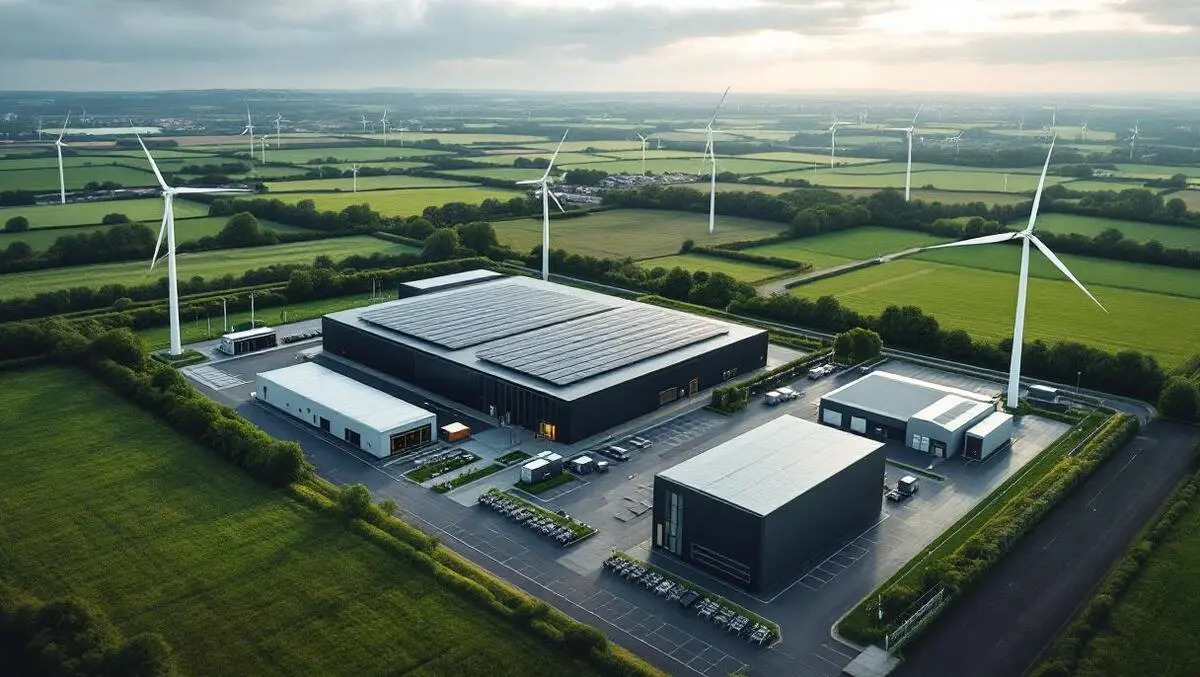
Ireland's Data Centre Boom Threatens 2030 Climate Targets as Sector Reaches 23% of National Electricity Demand
Data centres in Ireland now account for 23 per cent of total national electricity demand, a figure projected to reach nearly one-third of national demand by 2030, raising serious questions about the country's ability to meet its legally binding climate targets. The Environmental Protection Agency has warned that Ireland is at risk of exceeding its 2026-2030 carbon budget by between 77 and 114 million tonnes, with the data centre sector identified as a significant contributing factor to the country's continued reliance on fossil fuels for electricity generation.
Background
Ireland has become one of the most significant data centre markets in Europe over the past two decades, driven by the same combination of factors that has attracted major technology companies to the country: a well-educated workforce, a competitive tax environment, EU membership, and a temperate climate that reduces the cooling costs associated with large-scale computing infrastructure. The country now hosts data centres for some of the world's largest technology companies, and the sector has become a significant contributor to the Irish economy in terms of employment, investment, and tax revenue.
But the growth of the data centre sector has come at a cost. The enormous energy demands of large-scale computing infrastructure have placed significant pressure on Ireland's electricity grid, particularly in the Dublin region, where the concentration of data centres is highest. The grid operator, EirGrid, has been warning for several years that the pace of data centre development is outstripping the development of renewable energy capacity, and that the gap is being filled by fossil fuel generation — primarily gas — that undermines Ireland's climate commitments.
The government has responded with a series of policy measures, including the Large Energy User Action Plan, which requires new data centres to co-locate with renewable energy sources or install on-site storage and generation. But critics argue that these measures are insufficient to address the scale of the problem, and that the government's continued enthusiasm for data centre investment is incompatible with its stated commitment to meeting Ireland's 2030 climate targets.
Key Developments
The Environmental Protection Agency's latest projections indicate that Ireland is at risk of exceeding its 2026-2030 carbon budget by between 77 and 114 million tonnes, a range that reflects the uncertainty about the pace of renewable energy development and the growth of energy-intensive sectors including data centres. The projections have been described by environmental groups as alarming, and they have prompted renewed calls for a moratorium on new data centre connections to the national grid until the renewable energy capacity needed to power them is in place.
Data centres in Ireland accounted for 23 per cent of total electricity demand as of July 2026, a figure that has grown significantly over the past five years and that is projected to reach nearly one-third of national demand by 2030. The Commission for the Regulation of Utilities has mandated that new data centres must meet at least 80 per cent of their annual energy demand through new renewable electricity sources, with a six-year glide path post-energisation to achieve this target. But the implementation of this requirement has been uneven, and some data centres are relying on on-site gas generation to meet their energy needs — a practice that directly increases carbon emissions.
Minister for Enterprise Peter Burke has argued that the data centre sector is a strategic opportunity for Ireland to accelerate the green transition, asserting that carbon emissions from the sector will begin to reduce from 2030 as offshore wind capacity comes online. But environmental researchers have challenged this argument, noting that the current reliance on gas generation for data centres is increasing emissions now, and that the promised offshore wind capacity is not guaranteed to materialise on the timescale that the minister has suggested.
The government is also working to transpose the EU Energy Efficiency Directive, which requires annual reporting on energy use and environmental impact from data centres, with a focus on utilising waste heat for district heating schemes. This measure has the potential to reduce the net environmental impact of data centres, but its implementation is at an early stage and its effectiveness remains to be demonstrated.
Why It Matters
The data centre debate matters because it exposes a fundamental tension at the heart of Irish economic and environmental policy. Ireland has built a significant part of its economic success on attracting technology investment, and the data centre sector is a major component of that investment. But the environmental cost of that investment — in terms of electricity demand, carbon emissions, and pressure on the grid — is increasingly difficult to ignore. Ireland has legally binding climate targets, and the consequences of missing those targets — in terms of EU fines, reputational damage, and the long-term costs of climate change — are significant. The government cannot have it both ways: it cannot continue to attract data centre investment at the current pace while also meeting its climate commitments. A choice will have to be made, and the sooner it is made, the better for both the economy and the environment.
Local Impact
The impact of the data centre boom is felt most directly in the Dublin region, where the concentration of data centres is highest and where the pressure on the electricity grid is most acute. Residents and businesses in areas where data centres are located have raised concerns about the visual impact of large industrial facilities, the noise from cooling systems, and the heat island effects that can result from the concentration of computing infrastructure in a small area. The pressure on the grid has also contributed to delays in connecting new renewable energy projects, which has slowed the transition to clean energy in the wider economy. Outside Dublin, the government's plan to develop data centres in other regions — including the midlands and the west — has raised similar concerns about the environmental impact of large-scale computing infrastructure in areas that have historically been less industrialised.
What's Next
The government is expected to publish a revised data centre policy statement before the end of 2026, which will set out the conditions under which new data centre connections to the national grid will be permitted. The policy statement is expected to include stricter requirements for renewable energy co-location and more rigorous enforcement of the existing rules on on-site gas generation. The EPA's carbon budget projections will be a central input to the policy review, and environmental groups are expected to use the projections to press for more ambitious action. The Dáil's Joint Committee on Climate Action is expected to hold hearings on the data centre issue in the autumn, providing an opportunity for a broader public debate about the trade-offs involved.