Ireland Pushes for EU-Wide Social Media Ban for Under-16s During Presidency
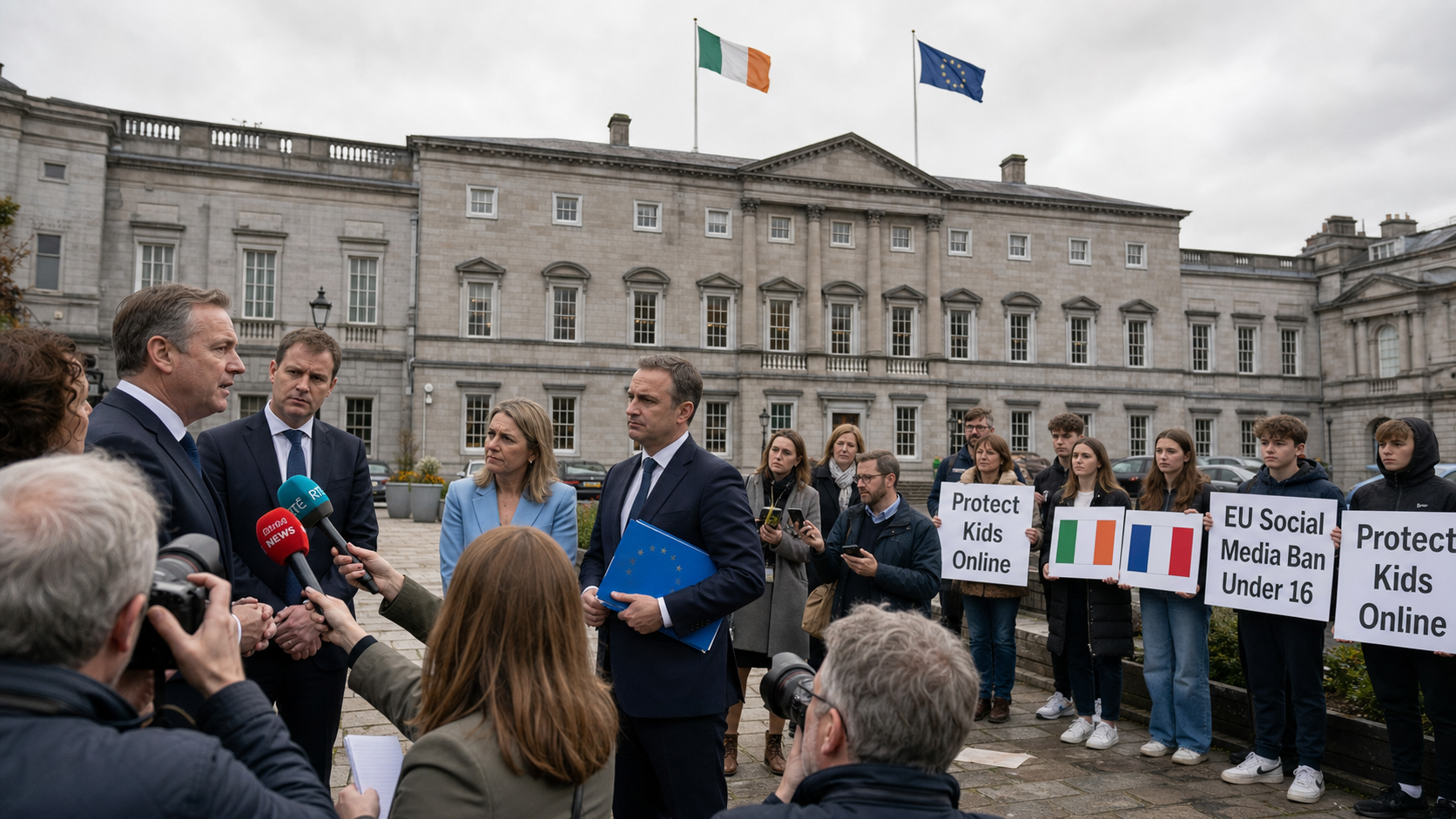
Ireland is using its rotating presidency of the Council of the European Union to advance a proposal for a bloc-wide ban on social media for children under the age of 16, with French officials specifically encouraging the Irish government to leverage its unique position as the European headquarters of most major technology companies to establish a benchmark for child online safety that could reshape the digital landscape across the continent.
Background
The question of how to protect children from the harms associated with social media has moved rapidly up the political agenda across Europe and beyond in recent years, driven by a growing body of research linking heavy social media use among young people to anxiety, depression, and other mental health difficulties. Countries including Australia, France, Spain, and Greece have either introduced or are considering restrictions on social media access for minors, and the United Kingdom has recently moved to restrict access for those under 16.
Ireland's position in this debate is distinctive. As the European headquarters of companies including Meta, TikTok, Google, and X, Ireland is the primary regulator of these platforms under the EU's Digital Services Act, with the Data Protection Commission and Coimisiún na Meán responsible for enforcing the rules that govern how these companies operate across the bloc. This gives Ireland both a particular responsibility and a particular leverage in shaping the regulatory environment for social media.
The Irish government has been developing its position on social media and children's online safety for several years, and the assumption of the EU presidency in July 2026 provided an opportunity to advance that agenda at the European level. Taoiseach Micheál Martin and Tánaiste Simon Harris have both characterised social media as a significant public health issue, and the government has indicated a preference for a coordinated European approach over unilateral national action.
Key Developments
The Irish government has advocated for a blanket ban on social media for children under the age of 16, aligning with Ireland's existing digital age of consent. This position goes further than the European Commission's own proposals, which were published in July 2026 and recommended a total ban for children under 13, combined with staged restrictions for those up to age 16. The Commission has indicated that formal legislative proposals on child safety online are expected in the autumn.
French officials have been particularly supportive of Ireland's approach, with a senior French children's commissioner telling the Irish Examiner that Ireland should use its presidency — and its status as a hub for major tech company headquarters — to establish a European-wide benchmark for protecting children's rights. France introduced its own social media restrictions for minors in 2024, and has been a consistent advocate for stronger EU-level action.
Both the Taoiseach and the Tánaiste have explicitly stated that while a collective EU strategy is the preferred path, Ireland reserves the right to pursue its own domestic legislation if a European agreement is not achieved. This willingness to act unilaterally if necessary has strengthened Ireland's negotiating position within the EU, signalling that the government is serious about the issue rather than using it merely as a rhetorical device.
Why It Matters
The push for a social media ban for under-16s is one of the most significant policy initiatives of Ireland's EU presidency, and its outcome will have implications that extend well beyond the six months of the Irish term. If Ireland can secure agreement on a European-wide approach, it will represent a landmark moment in the regulation of social media — the first time that the EU has imposed age-based restrictions on access to major platforms at the bloc level.
The technical challenges are significant. Age verification systems that are both effective and privacy-preserving are difficult to implement, and there is a genuine risk that a poorly designed ban could drive young people towards less regulated and potentially more dangerous online environments. These concerns have been raised by some members of the Oireachtas, who have argued for a "digital duty of care" approach that focuses on platform design and content moderation rather than access restrictions.
Ireland's position as the primary EU regulator of the major social media platforms gives it a unique insight into the practical challenges of implementing such a ban, and its experience in this area will be an important input into the European Commission's legislative proposals in the autumn.
Local Impact
For Irish parents, teachers, and young people, the debate about social media and children's wellbeing is one that resonates deeply. Schools across the country have been grappling with the impact of social media on their students for years, and many have introduced their own restrictions on phone use during school hours. The government's push for a formal age-based restriction on social media access reflects a broader societal concern that the current regulatory framework is not adequate to protect young people from the harms associated with these platforms.
What's Next
The European Commission is expected to publish formal legislative proposals on child online safety in the autumn of 2026, and Ireland's presidency will be responsible for managing the initial stages of the legislative process. The extraordinary JHA Council meeting on August 4, which is primarily focused on the Ceuta migration crisis, is also expected to include a brief discussion of the online safety agenda. A dedicated Council working group on child online safety is expected to begin its work in September, with Ireland chairing the discussions.