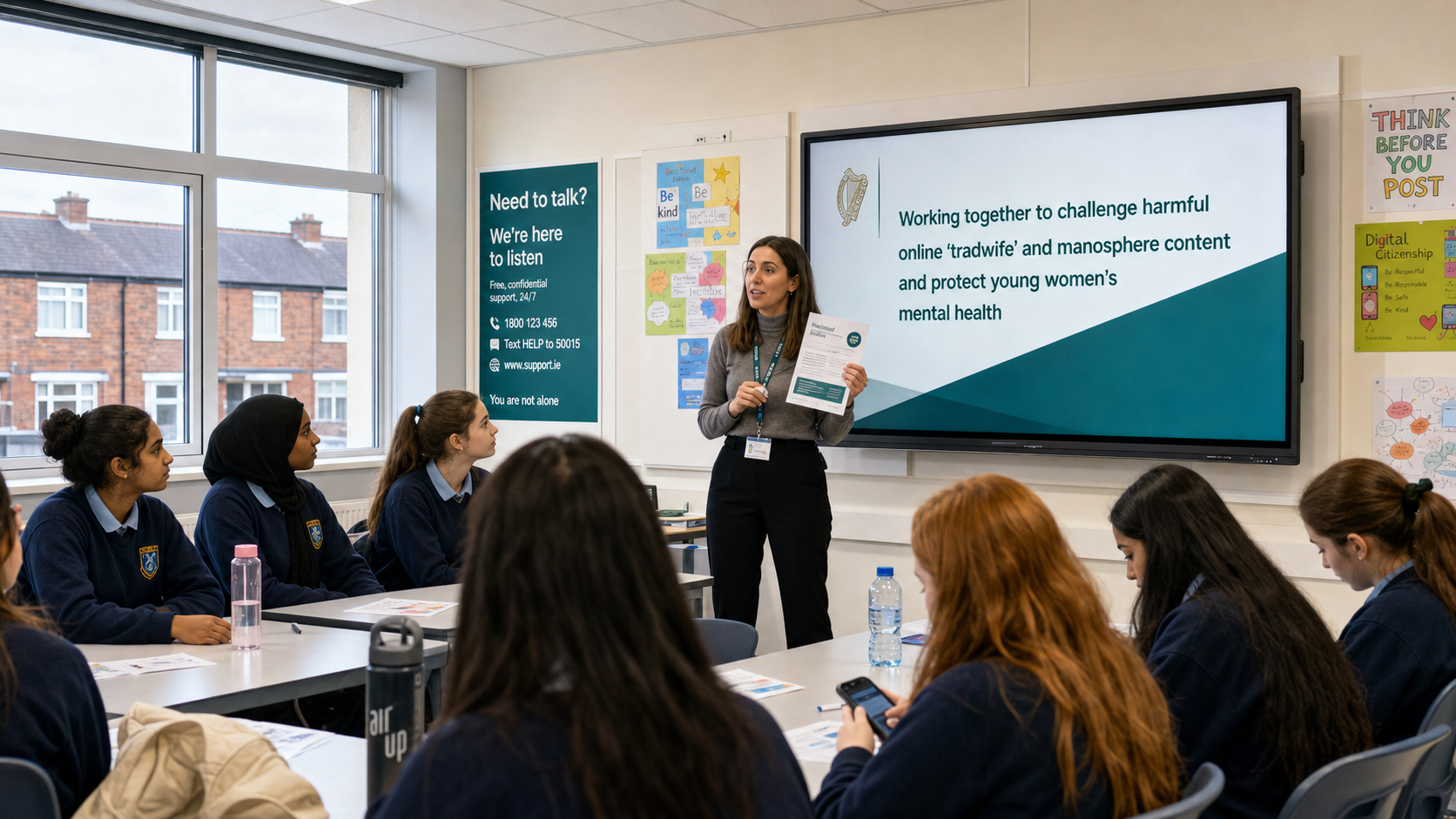
Cuan Agency Targets Mental Health Impact of Online Misogyny in New Campaign for Young Irish Women
The state agency Cuan, which was established to address domestic, sexual, and gender-based violence in Ireland, is leading a new public awareness campaign that targets the mental health impact of "tradwife" and "manosphere" online content on young women and girls, providing resources and support for those who have been affected by harmful online messaging and equipping young people with the critical thinking tools to evaluate the content they encounter on social media platforms.
The campaign, which forms part of the government's broader gender strategy announced this week, reflects growing concern among health professionals and educators about the impact of online influencer culture on the mental health and self-image of young Irish women. Research conducted for the Department of Children and Equality found that exposure to tradwife and manosphere content was associated with increased rates of anxiety, depression, and disordered eating among teenage girls.
Background
Cuan was established in 2023 as a dedicated state agency for domestic, sexual, and gender-based violence, bringing together functions previously spread across multiple government departments and agencies. The agency's mandate includes prevention, awareness, and support for those affected by gender-based violence, and its work has expanded in recent years to address the growing role of online platforms in facilitating and amplifying harmful content.
The "tradwife" movement, which promotes a romanticised vision of traditional domestic life in which women embrace roles as homemakers and caregivers, has gained significant traction on platforms like TikTok and Instagram, particularly among younger audiences. While proponents of the movement argue that it represents a genuine lifestyle choice, health professionals and gender equality advocates have raised concerns about its impact on young women's mental health, self-image, and career aspirations.
The "manosphere" — a network of online communities and influencers who promote misogynistic views and anti-gender equality sentiments — has also been identified as a significant source of harmful content for young people. Research has found that exposure to manosphere content is associated with more negative attitudes towards women and gender equality, and with increased rates of anxiety and depression among young men who internalise its messages about masculinity and success.
Key Developments
Cuan's campaign will focus on three key areas: awareness, support, and education. The awareness component will involve a public information campaign that highlights the potential mental health impacts of tradwife and manosphere content and provides information about where to seek help. The support component will involve the development of new resources for young people who have been affected by harmful online content, including online counselling services and peer support networks. The education component will involve working with schools and youth organisations to develop digital literacy programmes that help young people critically evaluate the content they encounter online.
The campaign has been developed in consultation with mental health professionals, educators, and young people themselves, and reflects a recognition that effective responses to online harm must be grounded in the experiences and needs of those most affected. "We know that young women are being significantly affected by the content they encounter online," said Cuan's chief executive. "Our campaign is designed to provide them with the tools and support they need to navigate that environment safely and to protect their mental health."
The campaign will be launched across multiple platforms, including social media, schools, and community organisations, with a particular focus on reaching young people in areas where access to mental health services is limited. Funding for the campaign has been allocated from the government's gender strategy budget, with additional resources expected to be committed in Budget 2027.
Why It Matters
The mental health impact of online content on young people is one of the most pressing public health challenges of the digital age. Research consistently shows that heavy social media use is associated with increased rates of anxiety, depression, and poor self-image among teenagers, and that the specific content young people encounter online — including tradwife and manosphere material — can have significant and lasting effects on their attitudes, beliefs, and mental health.
Ireland has been relatively slow to develop a comprehensive policy response to this challenge, and the government's gender strategy represents an important step forward. However, the effectiveness of the response will depend on the quality of the resources developed, the reach of the campaign, and the extent to which it is able to engage young people in a meaningful way. Online influencer culture is sophisticated and well-resourced, and a government information campaign will need to be equally sophisticated to have a meaningful impact.
The involvement of Cuan in the campaign is significant, as it connects the issue of online harm to the broader framework of gender-based violence prevention. The recognition that tradwife and manosphere content can contribute to a culture that normalises the subordination of women and that this has implications for gender-based violence is an important conceptual advance in how Ireland approaches these issues.
Local Impact
The campaign will be delivered through a network of youth services, schools, and community organisations across Ireland, with a particular focus on areas where access to mental health services is limited. Rural communities, where young people may have fewer alternatives to online socialisation and where mental health services are often less accessible, will be a priority for the campaign's outreach efforts. The campaign will also work with LGBTQI+ youth organisations to ensure that its resources are inclusive and relevant to young people of all identities and backgrounds.
What's Next
The campaign is expected to launch formally in September 2026, with the development of resources and the training of youth workers and educators to be completed over the summer. Cuan has indicated that it will evaluate the impact of the campaign after its first year and will use the findings to refine and expand its approach. The agency is also working with social media platforms to explore what additional measures can be taken to reduce the algorithmic amplification of harmful content targeting young people.