Ireland Holds 'Absolutely Critical' Strategic Position as UK-Ireland Defence Cooperation Deepens
Senior military commanders from both the UK and Ireland have publicly asserted that the island of Ireland occupies an "absolutely critical position" in the context of growing geopolitical tensions with Russia, as a landmark joint exercise saw an RAF maritime patrol aircraft operate from Northern Ireland for the first time — a development that signals a significant deepening of bilateral defence cooperation.Background
Ireland's relationship with military alliances and defence cooperation has always been shaped by its constitutional commitment to neutrality — a policy that has defined the country's foreign policy since the Second World War and remains deeply embedded in public consciousness. Ireland is not a member of NATO, unlike its nearest neighbours the UK and Northern Ireland, and has historically been cautious about any arrangements that might be perceived as compromising its neutral status.
However, the geopolitical landscape has shifted dramatically in recent years. Russia's full-scale invasion of Ukraine in 2022 prompted a fundamental reassessment of security arrangements across Europe, including in Ireland. The Irish government has increased its defence spending, participated in EU defence initiatives, and engaged more actively with NATO's Partnership for Peace programme. The question of whether Ireland's neutrality is compatible with the security realities of the current era has become one of the most contested issues in Irish politics.
The island of Ireland's strategic location in the North Atlantic — at the western edge of Europe, adjacent to the GIUK (Greenland-Iceland-UK) gap through which Russian naval vessels must pass to reach the Atlantic — gives it a significance in maritime security that goes beyond its size. The increase in Russian naval activity in the North Atlantic in recent years has heightened awareness of this strategic reality among military planners in both the UK and Ireland.
Key Developments
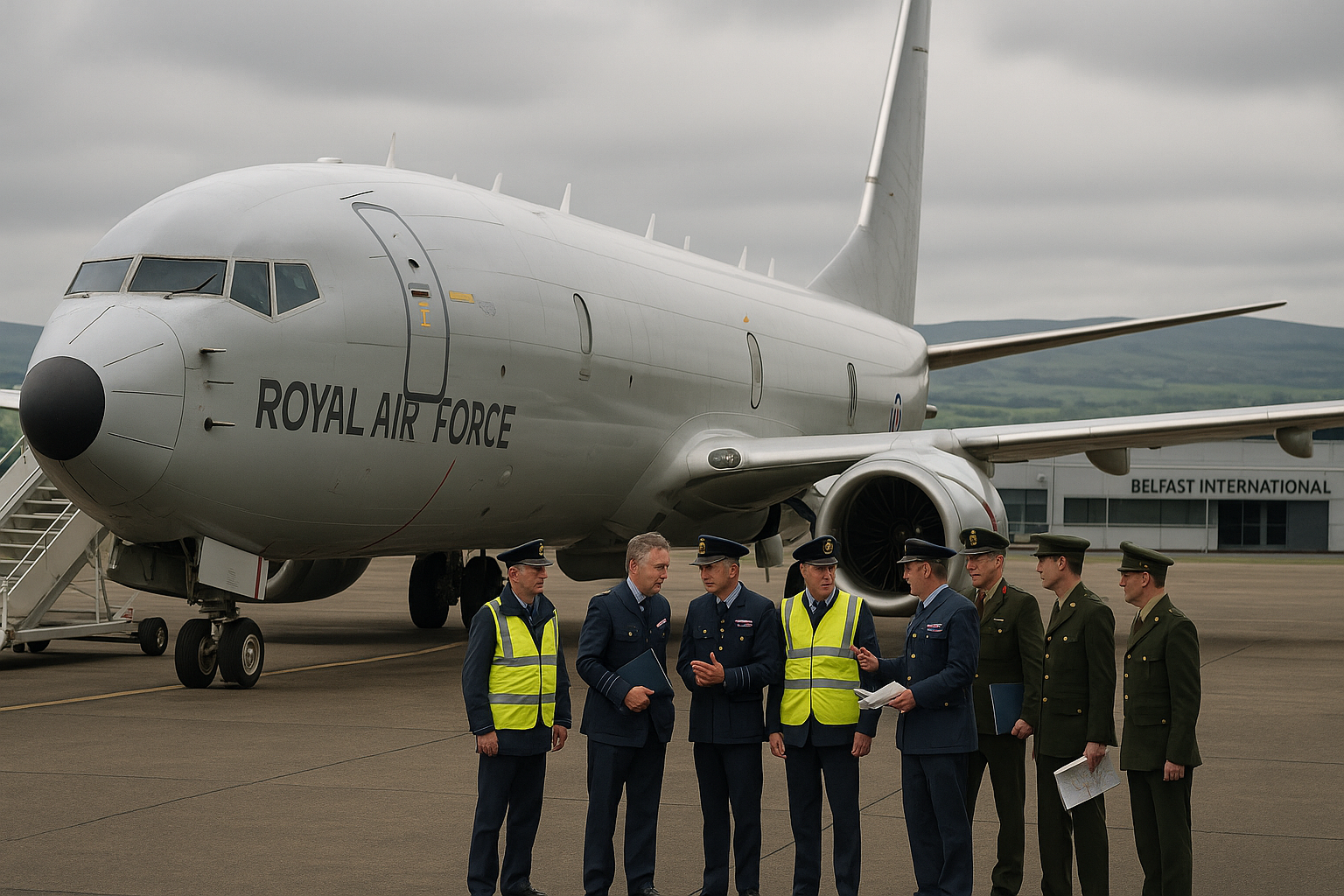
Top military commanders have asserted that the island of Ireland holds an "absolutely critical position" in the context of growing geopolitical tensions with Russia. Brigadier Piers Ashfield, joint military commander in Northern Ireland, made the statement following a joint UK-Ireland search and rescue exercise that saw an RAF P-8 Poseidon maritime patrol aircraft operate from Aldergrove in Co Antrim for the first time. Wing Commander Rob McCartney described the deployment as a "physical manifestation" of an updated memorandum of understanding to enhance bilateral defence cooperation.
McCartney stressed the strategic importance of the island's location in the North Atlantic, particularly given an increase in Russian naval operations in the region, and signalled the RAF's intent to work more closely with its Irish partners. The P-8 Poseidon is one of the most advanced maritime patrol aircraft in the world, capable of tracking submarines, surface vessels, and conducting search and rescue operations over vast areas of ocean. Its deployment to Aldergrove — the RAF base in Co Antrim — represents a significant practical demonstration of the deepening UK-Ireland security relationship.
Why It Matters
The deepening of UK-Ireland defence cooperation is a significant development that reflects the changed security environment in Europe. For Ireland, the challenge is to enhance its contribution to collective security without formally abandoning its neutrality — a balance that is becoming increasingly difficult to maintain as the security threats facing Europe intensify. For the UK, which left the EU in 2020 but remains deeply committed to European security through NATO and bilateral arrangements, the relationship with Ireland is a critical component of its North Atlantic security architecture. The island of Ireland's position at the western edge of Europe makes it strategically important for monitoring Russian naval activity in the North Atlantic, and the RAF's use of Aldergrove for maritime patrol operations is a practical expression of that strategic reality. Unlike Sweden and Finland, which formally joined NATO in 2023 and 2024 respectively, Ireland has chosen to deepen its security cooperation through bilateral arrangements and EU mechanisms rather than full NATO membership — an approach that reflects the political constraints of Irish neutrality but may become increasingly difficult to sustain as security pressures intensify.
Local Impact
For communities in Northern Ireland, the RAF's use of Aldergrove for maritime patrol operations is a reminder of the province's strategic importance within the UK's defence architecture. The base, which is also home to Belfast International Airport, has a long history of military use and its continued role in UK defence operations is significant for the local economy and employment. In the Republic of Ireland, the joint exercise and the commanders' statements about Ireland's strategic importance will reignite the debate about neutrality and defence spending. The Irish government has been under pressure to increase defence spending to meet the 2% of GDP target that NATO members are expected to achieve, and the latest developments will add to that pressure. For communities along the west coast of Ireland, the increased military activity in the North Atlantic is a reminder of the geopolitical tensions that are reshaping the security environment across Europe.
What's Next
The updated memorandum of understanding between the UK and Ireland on defence cooperation is expected to be published in the coming months, setting out the framework for future joint exercises and information sharing. The Irish government's defence review, which is examining the country's security arrangements in light of the changed geopolitical environment, is expected to report by the end of 2026. Watch for the publication of the defence review and any announcements about increased Irish defence spending or new bilateral arrangements with the UK, which will be the clearest indication of how Ireland intends to navigate the tension between its neutrality tradition and the security realities of the current era.
Sources: RTÉ News — Ireland Russia strategic importance, 27 April 2026; Politico