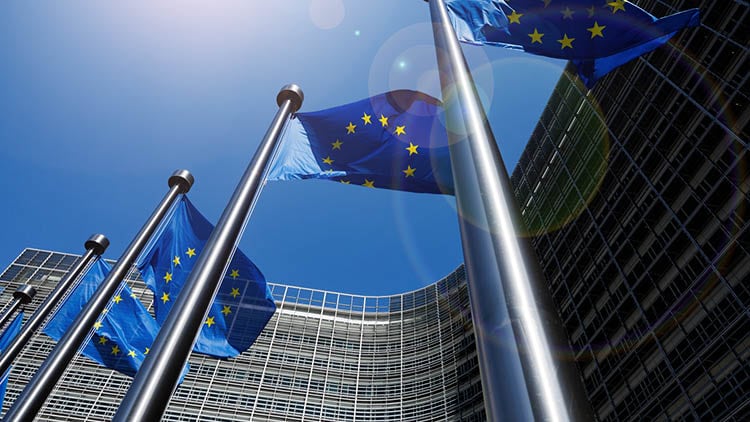
Ireland Emerges as Unlikely EU Power Broker as Presidency Approaches and Diplomatic Influence Grows
Ireland has emerged as one of the European Union's most influential smaller member states, with political analysts and EU officials noting that Dublin's diplomatic positioning on issues ranging from trade policy to defence cooperation has given the country an outsized role in shaping the bloc's direction — a development that reflects both Ireland's strategic acumen and the particular moment in European politics.
Background
Ireland's relationship with the European Union has been one of the defining features of the country's modern political identity. Since joining the then-European Economic Community in 1973, Ireland has consistently been among the most pro-European member states, with successive governments viewing EU membership as central to the country's economic development, political stability, and international standing.
The country's EU credentials were tested during the financial crisis of 2008 to 2013, when Ireland was forced to accept an EU-IMF bailout programme that imposed severe austerity conditions. The experience was painful, but Ireland's subsequent recovery — driven in large part by its position as a hub for US multinational investment within the EU single market — reinforced the country's commitment to European integration and demonstrated the economic benefits of EU membership in concrete terms.
In recent years, Ireland's diplomatic profile within the EU has grown considerably. The Brexit negotiations, in which Ireland's interests — particularly the protection of the Good Friday Agreement and the avoidance of a hard border on the island of Ireland — were central to the EU's negotiating position, demonstrated that a small member state could exercise significant influence when its interests aligned with broader EU principles.
Key Developments
Political analyst Gavan Reilly, writing in The Journal, has documented how Ireland has moved from being perceived as "Europe's problem child" — a reference to the country's initial rejection of the Lisbon Treaty in 2008 — to its current position as an "unlikely power broker" within the EU. The transformation reflects a combination of factors: Ireland's economic success, its diplomatic relationships with both the United States and the United Kingdom, and its ability to build coalitions among smaller member states on issues of shared concern.
The country's upcoming EU Council Presidency — Ireland is scheduled to hold the rotating presidency in the second half of 2026 — is expected to further amplify its influence. The presidency gives the holder country significant agenda-setting power and the opportunity to shape the EU's legislative programme over a six-month period. Ireland's government has indicated that it intends to prioritise issues including housing, competitiveness, and the implementation of the EU's defence cooperation agenda during its presidency.
The Taoiseach's recent meetings with European Commission President Ursula von der Leyen and other EU leaders have been characterised by a confidence and assertiveness that reflects Ireland's growing diplomatic standing. On issues such as the Occupied Territories Bill — Ireland became the first EU member state to ban goods from Israeli settlements — Ireland has been willing to take positions that place it at odds with some larger member states, demonstrating an independence of judgment that has enhanced rather than diminished its credibility.
Why It Matters
Ireland's emergence as an EU power broker matters for several reasons. For Irish citizens, it means that the country's interests are more likely to be reflected in EU policy decisions — from trade agreements to regulatory frameworks to defence cooperation. For the EU as a whole, Ireland's diplomatic role is valuable precisely because it is a small, open economy with strong transatlantic ties that can serve as a bridge between different perspectives within the bloc. The country's ability to maintain close relationships with both the United States and the United Kingdom — despite Brexit — gives it a unique vantage point that larger member states sometimes lack. Ireland's influence is also a reminder that in the EU, diplomatic skill and coalition-building can compensate for the absence of the raw economic or military power that determines influence in other international forums.
Local Impact
Ireland's growing EU influence has practical implications for Irish businesses, workers, and communities. The country's ability to shape EU regulatory frameworks — from data protection to financial services to agricultural policy — directly affects the operating environment for Irish enterprises and the services available to Irish citizens. The upcoming EU Presidency will bring significant logistical and economic activity to Ireland, with hundreds of EU meetings scheduled to take place in Dublin and other Irish cities over the six-month period. The Department of Foreign Affairs has estimated that the presidency will generate significant economic activity for the Irish hospitality and events sector.
What's Next
Ireland's EU Council Presidency begins in the second half of 2026, with the government expected to publish its presidency programme in the coming weeks. The Taoiseach is scheduled to address the European Parliament in Strasbourg in September to outline Ireland's priorities for the presidency. Key legislative files expected to be advanced during the Irish presidency include the EU Housing Affordability Act, the European Defence Investment Programme, and the review of the EU's trade policy framework.