Ireland Weighs Nuclear Option as Data Centre Demand and Energy Crisis Force Policy Rethink
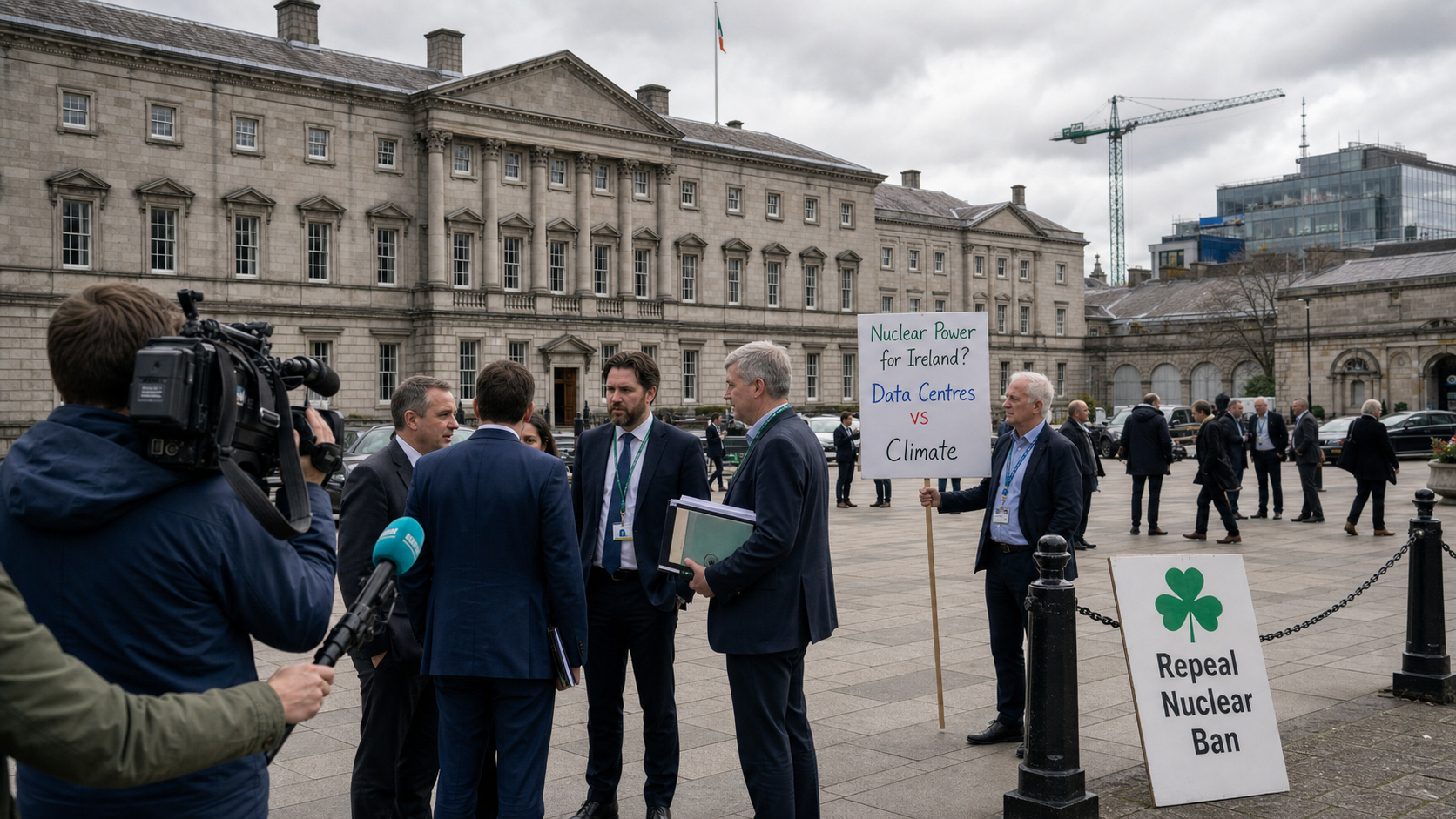
Ireland is facing mounting pressure to reconsider its long-standing legal prohibition on nuclear energy as a fresh electricity crisis looms, driven by the insatiable demand of the country's rapidly expanding data centre sector and the failure of renewable energy capacity to keep pace with consumption growth — a combination that has pushed the nuclear debate from the fringes of Irish politics to its centre in the space of a single year.
Background
Ireland has been legally prohibited from generating electricity through nuclear fission since the Electricity Regulation Act 1999 and the Planning and Development Act 2000 effectively banned the technology. That prohibition reflected the political consensus of the time, shaped by public anxiety about nuclear safety in the aftermath of Chernobyl and by Ireland's relatively small grid, which was seen as unsuitable for large baseload nuclear generation.
The energy landscape has changed dramatically since 1999. Ireland's electricity demand has grown substantially, driven in large part by the explosion of data centre construction in the Dublin region and along the east coast. Data centres now account for approximately a fifth of Ireland's total electricity consumption, a proportion that is expected to rise further as artificial intelligence applications drive demand for computing power. The grid operator EirGrid has warned repeatedly that demand growth is outpacing the development of new generation capacity, and that Ireland faces a genuine risk of supply shortfalls in the coming years.
Against this backdrop, Fianna Fáil TD James O'Connor introduced the Electricity Regulation (Removal of Nuclear Fission Prohibitions) Bill 2026 in May, which would remove the legal barriers to nuclear generation in Ireland. The bill is expected to be debated in the Dáil within six months of its submission.
Key Developments
Taoiseach Micheál Martin has expressed an "openness" to nuclear technology, though he has maintained reservations about the substantial costs and long construction timelines associated with new nuclear plants. Former Green Party leader Eamon Ryan has publicly advocated for a future energy mix incorporating both renewables and nuclear power — a striking evolution for a politician who built his career on opposition to nuclear energy.
The technology most frequently discussed in the Irish context is Small Modular Reactors, a newer generation of nuclear technology that proponents argue is better suited to smaller grids and can be deployed more quickly than conventional large-scale nuclear plants. The ESB's 2025 Emerging Technology Insights report, however, labelled SMR technology as currently unproven for the Irish market, a caution that has been cited by opponents of the nuclear option.
A Red C survey for KPMG in February 2026 found that approximately one in three Irish adults supports building nuclear power plants, while about 45 per cent remain opposed — a level of public scepticism that politicians will need to navigate carefully if the debate is to move from discussion to policy.
Why It Matters
The nuclear debate in Ireland is ultimately a debate about what kind of energy system the country wants and needs for the next fifty years. The renewable energy sector has made remarkable progress — Ireland now generates a significant proportion of its electricity from wind — but the intermittency of wind and solar generation means that a reliable baseload source is needed to ensure security of supply. The alternatives to nuclear — gas peakers, battery storage, interconnection with the UK and European grids — each have their own limitations and costs. The data centre sector, which has been a major driver of economic growth and employment in Ireland, is also a major driver of the energy challenge, and the question of whether that sector should be allowed to continue expanding without a credible plan for meeting its energy needs is one that the government has been reluctant to confront directly.
Local Impact
The energy crisis has tangible consequences for Irish households and businesses. The solar eclipse earlier this week provided a dramatic illustration of Ireland's vulnerability, with solar power generation dropping to near zero during the period of maximum coverage and the grid having to draw on backup generation to maintain supply. For households already facing rising electricity bills — Pinergy announced a 7.6 per cent increase this week — the prospect of further supply constraints and price volatility is a source of genuine anxiety. Rural communities in particular, which are often the last to benefit from grid investment, are watching the energy debate closely.
What's Next
The O'Connor bill is expected to be debated in the Dáil in the autumn. The government has indicated it will commission an independent assessment of the role nuclear energy could play in Ireland's future energy mix, with results expected by the end of 2026. The Commission for Regulation of Utilities is also reviewing the framework for data centre connections to the grid, with new rules expected to impose stricter requirements on data centres to demonstrate that their energy needs can be met without compromising supply security for other users.