Ireland's New E-Scooter Rules Take Hold as Gardaí Record 1,400 Seizures and Warn of Outright Ban
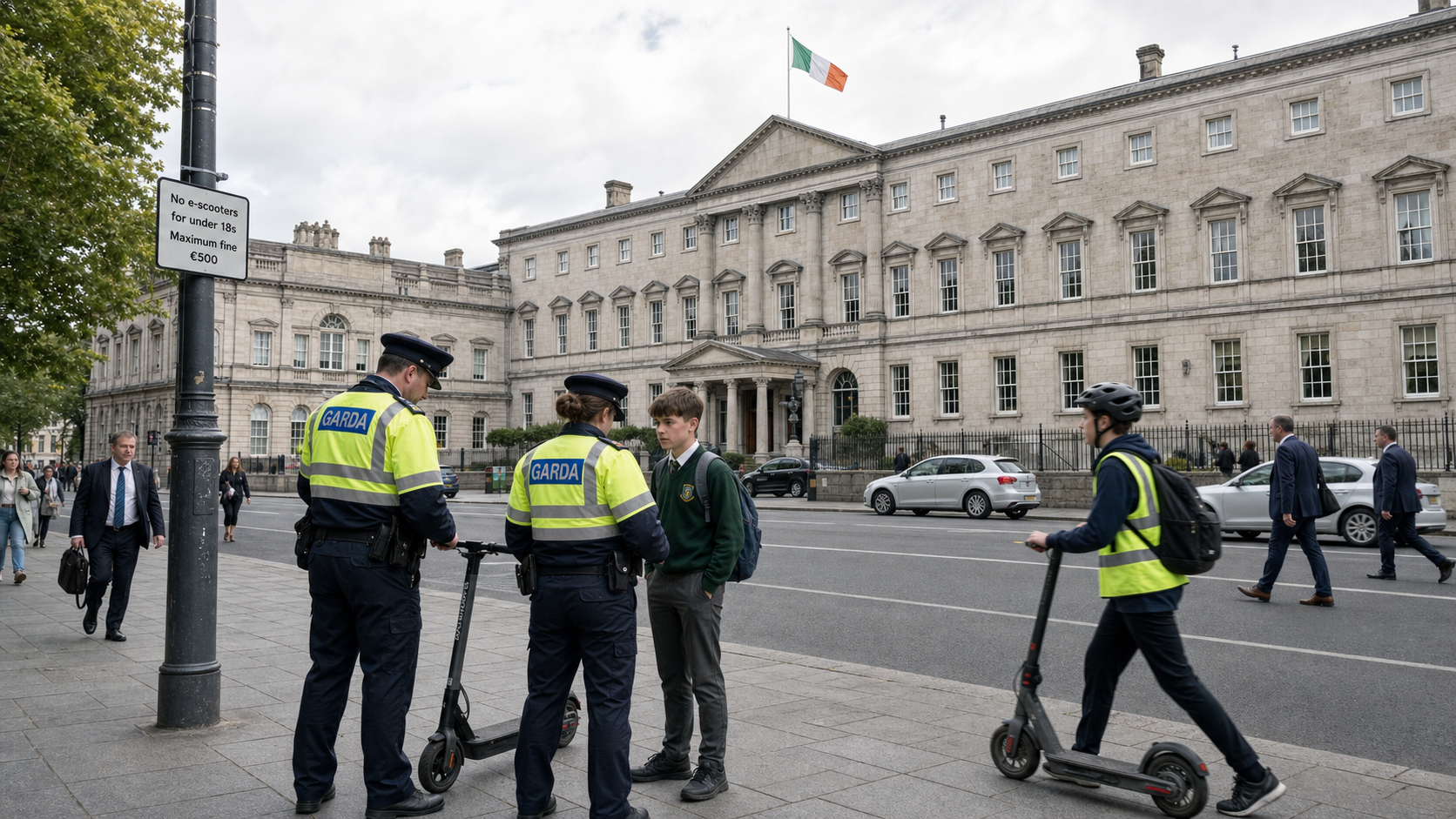
Ireland's new e-scooter regulations — banning under-18s from riding, mandating helmets and high-visibility clothing, and doubling the fees for seized devices — are now firmly in force, with An Garda Síochána having seized more than 1,400 e-scooters and recorded nearly 800 prosecutions in the first part of 2026, as the government warns that an outright ban on all e-scooters remains on the table if safety does not improve.
Background
E-scooters have become a significant feature of Irish urban life over the past three years, with the devices proliferating rapidly in Dublin, Cork, Galway, Limerick, and other cities. Their popularity has been driven by their convenience and relatively low cost, and they have been embraced by commuters, students, and leisure users alike. But the growth in e-scooter use has been accompanied by a sharp increase in accidents, particularly involving children.
Data from Children's Health Ireland revealed that e-scooter accidents accounted for more than one-third of all paediatric traumatic brain injury admissions at Temple Street Hospital in 2026 — a 50% increase on the previous year. The figures prompted urgent action from the government, which agreed new regulations in July 2026 and moved quickly to implement them. The speed of the government's response reflected the severity of the public health concern and the political pressure generated by the CHI data.
The regulatory landscape for e-scooters in Ireland has been complicated by the fact that the devices occupy an ambiguous legal position — not quite bicycles, not quite motor vehicles — that existing legislation was not designed to address. The new rules represent the most comprehensive attempt yet to bring e-scooters within a clear regulatory framework.
Key Developments
The new regulations, which came into force in late July 2026, prohibit the use of e-scooters by anyone under the age of 18, require all riders to wear helmets and high-visibility clothing, and increase on-the-spot fines for offences to €100. The fees associated with the release of seized or detained e-scooters have been doubled. Gardaí have been given additional powers to pursue e-scooter and e-bike riders, mirroring similar provisions in the UK.
The enforcement figures are striking: more than 1,400 e-scooters seized and nearly 800 prosecutions in the first part of 2026, before the new regulations even came into force. Since the regulations took effect, Garda enforcement has intensified, with targeted operations in Dublin city centre, Cork's Grand Parade, and Galway's Shop Street. Minister for Transport Darragh O'Brien and Minister of State Seán Canney have both emphasised that enforcement will continue to be a priority.
Why It Matters
The e-scooter issue is a microcosm of a broader challenge facing Irish policymakers: how to regulate rapidly evolving technologies in a way that captures their benefits while managing their risks. The government's response has been broadly welcomed by road safety advocates, who have long argued that the absence of clear rules was contributing to dangerous behaviour. The Dublin Commuter Coalition and other advocacy groups have cautioned, however, that the effectiveness of the new rules depends entirely on the resources and training available to Gardaí for enforcement — and that without sustained investment in enforcement capacity, the regulations risk becoming a paper exercise.
The government's warning that an outright ban remains possible is significant. It signals that the new regulations are being treated as a last chance for the e-scooter industry to demonstrate that the devices can be used safely, rather than as a permanent settlement of the regulatory question. If accident rates do not fall, the political pressure for a more drastic response will be difficult to resist.
Local Impact
In Dublin, where e-scooters are most prevalent, the new regulations have already changed the visible landscape of the city's streets. Garda checkpoints targeting e-scooter users have become a regular feature in the city centre, and the sight of riders in helmets and high-visibility vests — previously rare — is becoming more common. In Cork, Galway, and Limerick, similar enforcement operations have been conducted, with local Garda divisions reporting significant numbers of seizures. The impact on younger users has been particularly noticeable: the ban on under-18s has removed a significant cohort of riders from the streets, and schools across the country have been asked to reinforce the message with students.
What's Next
The government has indicated that further legislative steps are planned to classify e-scooters as "mechanically propelled vehicles," which would introduce a mandatory licensing and registration scheme. The specific testing requirements for these licences are still being finalised, but the intention is to create a system that improves traceability of ownership and makes it easier to enforce the rules. A review of the new regulations' effectiveness is expected to be conducted before the end of 2026, with the results informing decisions about whether further action — including the possibility of an outright ban — is required. The Road Safety Authority has been asked to contribute to the review process.