Ireland Approves Procurement of National Electronic Health Record in Landmark Digital Shift
The Irish Government has given the green light for the Health Service Executive (HSE) to begin the procurement process for a National Electronic Health Record (EHR) system, a move that has been hailed as a "landmark step" in the modernisation of the country's health service. The project, which will be the largest digital transformation in the history of Irish healthcare, aims to create a single, secure, and integrated digital health record for every patient in the country.Background
For decades, Ireland's health service has been hampered by a fragmented and paper-based system of record-keeping. Patient information is often held in multiple locations, in different formats, and is not easily accessible to clinicians at the point of care. This can lead to delays in treatment, duplication of tests, and an increased risk of medical errors. The lack of a unified digital infrastructure has been a long-standing source of frustration for both healthcare professionals and patients, and has been identified as a major barrier to the delivery of safe, efficient, and integrated care.
The vision of a national EHR has been a central plank of the Sláintecare reform programme, the cross-party plan to transform Ireland's health and social care services. The ambition is to create a system where a patient's complete medical history, from their GP records to their hospital admissions, is available to authorised clinicians in a single, easily accessible digital file. This "one patient, one record" approach is seen as essential for breaking down the silos between different parts of the health service and enabling a more coordinated and patient-centred model of care.
The Government's approval to commence procurement follows the completion of a detailed Preliminary Business Case and a rigorous independent assurance process. This has confirmed that the project is compliant with the State's Infrastructure Guidelines and represents a sound investment of public money. The decision marks the formal start of a multi-year journey to deliver one of the most complex and ambitious public sector projects ever undertaken in Ireland.
Key Developments
Announcing the Government's decision, the Minister for Health, Jennifer Carroll MacNeill, described it as a "landmark step in delivering a modern, connected health service that puts patients first." She stated that the National EHR "will be central to patients receiving safer, faster, and more integrated care, supporting clinicians and improving outcomes for everyone." Her comments were echoed by the HSE's Chief Executive, Bernard Gloster, who said the project is "central to our vision for a digitally enabled health service" and will "transform how care is delivered."
The procurement process will begin with a shortlisting phase, where the HSE will invite potential vendors to submit their qualifications and proposals. This is a highly competitive international market, with a number of major global technology companies specialising in the provision of large-scale EHR systems. The HSE will be looking for a partner with a proven track record of successful delivery in other national health systems. The tender process is expected to be lengthy and complex, with a phased rollout of the new system to follow once a contract is awarded.
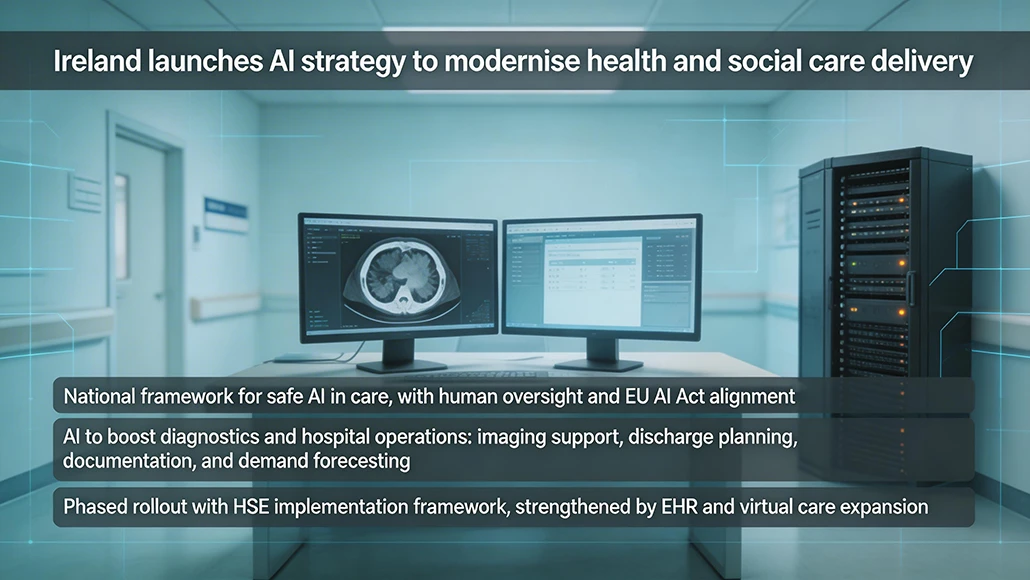
The National EHR project is part of a wider "Digital for Care" strategy that is already delivering significant changes to the health service. Other key initiatives include the HSE Health App, which has seen over 200,000 downloads since its launch in 2025, and the Maternal and Newborn Clinical Management System, which is now live in five major maternity hospitals. The legal framework for the new system is also being put in place, with the Health Information Bill currently progressing through the Oireachtas.
Why It Matters
The move to a national EHR is a game-changer for the Irish health service. For patients, it will mean safer and more convenient care. Having a single, comprehensive record will reduce the risk of errors, eliminate the need for patients to repeatedly provide their medical history, and give them greater access to and control over their own health information. For clinicians, it will provide instant access to the information they need to make the best possible decisions, freeing up valuable time that is currently spent chasing paper records and duplicating tests.
At a system level, the National EHR will be a powerful engine for reform and innovation. The vast repository of anonymised data it creates will be an invaluable resource for population health management, clinical research, and service planning. It will enable the health service to identify trends, predict future demand, and design more effective and targeted interventions. Unlike the UK's NHS, which has struggled with fragmented digital systems across different trusts, Ireland has the opportunity to build a truly unified national system from the outset — a significant strategic advantage. The successful delivery of the National EHR will also be a major statement of intent about Ireland's ambition to be a leading digital nation.
Local Impact
The implementation of a national EHR will have a profound impact on every local community in Ireland. Every individual who interacts with the health service, from a routine GP visit to a major hospital procedure, will have their information recorded on the new system. This will lead to a more consistent and joined-up experience of care, regardless of where a patient lives. The project will also have a significant impact on the healthcare workforce in every part of the country. Doctors, nurses, and other healthcare professionals will need to be trained on the new system and supported to adapt to new ways of working. The project will also create new employment opportunities in the field of digital health, both within the HSE and in the wider technology sector.
What's Next
With Government approval secured, the HSE will now move forward with the procurement process. The legal framework for the new system is also being put in place, with the Health Information Bill currently progressing through the Oireachtas. This legislation will provide the legal basis for secure data sharing and ensure compliance with the highest standards of data protection. The journey to a fully implemented National EHR will be a long and challenging one, with many technical, logistical, and cultural hurdles to overcome. However, the Government's decision to press ahead with procurement marks a critical point of no return. After years of discussion and debate, the vision of a modern, connected, and digitally enabled health service for Ireland is finally on the path to becoming a reality.
Sources: Department of Health | Health Service Executive