Ireland and UK to Expand Data-Sharing and Intelligence Operations to Secure Common Travel Area After Belfast Unrest
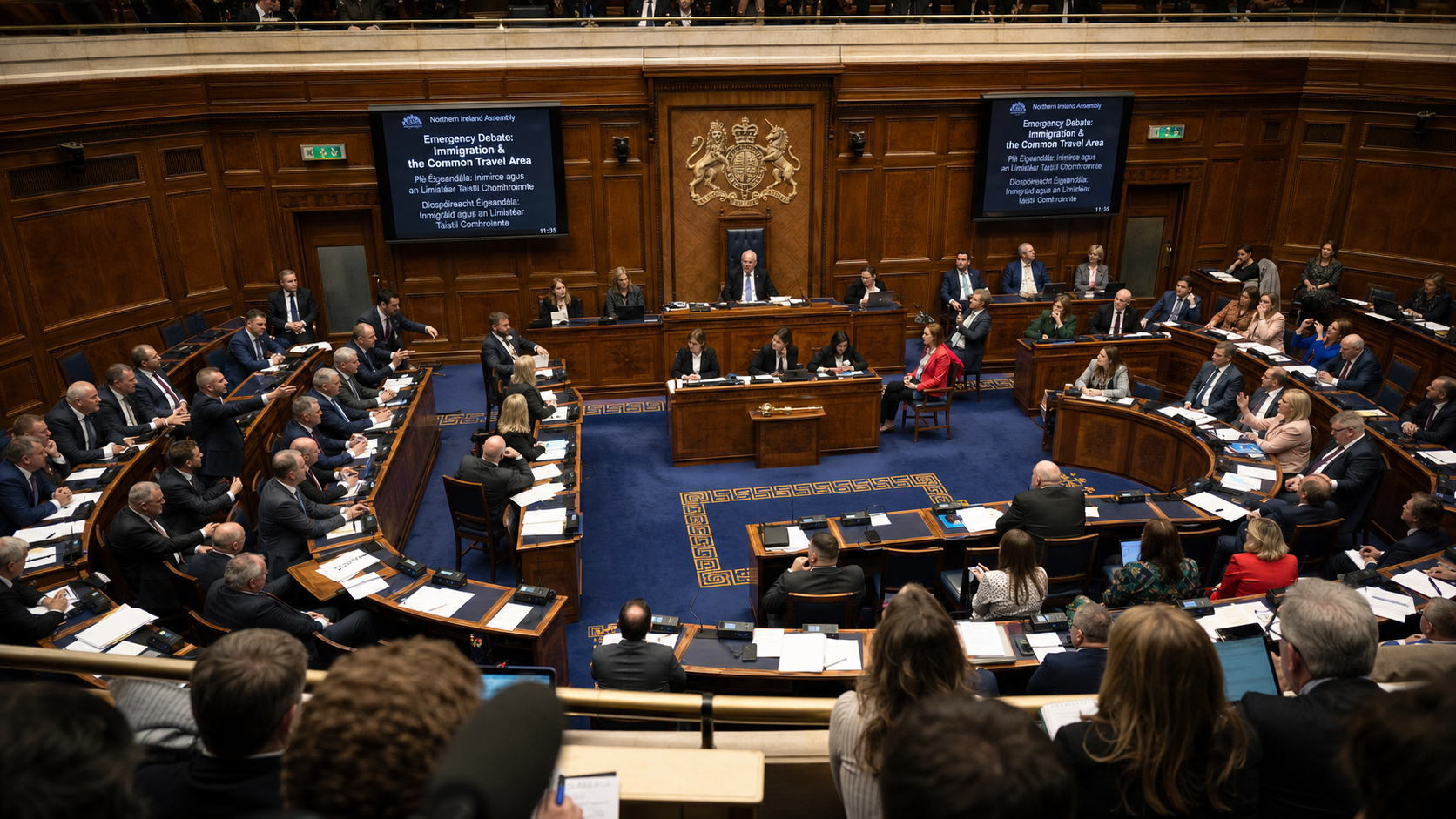
The Irish and British governments have announced a significant enhancement of their cooperation on border security, committing to expanded data-sharing arrangements and more intensive intelligence-led operations to prevent the abuse of the Common Travel Area. The announcement comes in the direct aftermath of the violent disorder in Belfast, which was triggered by a stabbing allegedly carried out by a man who had entered Northern Ireland via Dublin, and it has placed the CTA under the most intense political scrutiny it has faced in years.
Background
The Common Travel Area is one of the most significant and least understood features of the relationship between Ireland and the United Kingdom. Established in the 1920s, it allows citizens of both countries to move freely between Ireland, the United Kingdom, the Isle of Man, and the Channel Islands without passport controls. It predates both Irish independence and the European Union, and it has survived Brexit — though not without significant political and legal complexity.
The CTA has always operated on the basis of a degree of mutual trust between the two governments, with each relying on the other to manage its external borders effectively. The arrangement has generally worked well, but it has periodically come under pressure when questions arise about the movement of individuals who pose a security risk or who are subject to immigration restrictions in one jurisdiction but not the other.
The events in Belfast brought these questions into sharp focus. The man arrested in connection with the North Belfast stabbing had reportedly entered the island of Ireland through Dublin Airport before travelling north. This raised immediate questions about whether the Irish immigration system had failed to identify him as a person of concern, and whether better information-sharing between the Irish and British authorities could have prevented his travel to Northern Ireland.
Key Developments
RTÉ reported this week that the Irish and British governments have agreed to a package of enhanced cooperation measures, including the sharing of immigration and criminal records data in real time, joint intelligence assessments of individuals who may pose a risk to either jurisdiction, and enhanced coordination between the Garda National Immigration Bureau and the UK Border Force. The measures are described as building on existing cooperation arrangements rather than replacing them, but officials on both sides acknowledge that the scale and speed of information-sharing will be significantly increased.
The announcement was made jointly by the Irish Minister for Justice and the UK Home Secretary, who issued a statement emphasising their shared commitment to the security of the CTA and their determination to prevent its abuse. The statement was careful to frame the enhanced cooperation as a security measure rather than a border control measure — a distinction that is politically important given the sensitivity of any suggestion that the Irish border might be hardened.
DUP leader Gavin Robinson has called for more radical action, arguing that the CTA has become a "porous border" that is being exploited by people who should not be in either jurisdiction. His comments have been rejected by the Irish government and by Alliance and SDLP, who argue that the CTA is a fundamental feature of the relationship between the two islands and must not be undermined.
Why It Matters
The CTA debate matters because it sits at the intersection of several of the most sensitive issues in Irish and British politics: immigration, border security, the peace process, and the constitutional status of Northern Ireland. Any significant change to the CTA — whether in the form of enhanced checks, data-sharing, or new legal frameworks — has implications that extend well beyond the immediate security question.
The political dynamics are complex. In Northern Ireland, unionist parties have used the events in Belfast to argue for a tougher approach to immigration and border management, while nationalist and cross-community parties have emphasised the importance of maintaining the open border as a symbol and a practical expression of the Good Friday Agreement. In the Republic, the government is trying to balance its commitment to the CTA with the political pressure to be seen to be taking security seriously.
The UK government's position is also complicated by its own domestic politics. The announcement of a £3.7 billion immigration enforcement drive by the Home Office — reported in the same week as the Belfast disorder — has created a political context in which any suggestion of laxity on border security is politically toxic. The pressure on the Irish government to align with the UK's tougher approach is real, even if the two countries' legal and constitutional frameworks are very different.
Local Impact
In practical terms, the enhanced data-sharing arrangements will be felt most immediately at Dublin Airport and at the main road crossing points between the Republic and Northern Ireland. Garda and PSNI officers will have access to a wider range of information about individuals crossing the border, and the processing of that information will be faster and more systematic than before. For the vast majority of people who cross the border every day for work, family, and leisure, the changes will be invisible. For a small number of individuals who are of concern to the authorities, the enhanced cooperation will make it significantly harder to move undetected between the two jurisdictions.
What's Next
The two governments have committed to a formal review of the enhanced cooperation arrangements after six months, with a report to be presented to both the Irish Cabinet and the UK Cabinet in December 2026. The Oireachtas Justice Committee and the Westminster Home Affairs Committee are both expected to hold hearings on the CTA security question in the autumn. The British-Irish Intergovernmental Conference, which provides a formal framework for cooperation between the two governments on matters relating to Northern Ireland, is expected to discuss the CTA at its next meeting in September.