Stormont Immigration Debate Exposes Deep Divisions as Unionist Calls for Border Controls Clash with Nationalist Warnings
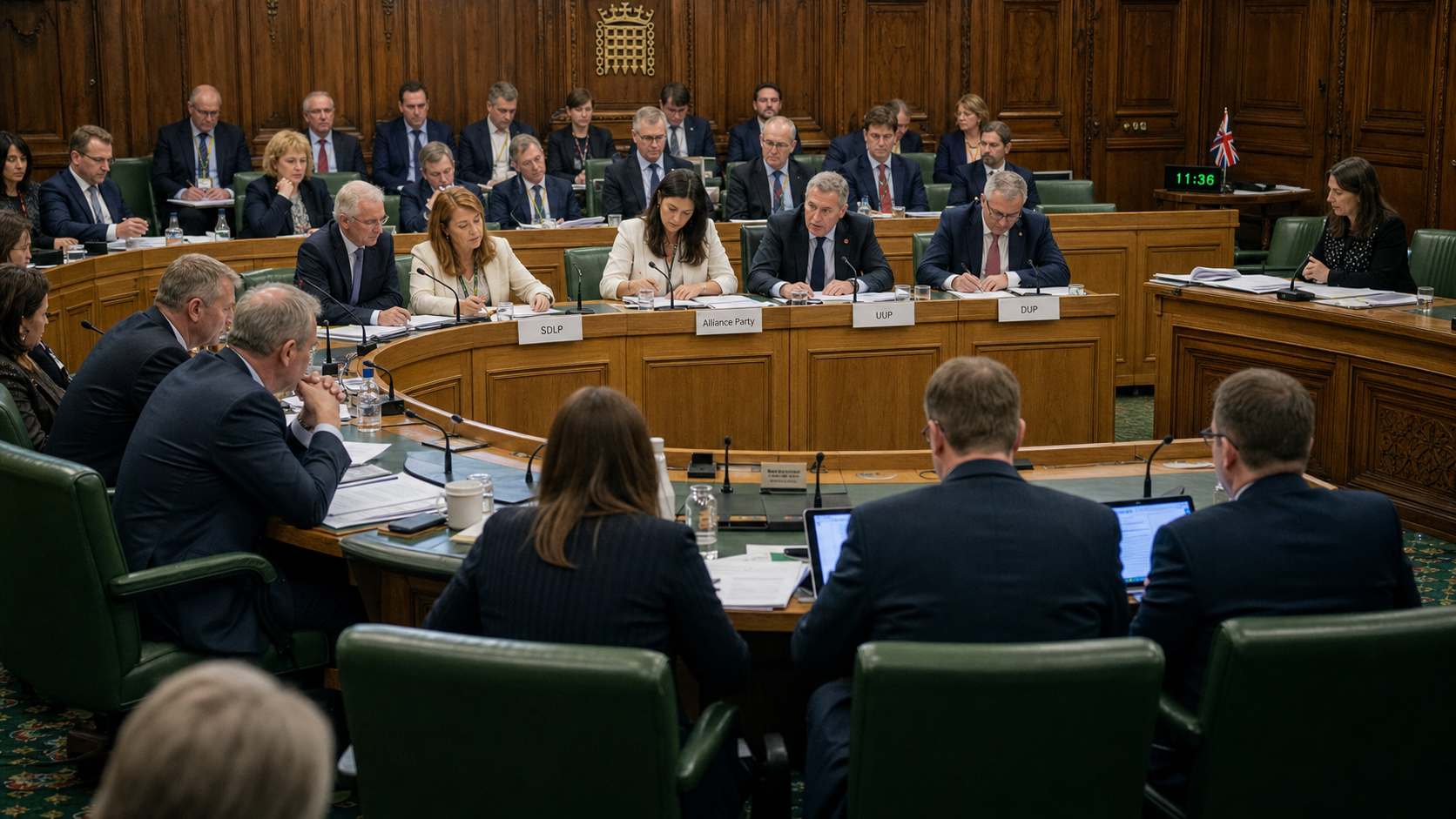
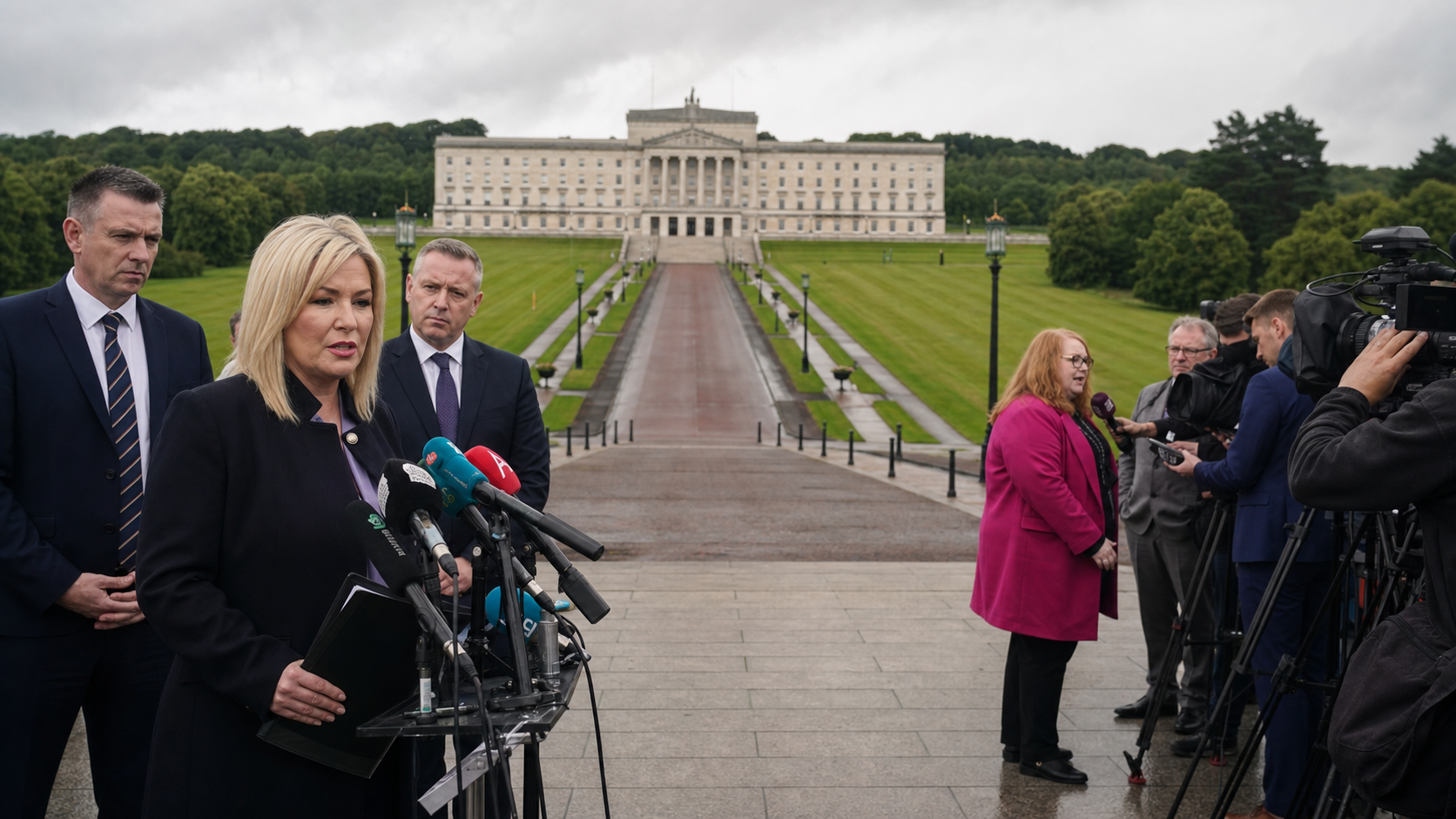
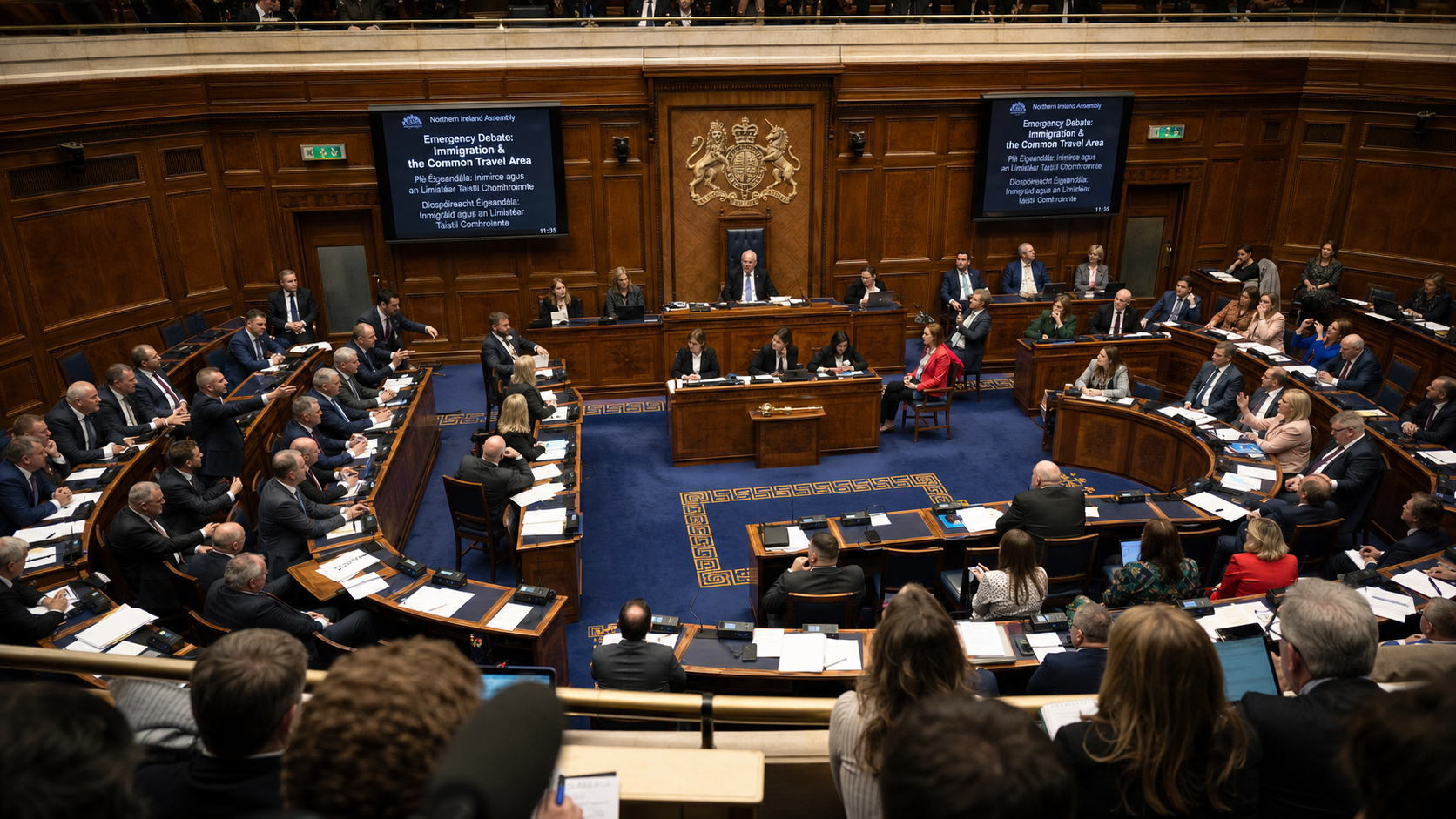
The violent disorder that swept Belfast and surrounding areas in the wake of a north Belfast stabbing has triggered a fractious and revealing debate at Stormont about immigration policy, with unionist politicians calling for stricter controls on the Common Travel Area and an end to what they describe as "uncontrolled immigration," while nationalist and cross-community parties warn that weaponising the tragedy to advance an anti-immigration agenda would be both morally wrong and politically dangerous.
Background
Immigration has been a politically sensitive issue in Northern Ireland for years, but the events of June 2026 have brought it to the centre of the Assembly's agenda in a way that was not anticipated. The disorder was triggered by a knife attack in north Belfast, and the fact that the suspect allegedly entered Northern Ireland via Dublin — travelling through the Common Travel Area — has given unionist politicians a specific policy hook on which to hang their calls for stricter border management.
The Common Travel Area, which allows free movement between Ireland and the United Kingdom without passport checks, is one of the oldest and most fundamental features of the relationship between the two islands. It predates both the EU and the Good Friday Agreement, and it is deeply embedded in the daily lives of people on both sides of the border — the tens of thousands who commute across it for work, the families who straddle it, the businesses that depend on it. Any significant change to the CTA would have profound implications for the Good Friday Agreement, which explicitly envisages an open border as part of the settlement.
The UK government's announcement of a £3.7 billion immigration enforcement drive through 2029, and its decision to increase spot checks on cross-border routes, has added a practical dimension to the political debate. Dublin has responded by warning that any measures must not undermine the Good Friday Agreement, and the two governments have committed to expanding data-sharing and intelligence-led operations as a compromise that stops short of physical border checks.
Key Developments
The debate at Stormont has been characterised by a fundamental disagreement about the nature of the problem and the appropriate response. DUP leader Gavin Robinson and other unionist figures have argued that the CTA has been exploited by individuals who use the open border to evade immigration controls, and that this represents a genuine security risk that requires a policy response. They have called for enhanced checks at ports of entry and for greater information-sharing between UK and Irish immigration authorities.
Sinn Féin, the SDLP, and Alliance have pushed back strongly against this framing. They argue that the disorder was driven by racism and far-right ideology, not by immigration policy failures, and that using the events to justify stricter border controls would be both factually misleading and politically irresponsible. They have pointed out that the vast majority of people who travel through the CTA do so entirely legitimately, and that the introduction of border checks would cause enormous disruption to the daily lives of hundreds of thousands of people while doing little to address the underlying causes of the disorder.
Secretary of State Hilary Benn has attempted to navigate between these positions, acknowledging that there are "questions to answer" about the suspect's transit through Dublin while also emphasising the UK government's commitment to the Good Friday Agreement and the CTA. His comments have satisfied neither side of the debate, with unionists arguing that he is not taking the security concerns seriously enough and nationalists arguing that he is giving undue credibility to the anti-immigration narrative.
Why It Matters
The Stormont immigration debate matters because it is testing the resilience of the power-sharing arrangements in a way that goes beyond the usual disagreements about budget allocations and public service delivery. Immigration touches on questions of identity, belonging, and the kind of society that Northern Ireland wants to be — questions on which the five Executive parties have genuinely different answers that cannot be resolved by the kind of technical compromise that works for most policy disputes. The debate also matters because it is happening in a context where far-right actors are actively trying to exploit the disorder to advance a broader anti-immigration agenda, and where the political response to that agenda will shape the environment in which Northern Ireland's ethnic minority communities live and work for years to come.
Local Impact
The immediate impact of the political debate is felt most acutely by Northern Ireland's ethnic minority communities, who are watching the Stormont discussion with a mixture of anxiety and determination. Community leaders have been clear that they want to see political leadership that unambiguously rejects racism and that does not give credibility to the narrative that immigration is the cause of Northern Ireland's problems. The anti-racism rally at Belfast City Hall, which drew an estimated 3,000 people, demonstrated that there is a significant constituency for that kind of leadership. The challenge for the five Executive parties is to provide it while also engaging seriously with the legitimate policy questions about immigration management that the disorder has raised.
What's Next
The Assembly is expected to debate immigration policy in the coming weeks, with a motion likely to be tabled that will force the five parties to articulate their positions more explicitly. The outcome of that debate will be closely watched as an indicator of whether the surface unity of the joint condemnation statement can be sustained in the face of genuine policy disagreement. The UK and Irish governments are continuing their discussions about enhanced data-sharing and intelligence cooperation on CTA management, and a joint statement on the outcome of those discussions is expected before the end of June. The PSNI's Operation Exposure investigation will continue to generate arrests and charges, providing a steady stream of accountability that all parties have said they welcome.