Westminster Committee Examines Stormont Reform as Parties Debate Assembly's Future
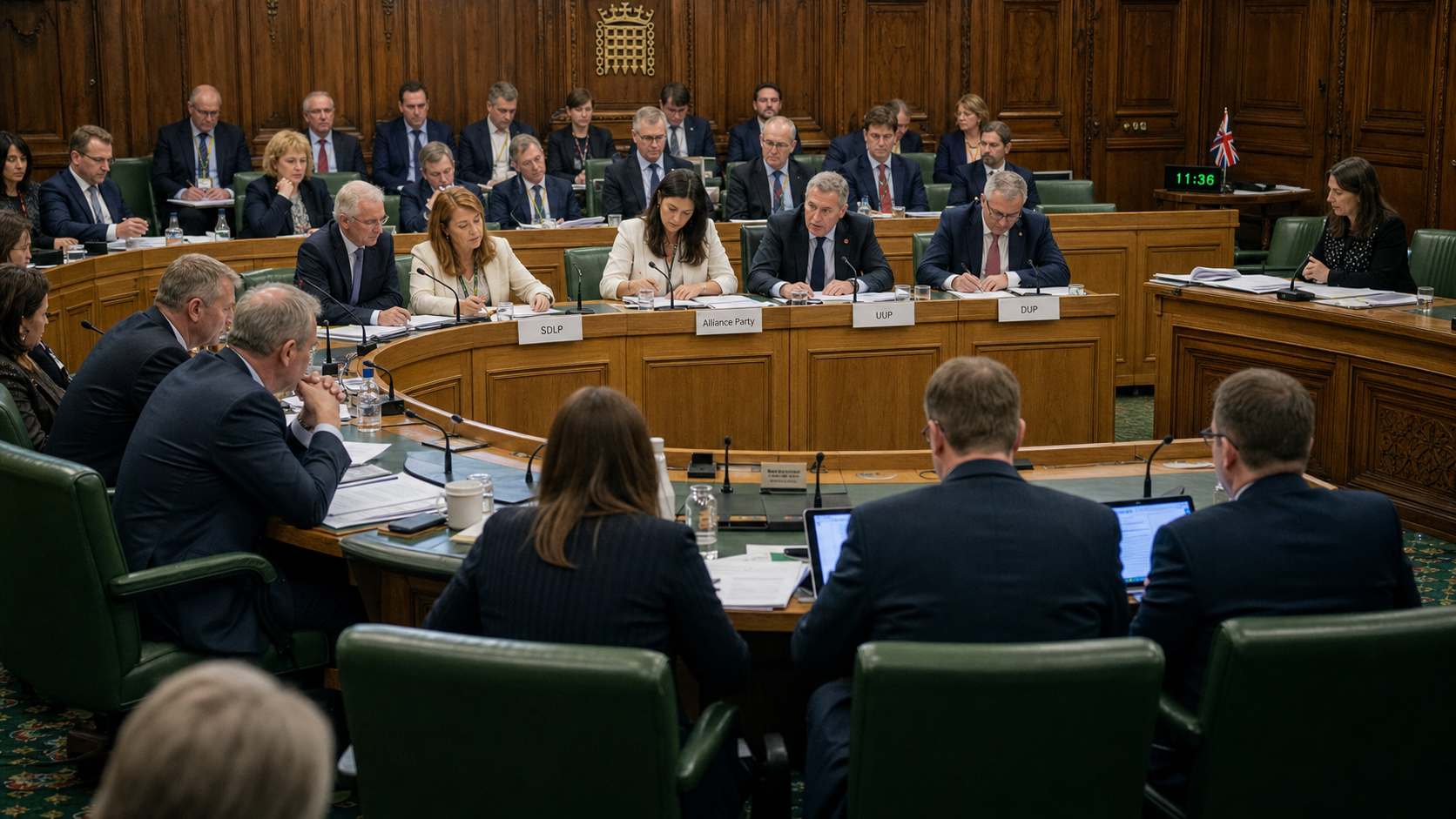
The UK Parliament's Northern Ireland Affairs Committee has held a significant oral evidence session examining options for reforming the Stormont Assembly and Executive, with representatives from the SDLP, Alliance Party, Ulster Unionist Party, and DUP giving evidence on potential changes to the power-sharing arrangements that have governed Northern Ireland since the Good Friday Agreement — a session that reflects growing concern among politicians and observers that the current institutional framework may be hindering effective governance at a time when Northern Ireland faces acute social and economic challenges.
Background
The Stormont Assembly and Executive, established under the Good Friday Agreement of 1998 and refined by subsequent agreements, operate on a power-sharing model that requires the main unionist and nationalist parties to govern together. The system has been praised internationally as a model for conflict resolution, but it has also been criticised for its tendency towards institutional paralysis, with the Executive having collapsed on multiple occasions — most recently for a two-year period from 2022 to 2024 — when one or more of the main parties withdrew from the power-sharing arrangements.
The restoration of the Executive in February 2024, following the DUP's decision to return to power-sharing after securing concessions on the Windsor Framework, was widely welcomed. However, the experience of repeated institutional collapse has prompted a broader debate about whether the current arrangements are fit for purpose and whether reforms are needed to make the institutions more resilient and effective. This debate has been taking place within Northern Ireland's political parties, at Stormont, and now at Westminster, where the Northern Ireland Affairs Committee has launched a formal inquiry into the question.
The inquiry is examining a range of potential reforms, including changes to the nomination process for the First Minister and deputy First Minister, modifications to the cross-community voting requirements that can be used to block legislation, and reforms to the relationship between individual ministers and the Executive as a collective body. These are complex and politically sensitive questions, touching on the fundamental architecture of the Good Friday Agreement and the balance of power between the unionist and nationalist communities.
Key Developments
The oral evidence session on June 17 heard from representatives of the four main parties in the Assembly, each of whom presented their party's perspective on the need for and direction of reform. The SDLP, led by Claire Hanna, argued for reforms that would make the institutions more effective while preserving the cross-community safeguards that are central to the Good Friday Agreement. The Alliance Party, which has been the most vocal advocate for institutional reform, called for changes that would reduce the ability of individual parties to collapse the institutions and would create a more collective approach to Executive decision-making.
The Ulster Unionist Party, now led by Jon Burrows following Doug Beattie's resignation from the party in May 2026, presented a more cautious approach, emphasising the importance of maintaining the consent principle while acknowledging that some reforms might be beneficial. The DUP, which has the most to lose from changes that would reduce the leverage of individual parties, was the most resistant to significant reform, arguing that the current arrangements reflect the political realities of Northern Ireland and should not be changed without broad cross-community support.
The committee's inquiry is expected to produce a report with recommendations for reform later in the year. The UK government will then need to decide whether to legislate for any changes, a process that would require careful negotiation with the Irish government and the Northern Ireland parties given the constitutional significance of the Good Friday Agreement.
Why It Matters
The Stormont reform debate matters because the effectiveness of Northern Ireland's devolved institutions has a direct impact on the quality of public services and the wellbeing of the people they serve. The repeated collapses of the Executive have left Northern Ireland without effective government for extended periods, during which critical decisions on health, education, and infrastructure have been delayed or deferred. The current institutions, while functioning, are widely regarded as less effective than they could be, with ministers often operating in silos rather than as a collective government. Reform that makes the institutions more resilient and more effective would benefit everyone in Northern Ireland, regardless of their political or constitutional preferences. The challenge is to achieve reform that commands sufficient cross-community support to be sustainable.
Local Impact
The reform debate has a direct impact on the communities that depend on Stormont for the delivery of public services. The health service, education system, and infrastructure networks of Northern Ireland are all managed by the devolved institutions, and the effectiveness of those institutions determines the quality of services that people receive. For communities in Belfast, Derry, Newry, and across Northern Ireland, the question of whether Stormont works effectively is not an abstract constitutional matter but a practical question about whether their hospitals are adequately funded, their schools are properly resourced, and their roads and public transport are maintained. The reform debate is therefore ultimately about the quality of life of the people of Northern Ireland, and it deserves to be treated with the seriousness that implies.
What's Next
The Northern Ireland Affairs Committee is expected to hold further evidence sessions on Stormont reform in the coming months, with academic experts, civil society organisations, and community representatives invited to give evidence alongside the political parties. The committee's report is expected to be published before the end of 2026, with recommendations for reform that will then be considered by the UK government. The Irish government, which is a co-guarantor of the Good Friday Agreement, will also need to be consulted on any proposed changes. The Stormont parties are expected to respond to the committee's report with their own positions, setting the stage for what could be a significant period of constitutional negotiation in 2027.