Opposition Fury as Government Narrows Occupied Territories Bill Scope
Sinn Féin and the Labour Party have demanded an emergency Dáil debate after the Government confirmed that the Occupied Territories Bill will not be extended to cover services, a decision that has drawn fierce criticism from opposition benches and civil society groups.
The announcement, made by the Tánaiste on Thursday, confirmed that while the legislation will proceed to ban goods from illegal Israeli settlements in the occupied Palestinian territories, the provision of services — including financial, legal, and professional services — will remain outside the bill's scope.
Opposition Reaction
Sinn Féin's spokesperson on foreign affairs described the decision as "a capitulation to pressure" and accused the Government of "hollowing out" legislation that had cross-party support in principle. "The Taoiseach stood in this chamber and told us this bill would be meaningful. What we have now is a shell," the spokesperson said.
Labour leader Ivana Bacik echoed those concerns, calling for an emergency debate to allow the Dáil to scrutinise the decision before the bill proceeds to committee stage. "The exclusion of services is not a technical matter — it is a political choice, and the Dáil deserves to debate it," she said.
People Before Profit and the Social Democrats also condemned the move, with several TDs accusing the Government of acting under pressure from business lobbying groups and diplomatic concerns from the United States.
Government Defence
The Tánaiste defended the decision, arguing that extending the bill to services would create significant legal complexity and risk challenges under EU trade law. "We are committed to the strongest possible legislation that will withstand legal scrutiny," he told reporters. "The goods provisions are robust and enforceable. Services present a different legal landscape."
The Minister for Foreign Affairs added that Ireland remained one of the most vocal advocates for Palestinian rights within the European Union and that the bill, even in its current form, would be among the most significant pieces of legislation of its kind in Europe.
Civil Society Response
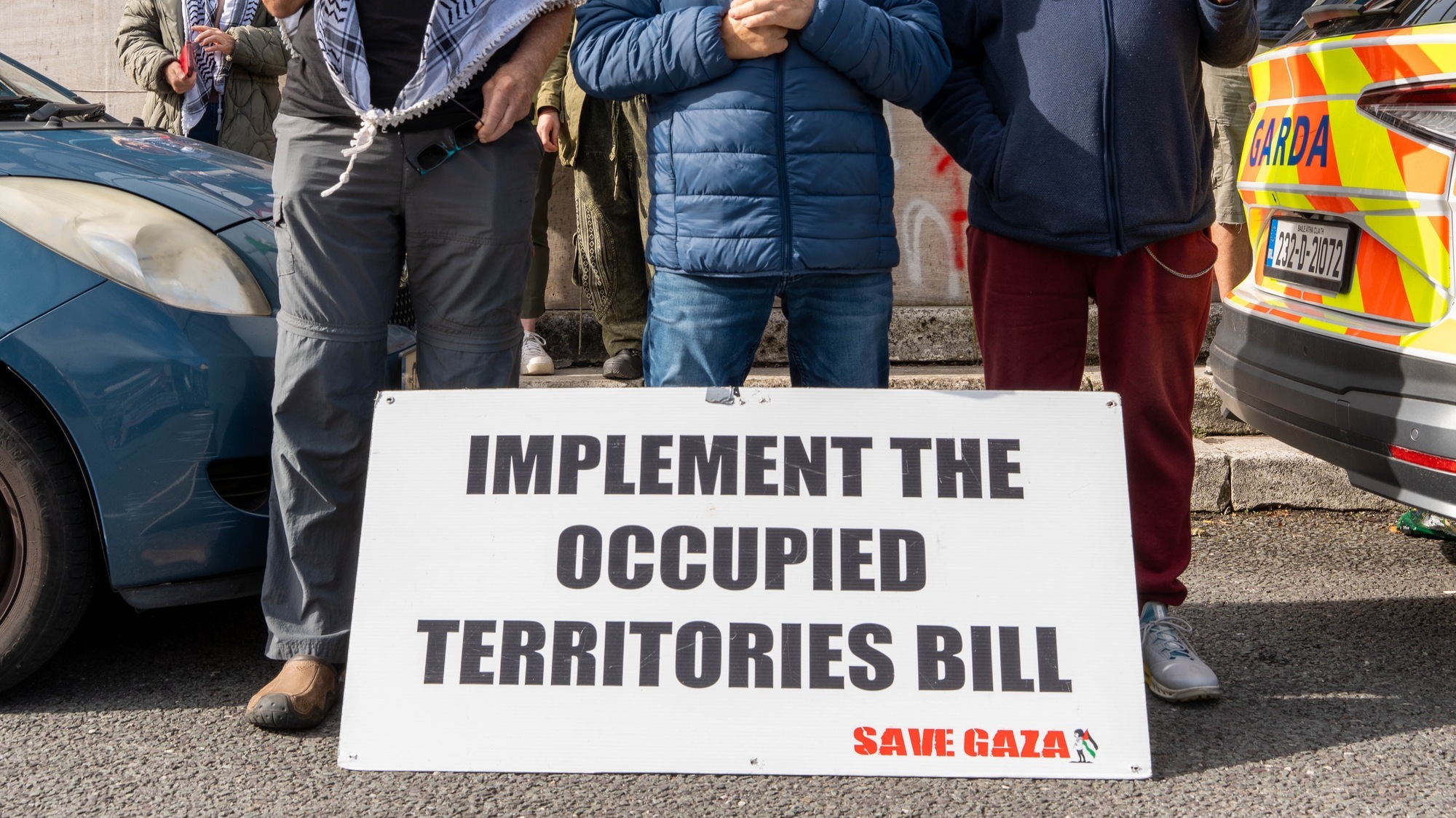
The Ireland Palestine Solidarity Campaign said it was "deeply disappointed" by the exclusion of services and called on the Government to reconsider before the bill's second reading. The group argued that financial and legal services provided to Israeli settlement enterprises were as significant as the trade in goods.
Amnesty International Ireland said the decision "undermines the spirit of the legislation" and called for a broader public consultation before the bill advanced further.
Background
The Occupied Territories Bill has had a lengthy and contested passage through the Oireachtas. Originally introduced as a private member's bill, it was taken over by the Government following sustained public pressure and a significant shift in Irish public opinion on the Israeli-Palestinian conflict.
The bill aims to make it illegal for Irish businesses to import goods produced in Israeli settlements in the West Bank, East Jerusalem, and the Golan Heights — territories considered illegal under international law. Ireland was among the first EU member states to formally recognise the State of Palestine, and the legislation has been seen as a concrete expression of that position.
The exclusion of services had been flagged as a possibility in recent weeks, with sources close to the Government suggesting that legal advice had raised concerns about the enforceability of such provisions under existing EU frameworks.
What Happens Next
The bill is expected to proceed to committee stage in the coming weeks. Opposition parties have indicated they will table amendments to reintroduce services provisions, though the Government is expected to resist such changes.
The Ceann Comhairle's office confirmed on Friday that a request for an emergency debate had been received and would be considered under standing orders. A decision on whether to grant the debate is expected early next week.
The controversy comes at a sensitive moment for the Government, which is also navigating the fallout from the Belfast disorder and a series of domestic policy challenges. The Occupied Territories Bill had been seen as an opportunity to demonstrate Ireland's commitment to international human rights norms, and the narrowing of its scope is likely to remain a source of political tension in the weeks ahead.