Iran Seizes Cargo Ships in Strait of Hormuz as US Warns of Six-Month Mine Clearance
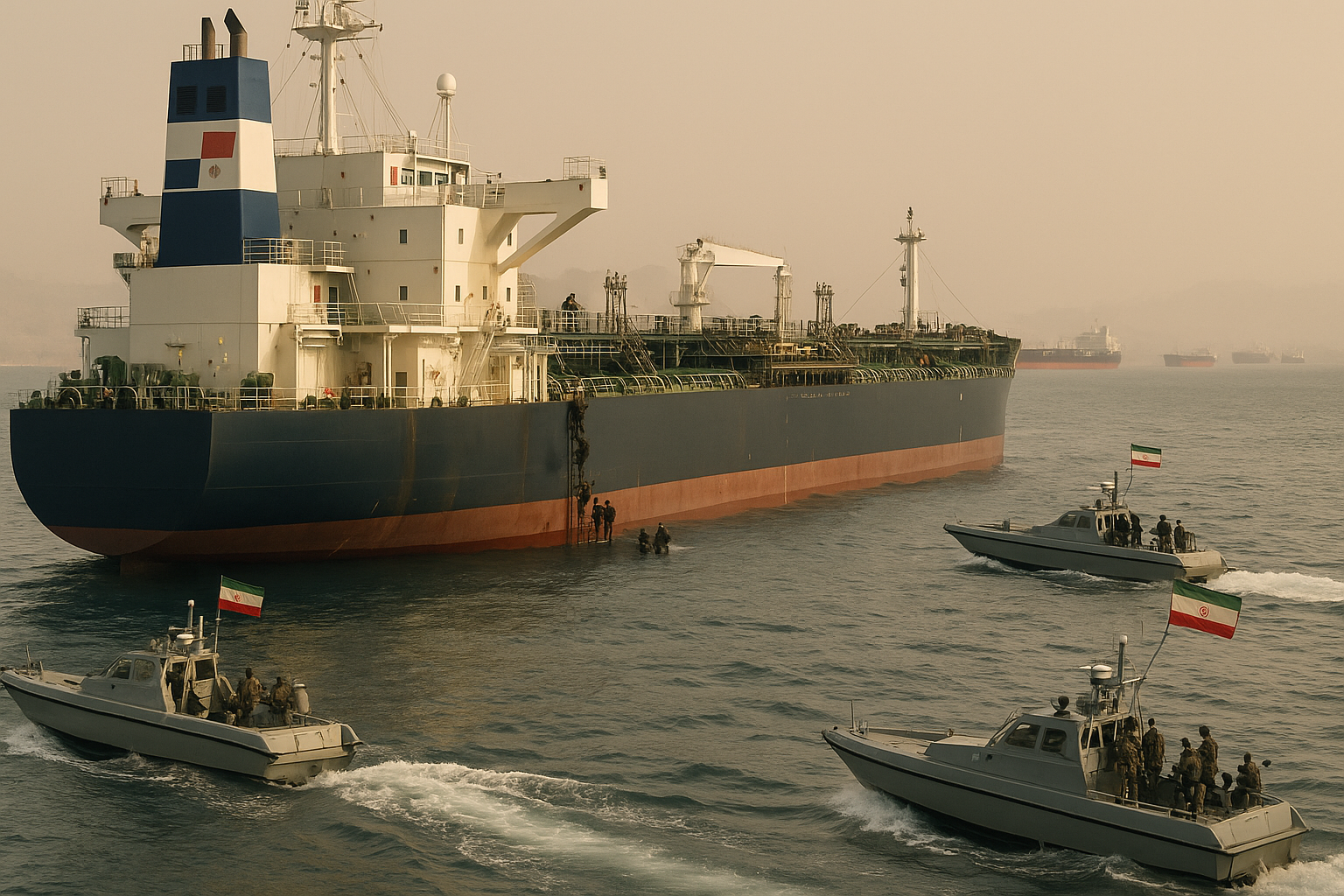
Iran's Islamic Revolutionary Guard Corps has seized two cargo ships in the Strait of Hormuz, diverting them to the Iranian coast with their multinational crews detained, as the United States warned that clearing the critical waterway of mines could take up to six months — sending oil prices surging and rattling global financial markets.
The seizures of the MSC Francesca and the Epaminondas on 23-24 April 2026 sent Brent crude climbing above $103 per barrel as markets priced in the risk of prolonged disruption to global energy supplies. European stock indices fell sharply, airline stocks declined on fears of fuel shortages, while shares in BP and Shell rose as investors anticipated sustained high energy prices.
Background
The Strait of Hormuz is one of the world's most strategically important waterways, through which approximately 20% of global oil supplies pass. Iran has long threatened to close the strait in the event of conflict, and the ongoing war with Israel and the United States has brought those threats closer to reality. The IRGC cited "unauthorised operations" and "tampering with navigation systems" as the reasons for seizing the vessels, with an IRGC-affiliated news outlet also alleging that the MSC Francesca had ties to Israel. The Epaminondas, a Greek-owned vessel, was reportedly fired upon and sustained damage before being escorted into Iranian waters.
The US Navy initiated mine clearance operations in the strait on 11 April 2026, deploying guided-missile destroyers including the USS Frank E. Peterson and USS Michael Murphy, alongside advanced Unmanned Underwater Vehicles and Avenger-class minesweepers. The stated goal is to establish safe passage for commercial shipping, but the operation has been complicated by the threat of Iranian attacks on mine-clearing crews.
Key Developments
The crews of the seized vessels included Montenegrin, Croatian, Ukrainian, and Filipino nationals. Iranian state media released footage of commandos boarding a vessel in the strait, while its air defence systems reportedly engaged what were described as "hostile targets." Iran also offered a fee exemption for transit through the strait to "friendly" countries, including Russia, while developing plans to levy tariffs on other shipping — a move that would effectively weaponise the waterway as an economic instrument.
President Trump issued an order for the US Navy to "shoot and kill" any Iranian small boats observed deploying mines in the strait. The US also seized a tanker suspected of smuggling Iranian oil and announced it would not renew a short-term authorisation permitting the sale of Iranian oil stranded at sea. The US Treasury Secretary warned that sanctions would be imposed on any country found to be purchasing Iranian oil.
Goldman Sachs estimated that approximately 14.5 million barrels per day of Gulf crude output — around 57% of pre-war supply — were offline in April due to precautionary production shutdowns, resulting in a record global oil inventory drawdown of 11 to 12 million barrels per day. The bank's base case scenario projects Brent crude to average around $90 per barrel in the fourth quarter of 2026, but outlined a "severely adverse" scenario where prices could reach nearly $120 per barrel if the disruption is prolonged.
Why It Matters
Disruption to the Strait of Hormuz has immediate and severe consequences for global energy markets, driving up oil and gas prices worldwide. For the UK, which imports significant quantities of energy, sustained high prices feed directly into inflation and household energy bills. The seizure of the cargo ships represents a significant escalation in Iran's willingness to use the strait as a weapon, and the warning that mine clearance could take up to six months — far longer than the Pentagon's initial estimate of two to three weeks — has solidified concerns about prolonged supply disruption. The economic consequences for British households and businesses, already struggling with the highest energy costs in a generation, could be severe if the standoff is not resolved swiftly.
Local Impact
The impact of the Strait of Hormuz crisis is being felt across the UK, with petrol and diesel prices at forecourts rising sharply and energy suppliers warning of further increases to household bills. For Northern Ireland, which is particularly exposed to energy price volatility given its reliance on imported gas and oil, the consequences are especially acute. Businesses across Belfast and beyond are facing sharply higher input costs, and the manufacturing and logistics sectors — which are critical to the Northern Ireland economy — are under particular pressure. The Port of Belfast, which handles a significant proportion of Northern Ireland's imports and exports, is monitoring the situation closely, as disruption to global shipping routes has knock-on effects for supply chains across the region.
What's Next
The US Navy is conducting operations in the region to protect international shipping. Diplomatic efforts to resolve the standoff are ongoing, but a swift resolution appears unlikely given the depth of the conflict. The fate of the seized vessels and their crews remains uncertain. Full coverage of the seizures is available from BBC News, while Goldman Sachs's analysis of the oil price impact can be found at Goldman Sachs Insights.