ICG Takeover Battle Intensifies as Bluefin BidCo Holds Firm on €8 Offer Ahead of August 28 EGM
Bluefin BidCo, the vehicle behind the €1.2 billion management-led buyout of Irish Continental Group, has declared its €8 per share offer final and will not be increased, drawing a line in the sand ahead of an extraordinary general meeting on 28 August — even as a coalition of minority shareholders representing approximately 11% of the company continues to argue that the bid undervalues the ferry operator by as much as 39%.
Background
Irish Continental Group, the parent company of Irish Ferries, is one of Ireland's most recognisable transport businesses, operating passenger and freight ferry services between Ireland, Britain, and France. The company has been publicly listed since the 1990s and has built a strong track record of profitability and dividend payments, making it a popular holding among Irish institutional and retail investors.
The management buyout bid, announced on 24 July 2026, was led by ICG chief executive Eamonn Rothwell — a figure who has run the company for over two decades and who attempted a similar buyout during the 2008-2009 financial crisis, only to be thwarted by the market conditions of the time. The bid, valued at €8 per share, represented a 28% premium over the closing share price at the time of the announcement and was initially welcomed by the company's independent board, which recommended it to shareholders.
Bluefin BidCo is owned by Rothwell and three other senior executives — David Ledwidge, Andrew Sheen, and Declan Freeman — who collectively hold approximately 23.7% of ICG's shares. The acquisition is financed by €455 million in preferred equity from Global Infrastructure Partners, a subsidiary of BlackRock, and €798 million in loans arranged by BNP Paribas and Banco Santander.
Key Developments
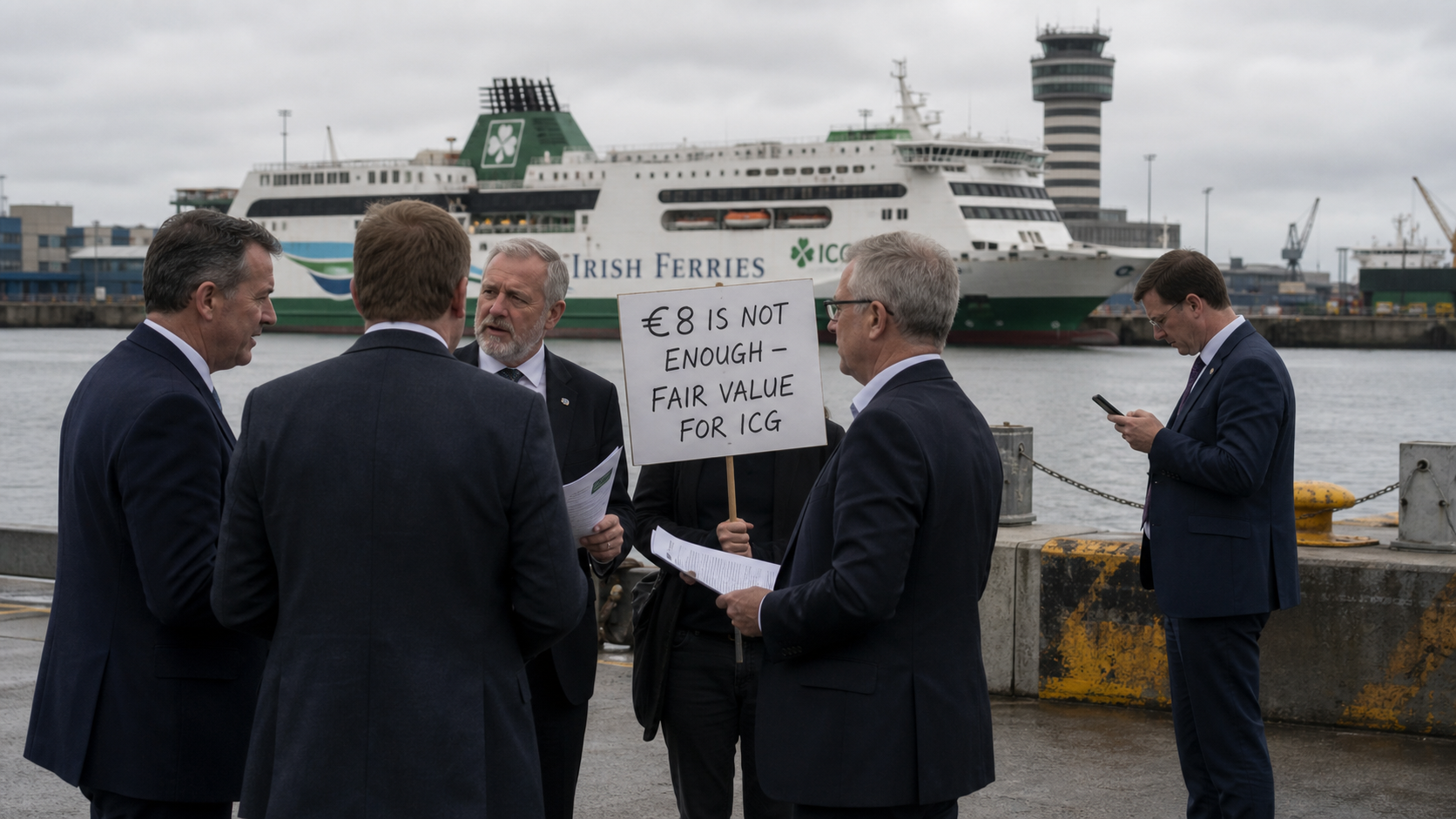
The declaration that the €8 offer is final came on Monday, 17 August, in response to mounting pressure from a group of minority shareholders who have argued publicly that the bid significantly undervalues the company. The dissenting investors — including Marathon Asset Management, Janus Henderson, Pageant Investments, Equus Global, and Oxy Capital — collectively own approximately 11% of ICG and have been vocal in their opposition.
Oxy Capital has suggested the bid undervalues the business by as much as 39%, arguing that the offer fails to account for the full value of ICG's assets and that the company's earnings were temporarily depressed at the time of the bid due to route disruptions and peak fleet investment. The minority shareholders have called on other investors to reject the deal at the 28 August EGM.
The proxy advisory firm ISS has recommended that investors support the bid, citing the "attractive premium" and "immediate liquidity" it offers. However, the independent board's recommendation and the ISS endorsement may not be sufficient to secure the level of support needed if the minority shareholder coalition can persuade other investors to join their cause.
Why It Matters
The ICG takeover battle is one of the most significant corporate governance stories in Ireland this year. The management buyout structure — in which the executives running a company seek to take it private — raises inherent questions about conflicts of interest and the adequacy of the price being offered to public shareholders. The fact that Rothwell and his colleagues hold nearly a quarter of the shares themselves means they have a direct financial interest in the outcome of the vote.
The minority shareholders' argument that the bid undervalues the company is not without merit. ICG has a strong underlying business, a dominant position on key Irish Sea routes, and a fleet that has been significantly upgraded in recent years. The timing of the bid — at a moment when the company's earnings were temporarily affected by route disruptions — may have allowed the management team to present a lower valuation than the business's long-term fundamentals would support.
The outcome of the 28 August EGM will have implications beyond ICG itself. A successful management buyout at a price that minority shareholders consider inadequate would send a concerning signal about the protections available to public shareholders in Irish-listed companies.
Local Impact
Irish Ferries is a critical piece of national transport infrastructure, connecting Ireland to Britain and France and carrying millions of passengers and hundreds of thousands of freight units each year. The question of who owns and controls the company has implications for the reliability and pricing of these services, which are essential for Irish exporters, importers, and travellers.
The company employs several hundred people directly and supports thousands more jobs in the logistics and tourism sectors. Workers and their union representatives have been monitoring the takeover process closely, seeking assurances about employment conditions and the future direction of the business under private ownership.
What's Next
The extraordinary general meeting is scheduled for 28 August 2026, at which shareholders will vote on whether to approve the takeover. The outcome will depend on whether the minority shareholder coalition can persuade enough other investors to join their opposition. If the deal is approved, ICG will be delisted from the Irish Stock Exchange and taken private. If it is rejected, Rothwell and his colleagues will need to decide whether to increase their offer or abandon the bid entirely. A decision is expected within days of the EGM.