Hundreds of SEN Children in Northern Ireland Still Without School Places for September
Hundreds of children with Special Educational Needs (SEN) across Northern Ireland are facing the distressing possibility of having no school to attend this coming September, plunging families into a state of extreme anxiety and uncertainty. The crisis, which affects some of the most vulnerable young people in society, has been attributed to a perfect storm of systemic underfunding, a severe shortage of specialist school capacity, and persistent bureaucratic delays within the Education Authority (EA), the body with a statutory duty to provide a suitable education for every child.
Background
The foundation for supporting children with additional needs in Northern Ireland is built upon the Education (Northern Ireland) Order 1996 and the accompanying Special Educational Needs Code of Practice. This legal framework places a statutory duty on the Education Authority to identify, assess, and provide for every child’s unique educational requirements. For children with more complex needs, this culminates in a Statement of Special Educational Needs, a legally binding document that outlines the specific support a child must receive. The process to secure a statement, however, is notoriously arduous for parents, often involving years of assessments, appeals, and advocacy to get the right provisions recognised.
This long-standing procedural challenge has been exacerbated in recent years by deep-seated financial pressures on the entire education sector. Successive Stormont budgets have failed to keep pace with rising demand and increasing complexity of need among the school-age population. Schools, both mainstream and special, have been left without the necessary capital to expand their facilities or the resource funding to hire and train the specialist teachers, classroom assistants, and therapists required. This has created a critical bottleneck in the system, particularly for specialist school places, which are now a scarce and highly sought-after resource.
Key Developments
The scale of the current crisis became starkly clear as the 1 May deadline for the Education Authority to finalise placements passed with hundreds of children still in limbo. The situation is particularly acute for those pupils transitioning from primary (P7) to post-primary education, a critical juncture in a child’s development. As reported by The Irish News, families have been left in an information vacuum, unable to prepare their children for a move to a new school because they have no idea where, or if, they will be going.
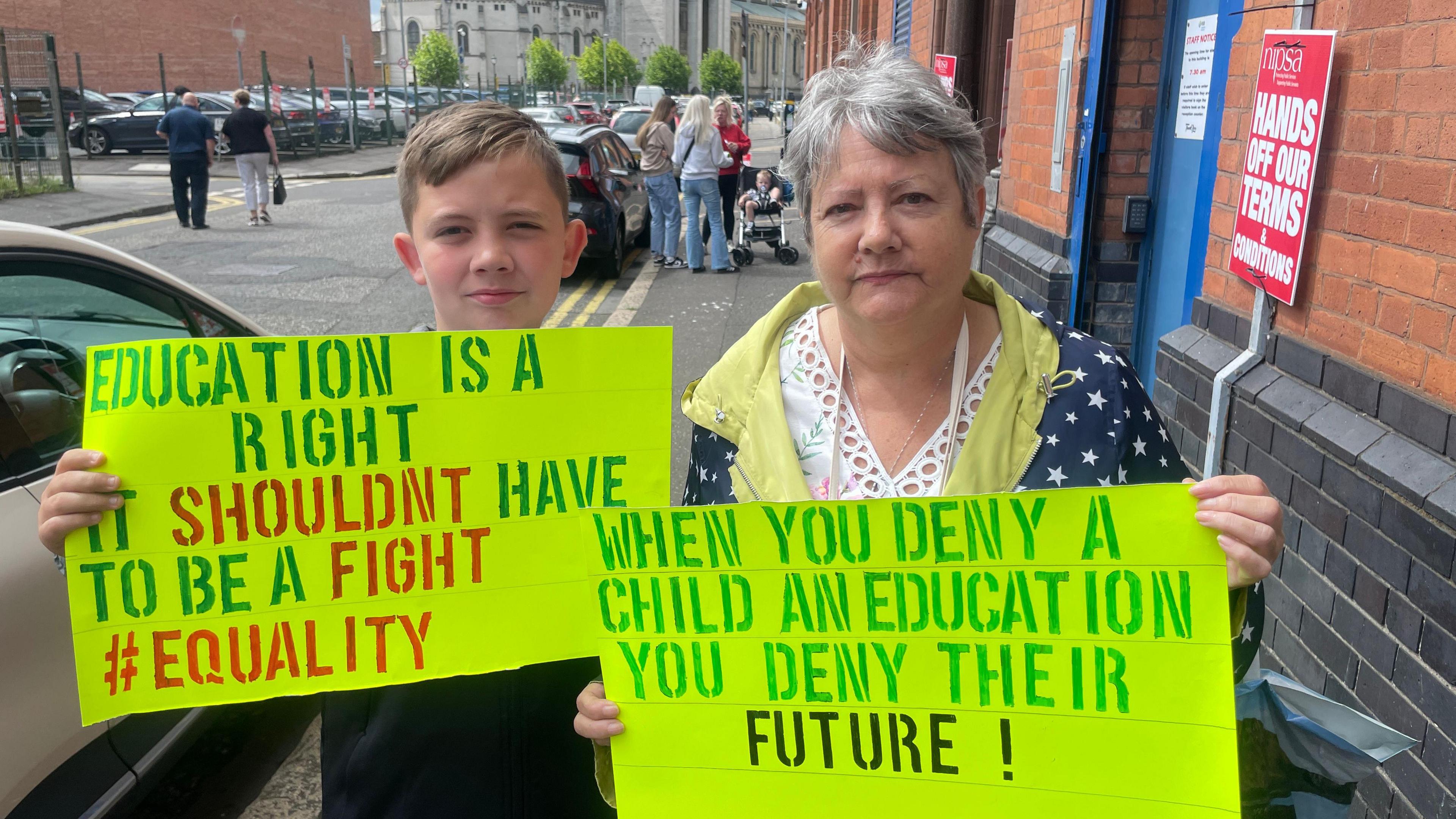
The Education Authority has publicly acknowledged the "significant challenges" it faces, citing increasing demand and the complexity of cases as primary factors. In a statement, the authority admitted it would be unable to offer a placement to every child by the deadline, a direct admission of its failure to fulfil its statutory obligations. For parents, this confirmation of their worst fears has been devastating. Many have spoken of the immense emotional and psychological toll, with the uncertainty compounding the already significant challenges of caring for a child with complex needs. The fight for a basic right has left many feeling exhausted and abandoned by the very system designed to provide support.
Why It Matters
This is not merely an administrative failure; it is a profound crisis of children’s rights that strikes at the heart of a fair and equitable society. The inability to provide an education for hundreds of SEN children is a clear breach of the fundamental right to education, a principle enshrined in law and international conventions. The long-term consequences for these children could be severe, potentially leading to regression in their learning, social isolation, and significant impacts on their mental and emotional well-being. For a society still healing from decades of conflict, the failure to protect its most vulnerable citizens is a damning indictment of its priorities.
The situation throws a harsh spotlight on the newly restored Northern Ireland Executive, presenting a critical test of its commitment to public services and social justice. While politicians from all parties have expressed concern, parents are demanding urgent action, not just words. The crisis demonstrates a systemic breakdown that requires more than a short-term fix; it necessitates a root-and-branch review of SEN provision, from the funding model and assessment process to capital investment in specialist schools. How the Executive responds will be a defining measure of its competence and its values.
Local Impact
Across every town and city in Northern Ireland, from Belfast to Derry and beyond, individual families are bearing the brunt of this systemic collapse. Parent support groups have been inundated with calls from desperate mothers and fathers who feel they have nowhere left to turn. These groups, often run by volunteers, are providing crucial emotional support and practical advice, but they are no substitute for a functioning state education system. The impact is also felt in mainstream schools, which are often pressured to take on more SEN pupils than they can adequately support, placing immense strain on already overstretched teachers and resources, and potentially compromising the quality of education for all students.
What's Next
The immediate future is a frantic race against time. The Education Authority, which can be contacted via its official website, must now work through the summer to try and secure a placement for every child before the new school year begins in September 2026. This will involve intensive negotiations with schools and, where necessary, the commissioning of new provisions. Parents and advocacy groups are planning further protests and political lobbying to maintain pressure on the Department of Education and the Assembly. For the children at the centre of this crisis, the summer will be a period of anxious waiting, hoping that a letter arrives to tell them where their future lies.