HSE Warns of Pink Cocaine, Triple-Strength MDMA and New Ketamine Strain Ahead of Festival Season
The HSE has issued an urgent public health warning about three dangerous substances that are circulating in Ireland ahead of the late summer festival season: "pink cocaine," a synthetic drug mixture that contains no actual cocaine and whose composition varies unpredictably; triple-strength MDMA tablets that have been linked to overdose deaths across Europe; and a new, more potent strain of ketamine that has been associated with severe adverse reactions in several Irish cities.
Background
Ireland's festival season runs from June through September, with dozens of music, arts, and cultural events taking place across the country during those months. The festivals attract hundreds of thousands of attendees, many of them young people, and drug use — while illegal — is a well-documented feature of the festival environment. The HSE's National Drug Treatment Centre and the Ana Liffey Drug Project have been monitoring drug trends at Irish festivals for several years, and their data provides an important early warning system for the emergence of new and potentially dangerous substances.
The three substances highlighted in this week's warning represent distinct but related challenges. Pink cocaine — also known as "tusi" or "tucibi" — is a synthetic drug mixture that has been spreading rapidly across Europe and Latin America over the past two years. Despite its name, it typically contains no cocaine; instead, it is a variable mixture of substances that may include MDMA, ketamine, methamphetamine, and various synthetic cathinones, with the specific composition varying from batch to batch. This variability makes it particularly dangerous, as users cannot know what they are taking or in what quantities.
Triple-strength MDMA tablets — pills containing two to three times the typical dose of MDMA — have been linked to a series of overdose deaths in the Netherlands, Belgium, and the United Kingdom over the past eighteen months, and have now been confirmed as circulating in Ireland. The danger of these tablets is that users who are accustomed to taking a standard-strength pill may take the same quantity of a triple-strength tablet, resulting in a dose that overwhelms the body's ability to process the drug safely.
Key Developments
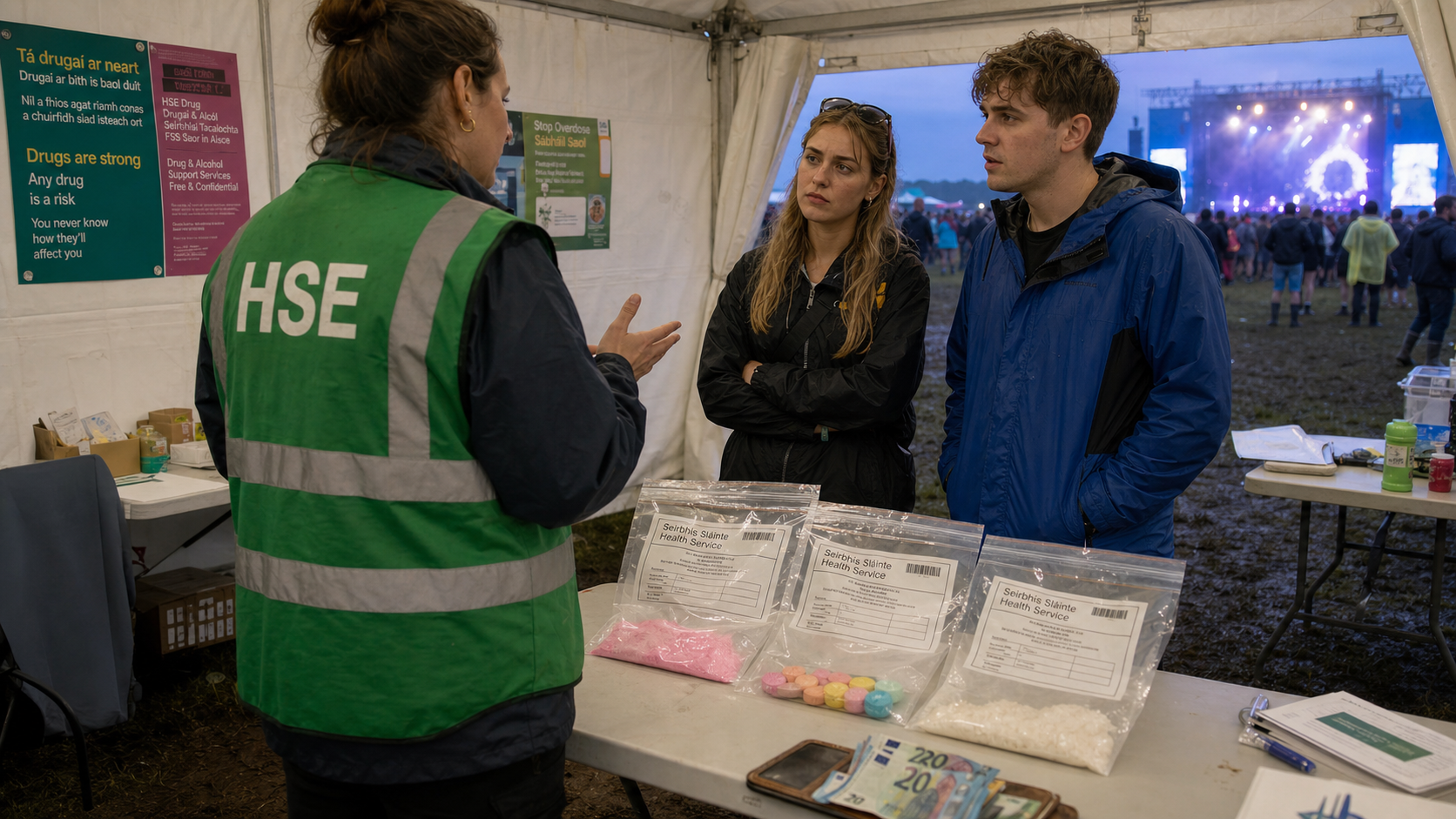
The HSE warning, issued on Saturday, urges festival-goers to be aware of the risks associated with these substances and to use drug checking services where they are available. Several Irish festivals have introduced drug checking services in recent years — a harm reduction measure that allows people to have substances tested before consuming them — and the HSE has indicated that it supports the expansion of these services to more events.
The warning also provides specific advice for people who may encounter someone who has taken one of these substances and is experiencing an adverse reaction. For pink cocaine and triple-strength MDMA, the advice is to call 999 immediately if the person is unconscious, having a seizure, or showing signs of overheating. For ketamine, the advice is to place the person in the recovery position and monitor their breathing, as the drug can cause a dissociative state that may be mistaken for unconsciousness.
The National Ambulance Service has confirmed that it has briefed its crews on the specific risks associated with these substances and has updated its clinical protocols for managing drug-related emergencies at festival sites. Several festival organisers have also been in contact with the HSE about additional medical provision for their events in light of the warning.
Why It Matters
Drug-related deaths at Irish festivals, while relatively rare, do occur, and the emergence of new and more potent substances increases the risk. The HSE's decision to issue a public warning reflects a harm reduction philosophy that prioritises keeping people safe over moral condemnation of drug use — an approach that has been shown to be more effective at reducing drug-related harm than purely punitive strategies.
The warning also reflects the changing landscape of drug supply in Ireland. The substances being flagged — pink cocaine, triple-strength MDMA, new ketamine strains — are all products of a drug market that is constantly evolving, driven by the efforts of suppliers to evade detection and to offer products that are perceived as novel or more potent. The speed with which new substances emerge and spread across Europe underlines the importance of real-time monitoring and rapid public communication of risks.
Local Impact
The warning is particularly relevant for the festivals taking place in the coming weeks, including several large music events in Dublin, Cork, and Galway. Festival organisers have been urged to ensure that their medical teams are briefed on the specific risks associated with these substances and that drug checking services are available on site. The HSE has offered to provide training and support to festival medical teams, and has indicated that it will be monitoring the situation closely throughout the remainder of the festival season.
What's Next
The HSE will continue to monitor drug trends at Irish festivals through its network of harm reduction workers and through data from hospital emergency departments and the National Ambulance Service. An updated warning will be issued if new substances or new risks are identified. The HSE has also indicated that it will be publishing a comprehensive review of drug-related harm at Irish festivals at the end of the season, which will inform planning for 2027.