HSE Surgical Hub at Cork University Hospital Opens to First Patients as National Day-Case Programme Gathers Pace
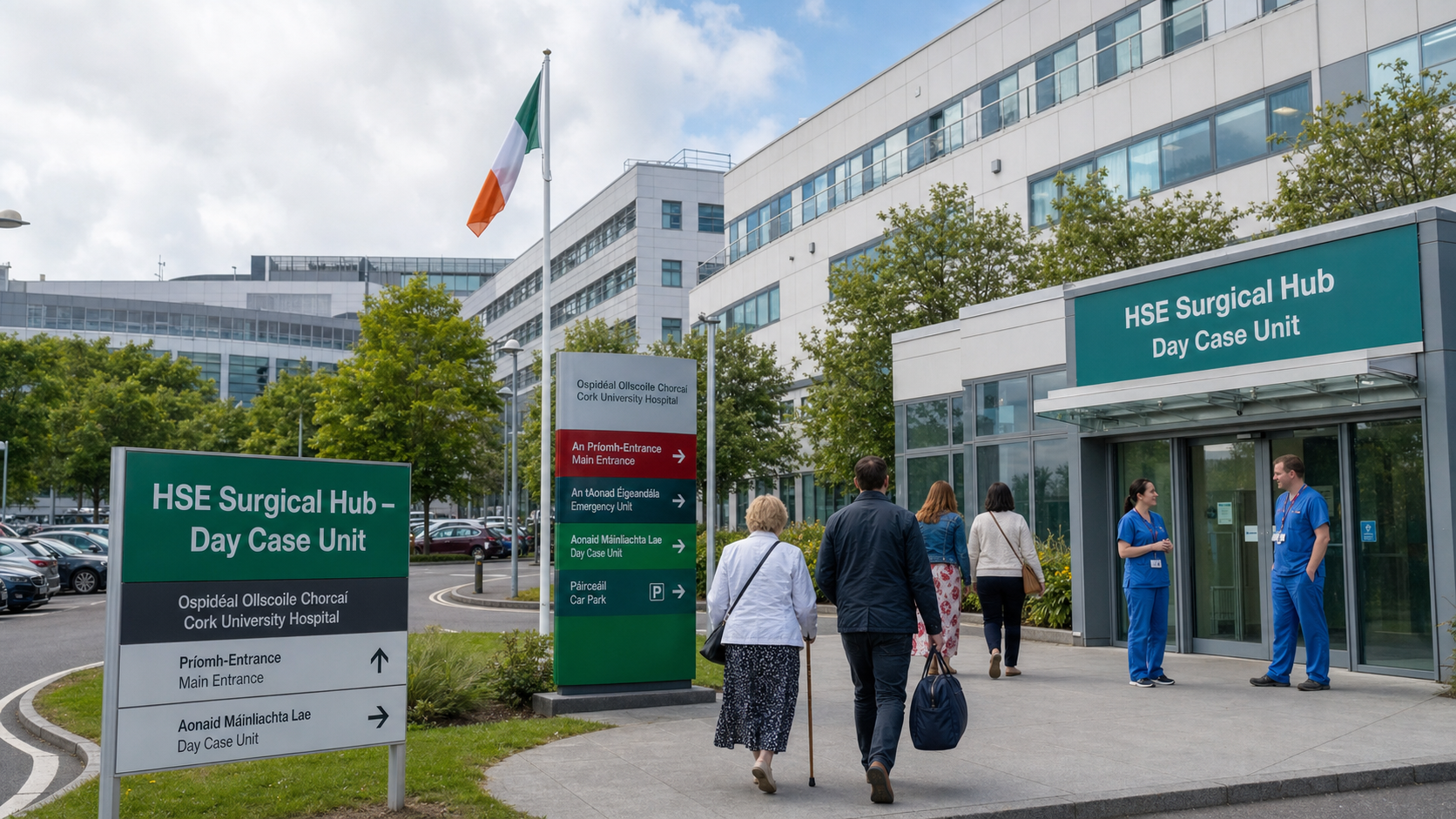
The Health Service Executive's surgical hub on the campus of Cork University Hospital has welcomed its first patients in July 2026, marking a significant milestone in the national programme to establish dedicated day-case surgical facilities that are insulated from the pressures of emergency hospital care — a model that its architects believe can make a meaningful dent in Ireland's chronic surgical waiting lists.
Background
Ireland's surgical waiting lists have been a source of persistent public concern for years, with hundreds of thousands of patients waiting for procedures that range from cataract surgery and hip replacements to hernia repairs and colonoscopies. At the end of 2025, there were 894,369 patients on acute hospital waiting lists for inpatient, outpatient, and endoscopy procedures — a figure that represents a significant improvement on the peak levels recorded during the Covid-19 pandemic but that remains far above the targets set by successive governments.
The fundamental problem is structural. Ireland's major acute hospitals are simultaneously responsible for managing unscheduled emergency care and delivering scheduled elective procedures, and the two functions are in constant competition for the same beds, theatres, and staff. When emergency demand surges — as it does every winter and increasingly during summer heatwaves — elective procedures are cancelled or postponed, adding to the backlog. The surgical hub model is designed to break this cycle by creating dedicated facilities for scheduled procedures that are physically and operationally separate from the emergency hospital environment.
The first surgical hub to open under the national programme was the Mount Carmel facility in South Dublin, which became operational in February 2025. The Cork hub is the second to open, and its location on the CUH campus — one of Ireland's busiest acute hospitals — is intended to demonstrate that the model can work in close proximity to a major emergency department without the two functions interfering with each other.
Key Developments
The Cork surgical hub is designed to deliver approximately 10,000 day-case surgeries and 18,500 outpatient consultations annually, focusing on procedures that can be completed within a single day and that do not require overnight hospital admission. The facility has been equipped with state-of-the-art operating theatres, recovery areas, and outpatient consultation rooms, and has been staffed by a dedicated team of surgeons, anaesthetists, nurses, and allied health professionals who work exclusively in the hub rather than splitting their time with the main hospital.
The procedures to be performed at the hub include cataract surgery, orthopaedic procedures such as knee arthroscopies, general surgical procedures including hernia repairs and cholecystectomies, and a range of gynaecological and urological procedures. The hub will also provide a significant volume of outpatient consultations, reducing the pressure on the main CUH outpatient department and providing patients with faster access to specialist opinion.
Construction is ongoing at hubs in Galway, Limerick, Waterford, and North Dublin, all of which are on track to be completed and commissioned by the end of 2026. The HSE has also indicated that it plans to advance the development of further hubs in Sligo and Letterkenny, extending the programme to the north-west and west of the country. When fully operational, the national network of surgical hubs is expected to deliver over 60,000 additional day-case procedures annually.
Why It Matters
The surgical hub programme represents one of the most significant structural reforms to the Irish health system in recent years. By creating a dedicated infrastructure for elective procedures, it addresses one of the root causes of the waiting list crisis rather than simply adding capacity to an already dysfunctional system. The evidence from comparable programmes in England and Scotland suggests that dedicated elective facilities can deliver procedures significantly more efficiently than integrated acute hospitals, with higher throughput, lower cancellation rates, and better patient experience.
For patients on waiting lists in Cork and the surrounding region — which includes a catchment area of approximately 600,000 people — the opening of the hub represents a tangible improvement in their prospects of receiving timely treatment. The HSE has indicated that it will prioritise patients who have been waiting longest for the procedures offered at the hub, with a particular focus on those who have been waiting more than 12 months.
The programme also has implications for the broader debate about how Ireland's health system should be organised. The success of the surgical hub model could provide the evidence base for a more fundamental restructuring of acute hospital services, with a clearer separation between emergency and elective functions across the system as a whole.
Local Impact
For patients in Cork city and county, the opening of the surgical hub means faster access to a range of procedures that have historically involved long waits at CUH or at Mercy University Hospital. The hub's location on the CUH campus means that patients who require more complex care than can be provided in the day-case setting can be transferred quickly to the main hospital, providing an important safety net. The facility is accessible by public transport, with Bus Éireann services connecting the CUH campus to Cork city centre and the surrounding suburbs.
For the staff working in the hub, the dedicated elective environment offers a different working experience from the pressured atmosphere of a busy acute hospital. The absence of emergency demand means that operating lists can be planned and executed with a predictability that is rarely possible in a general hospital setting, reducing stress and improving job satisfaction. The HSE has indicated that the hub model has been well-received by clinical staff and that recruitment to the Cork facility has been successful.
What's Next
The Cork hub will ramp up its activity over the coming months, with the number of procedures performed increasing as the facility reaches its full operational capacity. The HSE will publish quarterly performance data for all surgical hubs, allowing the public and policymakers to track progress against the targets set for the programme. The hubs in Galway, Limerick, Waterford, and North Dublin are expected to open in sequence between September and December 2026, with the Sligo and Letterkenny facilities following in 2027.