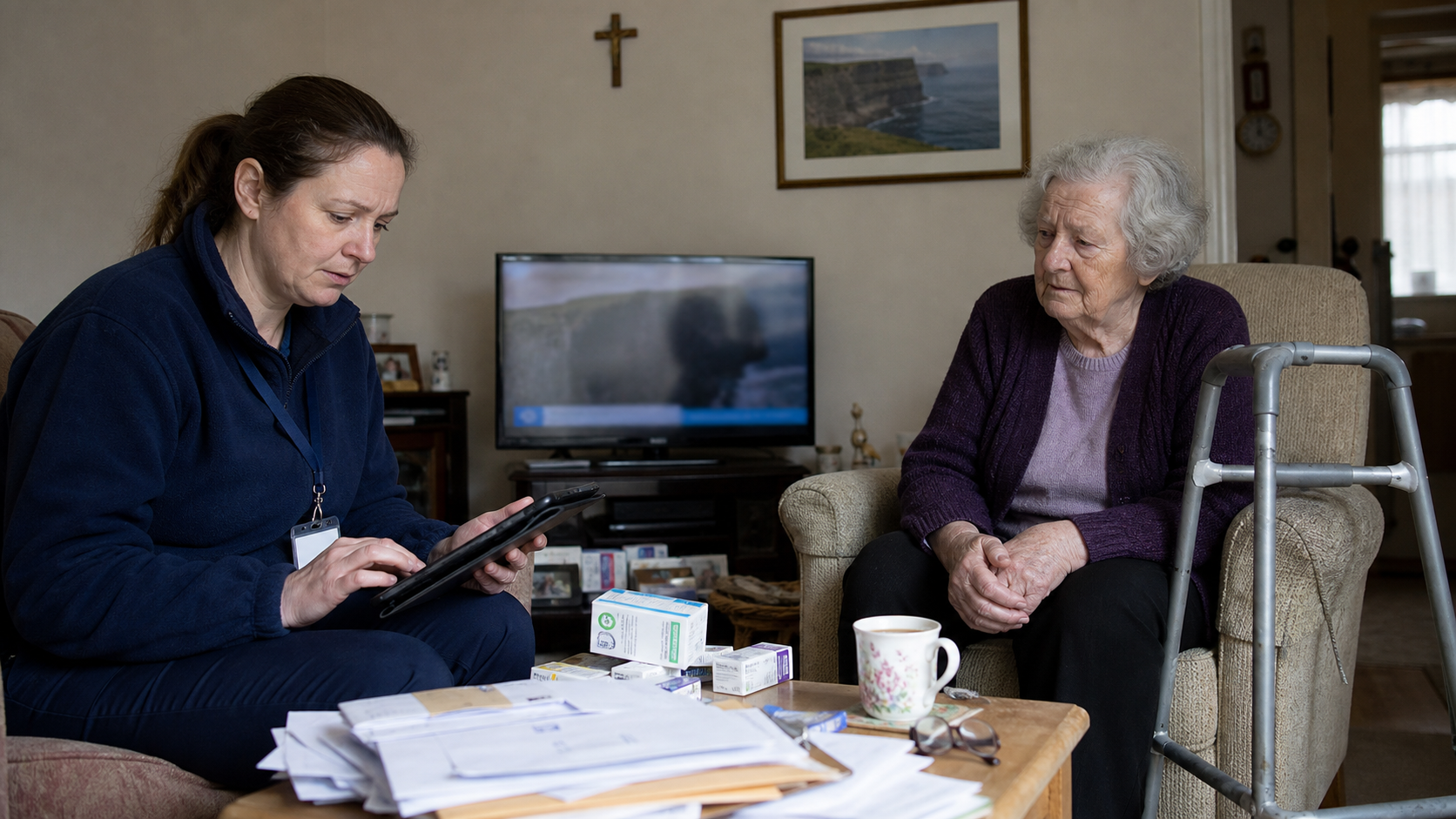
HSE Homecare Assessment Targets Missed as Only 25% of InterRAI Goals Achieved
The Health Service Executive has achieved only 25% of its targets for implementing the interRAI homecare assessment system, with just 4,656 of the targeted 18,100 assessments completed and only 216 of the 327 staff trained by July 2026 — a performance that advocacy groups warn is preventing vulnerable people from accessing appropriate care and may be contributing to unnecessary admissions to long-term residential facilities at a cost to both individuals and the state.
Background
The interRAI assessment system is a standardised, evidence-based tool for evaluating the homecare needs of individuals in a consistent and objective way. Its introduction was intended to address a long-standing criticism of the Irish homecare system: that the allocation of home support hours was subjective and inconsistent, with individuals in similar circumstances receiving very different levels of support depending on the assessor or the region in which they lived.
The HSE committed to rolling out interRAI as the standard assessment tool for homecare as part of its preparations for the introduction of a statutory home support scheme — a long-promised reform that would give people a legal right to homecare services rather than relying on the discretionary allocation of hours. The statutory scheme has itself been delayed repeatedly, and the slow implementation of interRAI is both a symptom and a cause of those delays.
The stakes are high. Ireland has an ageing population, and the demand for homecare services is growing rapidly. The HSE delivered a record number of homecare hours in 2025, but waiting lists for assessment and for the allocation of hours remain long, and the quality and consistency of the service varies significantly across the country.
Key Developments
New data published this week shows that the HSE's performance against its interRAI targets has been deeply disappointing. Against a target of 18,100 assessments, only 4,656 were completed — a shortfall of more than 74%. Against a target of 327 staff trained by September, only 216 had completed the training by July — a shortfall of 34%. Regional performance varied enormously, with the HSE West and North-West region performing best (21% below target) and the Dublin and South-East region performing worst (95.8% below target). In the Mid-West, the new approach had not yet been implemented at all.
The HSE attributed the poor performance to "competing priorities," acknowledging that the demands of day-to-day service delivery had made it difficult to release staff for training. Advocacy groups from organisations including Home and Community Care Ireland and Age Action expressed frustration at this explanation, arguing that the implementation of interRAI should itself be treated as a priority given its importance to the quality and fairness of homecare allocation.
The Department of Health confirmed that it was working with the HSE to accelerate the rollout of interRAI and that it remained committed to the introduction of the statutory home support scheme, though no revised timeline was provided.
Why It Matters
The failure to implement interRAI on schedule has real consequences for real people. Without a standardised assessment tool, the allocation of homecare hours continues to be inconsistent and potentially unfair, with individuals in similar circumstances receiving different levels of support depending on where they live and who assesses them. For older people and people with disabilities who are trying to remain in their own homes — the overwhelming preference of most people and the most cost-effective option for the state — this inconsistency is not an abstract policy failure but a daily reality that affects their quality of life.
The delays also have financial implications. People who cannot access adequate homecare are more likely to be admitted to long-term residential care, which costs the state significantly more than homecare. The failure to implement interRAI efficiently is therefore not just a service quality issue but a fiscal one.
Local Impact
The impact of the interRAI delays is felt across Ireland, but it is particularly acute in regions where the implementation has been slowest. In Cork and Kerry, where the South-West region is 88% below its assessment target, families seeking homecare for elderly relatives are facing long waits for assessment and uncertain outcomes. In Dublin and the south-east, the situation is even more stark. Community nurses and social workers, who are responsible for conducting the assessments, report that they are under significant pressure and that the training requirements for interRAI add to an already heavy workload.
What's Next
The Department of Health is expected to publish a revised implementation plan for interRAI in the autumn, setting out how the HSE will accelerate the rollout and address the regional disparities in performance. The statutory home support scheme, which depends on interRAI as its assessment foundation, is unlikely to be introduced before 2028 at the earliest, given the current pace of implementation. Advocacy groups have called for an independent review of the interRAI rollout and for the publication of regular, transparent data on progress against targets.