HSE Confirms Five New Surgical Hubs to Open by End of 2026 in Drive to Cut Waiting Lists for Day-Case Procedures
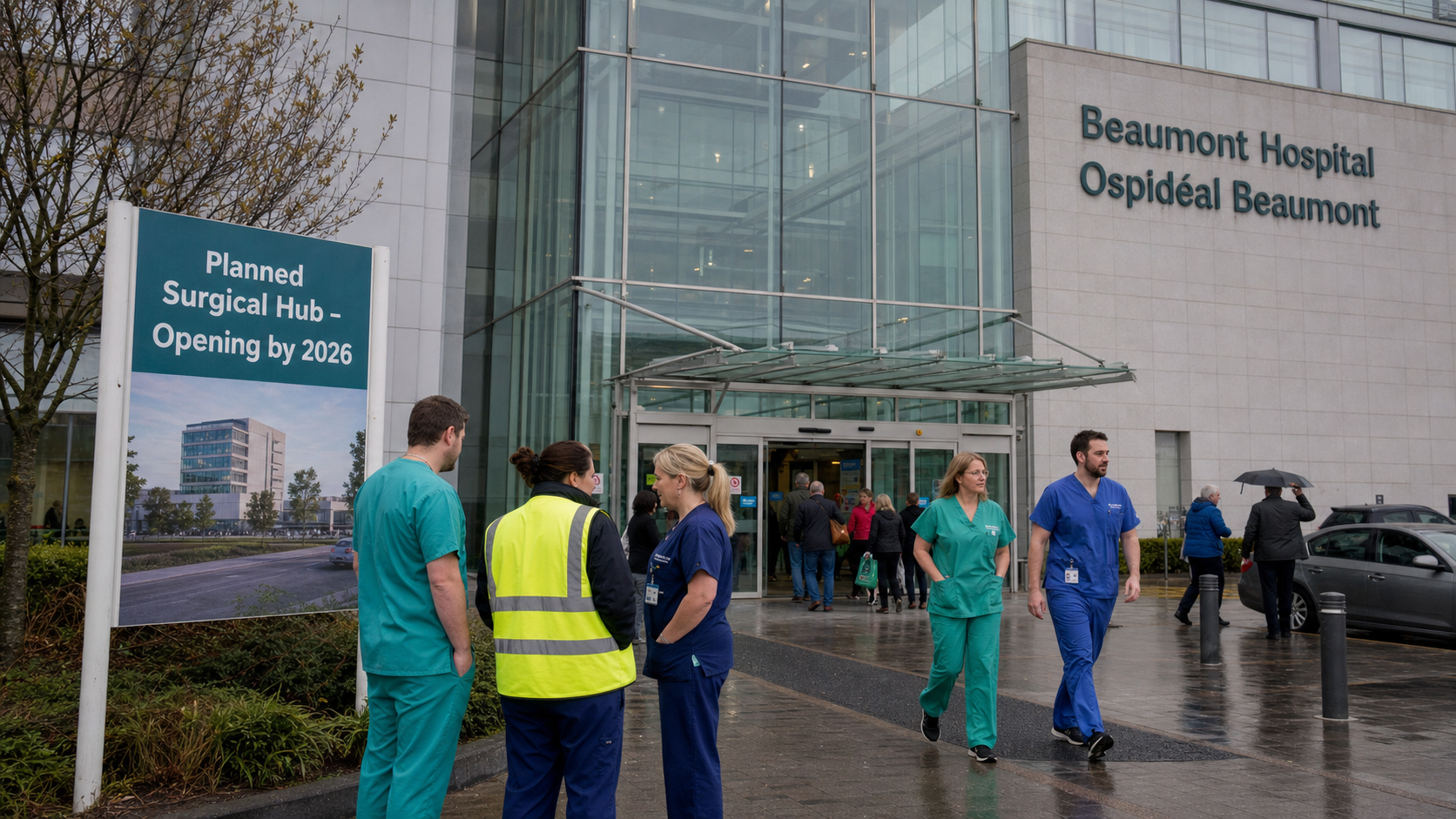
The Health Service Executive has confirmed its commitment to having five new surgical hubs operational by the end of 2026, with dedicated facilities planned for Cork, Limerick, Waterford, Galway, and North Dublin that will each perform approximately 10,000 day-case surgeries and 18,500 outpatient consultations annually — a significant expansion of capacity that the HSE says is essential to making meaningful inroads into Ireland's chronic waiting list crisis.
Background
Ireland's hospital waiting lists have been a source of political controversy and public frustration for decades. The combination of an ageing population, increasing demand for specialist care, and a hospital system that has historically been underfunded relative to comparable European countries has produced waiting times that are among the longest in the developed world. Hundreds of thousands of patients are waiting for outpatient appointments, and tens of thousands are waiting for elective procedures that could significantly improve their quality of life.
The surgical hub model was developed as a response to one of the most persistent problems in the Irish hospital system: the cancellation of elective procedures when emergency demand surges. In a traditional hospital setting, scheduled surgeries are frequently cancelled when emergency beds are needed, creating a cycle in which waiting lists grow even as the system nominally has capacity. Dedicated surgical hubs, which handle only scheduled procedures and have no emergency function, are designed to break this cycle by creating protected capacity for elective care.
Two surgical hubs — in South Dublin and Swords in North Dublin — are already operational and have demonstrated the model's effectiveness. The South Dublin hub, which opened in 2025, has been performing significantly above its initial targets, and waiting times for several common procedures have fallen measurably in the areas it serves. The HSE has cited these early results as evidence that the model works and as justification for the accelerated rollout of additional hubs.
Key Developments
The HSE's confirmation that five new hubs will be operational by the end of 2026 was reported by the Irish Examiner and the Irish Times on July 15. The five locations — Cork, Limerick, Waterford, Galway, and North Dublin — were selected on the basis of population need, existing infrastructure, and the capacity to deliver the hubs within the required timeframe. Each hub is designed to perform approximately 10,000 day-case surgeries and 18,500 outpatient consultations annually, representing a substantial addition to the system's overall capacity.
The hubs are for public patients only, with private practice explicitly prohibited. This policy has been welcomed by patient advocates who have long argued that the mixing of public and private patients in the same facilities creates perverse incentives that disadvantage those on public waiting lists. However, the policy is currently facing a legal challenge from two medical consultants who argue that the prohibition on private practice in the hubs is unlawful.
The HSE has indicated that the hubs will be staffed by a combination of existing HSE employees and newly recruited specialists, with particular emphasis on attracting Irish-trained doctors who have emigrated to work in the UK, Australia, and North America. A targeted recruitment campaign is underway, with competitive salary packages and improved working conditions being offered to attract candidates.
Why It Matters
The surgical hub programme matters because it represents one of the most concrete and deliverable responses to Ireland's waiting list crisis. Unlike broader systemic reforms — which require years of planning, negotiation, and implementation — the hub model can deliver measurable results relatively quickly. The early performance of the South Dublin and Swords hubs suggests that the model is capable of making a real difference to waiting times for common procedures such as cataracts, hip and knee replacements, and hernia repairs.
The programme also matters because it represents a significant investment in public healthcare infrastructure at a time when the government is under pressure to demonstrate that the record health budget of €27.4 billion for 2026 is delivering tangible improvements. The waiting list crisis has been a persistent source of political vulnerability for successive governments, and the surgical hub programme is one of the most visible elements of the current administration's response.
The legal challenge to the prohibition on private practice in the hubs introduces an element of uncertainty. If the courts were to rule against the HSE, it could fundamentally alter the character of the hubs and undermine the public-only model that is central to their design. The case is expected to be heard in the High Court in the autumn.
Local Impact
For patients in Cork, Limerick, Waterford, and Galway, the announcement of new surgical hubs represents a genuine prospect of reduced waiting times for procedures that have been deferred for months or years. In Cork, where the Mercy University Hospital and Cork University Hospital have been operating under significant pressure, the new hub is expected to take a significant volume of day-case work off the main hospital sites. In Galway, the University Hospital Galway has one of the longest waiting lists in the country for several specialties, and the new hub is expected to provide meaningful relief.
In Limerick, the University Hospital Limerick has been one of the most pressured emergency departments in the country, and the separation of elective work into a dedicated hub is expected to reduce the frequency with which scheduled procedures are cancelled to accommodate emergency demand. In Waterford, the University Hospital Waterford serves a large catchment area across the south-east, and the new hub will provide additional capacity for a region that has historically been underserved.
What's Next
The HSE has committed to providing quarterly updates on the progress of the surgical hub programme, with the first update expected in October 2026. The legal challenge to the private practice prohibition is expected to be heard in the High Court in September or October. The Department of Health has indicated that a further expansion of the hub programme — potentially including additional locations in Munster and the midlands — will be considered in the context of the 2027 health budget negotiations, which are expected to begin in the autumn.