House Limerick Closes with 300 Job Losses as Retail Sector Faces Continued Pressure
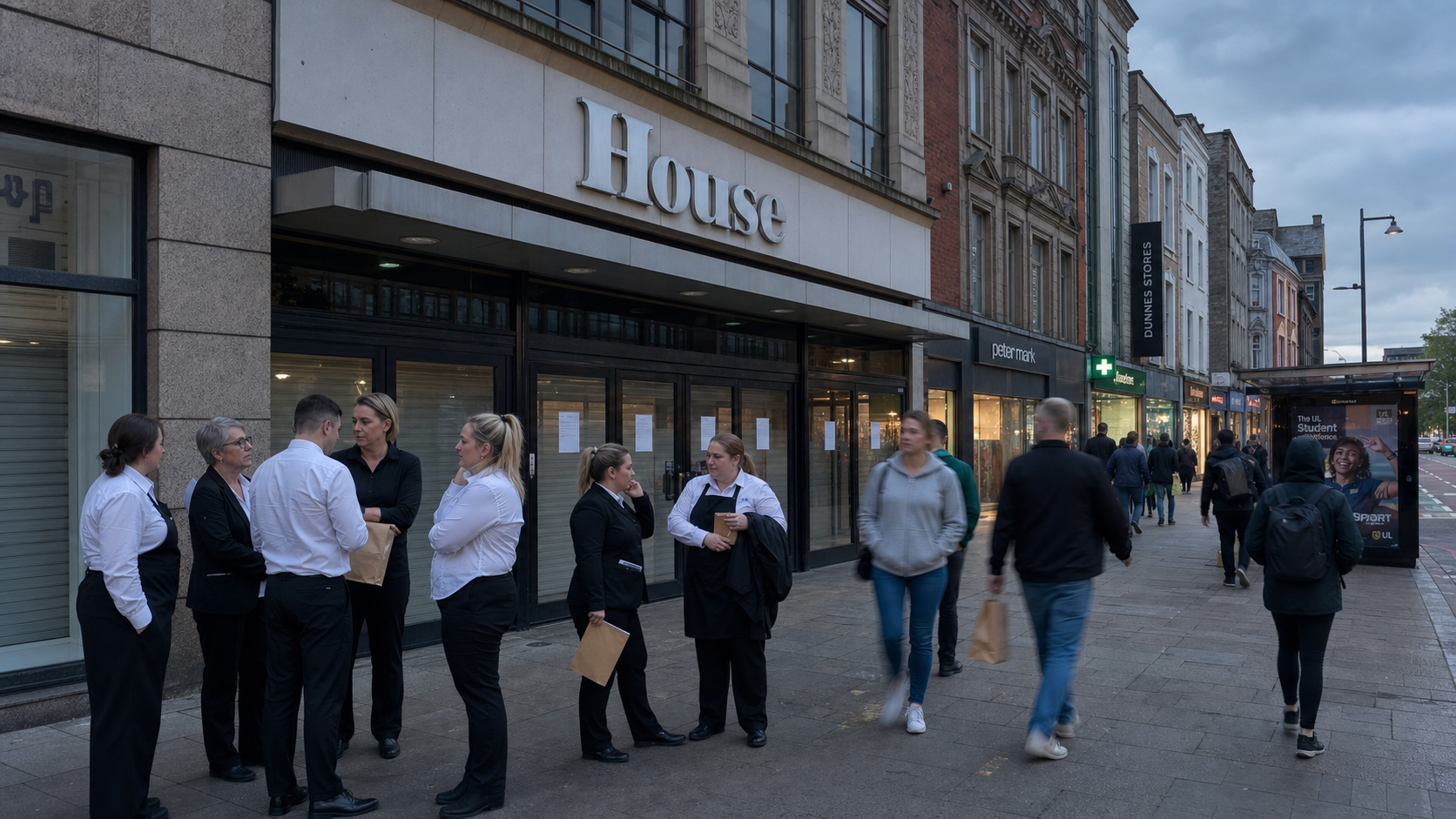
Nearly 300 jobs have been lost following the closure of House Limerick, a major retail and hospitality venue in the city centre, in a significant blow to Limerick's commercial district. The closure, which was announced with little advance notice, has prompted calls from local politicians and trade unions for emergency support for affected workers and for a coherent plan to address the growing number of vacant commercial premises in the city centre.
Background
House Limerick was one of the most prominent commercial venues in the city, occupying a significant footprint in the city centre and employing a substantial workforce across its retail and hospitality operations. The venue had been a fixture of Limerick's commercial landscape for several years, and its closure represents a significant loss not only in terms of employment but in terms of the footfall and economic activity that it generated for surrounding businesses.
The closure comes at a difficult time for Limerick's city centre, which has been working to recover from the economic disruption of the Covid-19 pandemic and to adapt to the structural changes in retail and hospitality that have accelerated since 2020. The growth of online shopping, the shift in consumer spending patterns toward experiences rather than goods, and the rising costs of commercial rents and energy have all contributed to a challenging environment for city centre businesses.
Limerick has made significant progress in recent years in addressing some of the structural challenges facing its city centre. The Limerick 2030 economic development plan has delivered a number of significant projects, including the development of the Opera Site and the regeneration of the Cleeves site on the banks of the Shannon. But the closure of a major employer like House Limerick is a reminder that the recovery of the city centre is not yet complete and that significant vulnerabilities remain.
Key Developments
The closure was announced with limited advance notice, leaving workers and their families with little time to prepare for the loss of income. The Communications Workers' Union and SIPTU have both called for the company to honour its statutory redundancy obligations and have urged the Department of Social Protection to fast-track the processing of redundancy claims for affected workers.
Local politicians, including Limerick City and County Council members and Oireachtas representatives from across the political spectrum, have called for an emergency meeting with the Department of Enterprise to discuss the implications of the closure and to identify what supports are available for affected workers. Several TDs have also raised the question of what will happen to the vacant premises, noting that a large empty building in the city centre would be a significant setback for efforts to maintain footfall and commercial vibrancy.
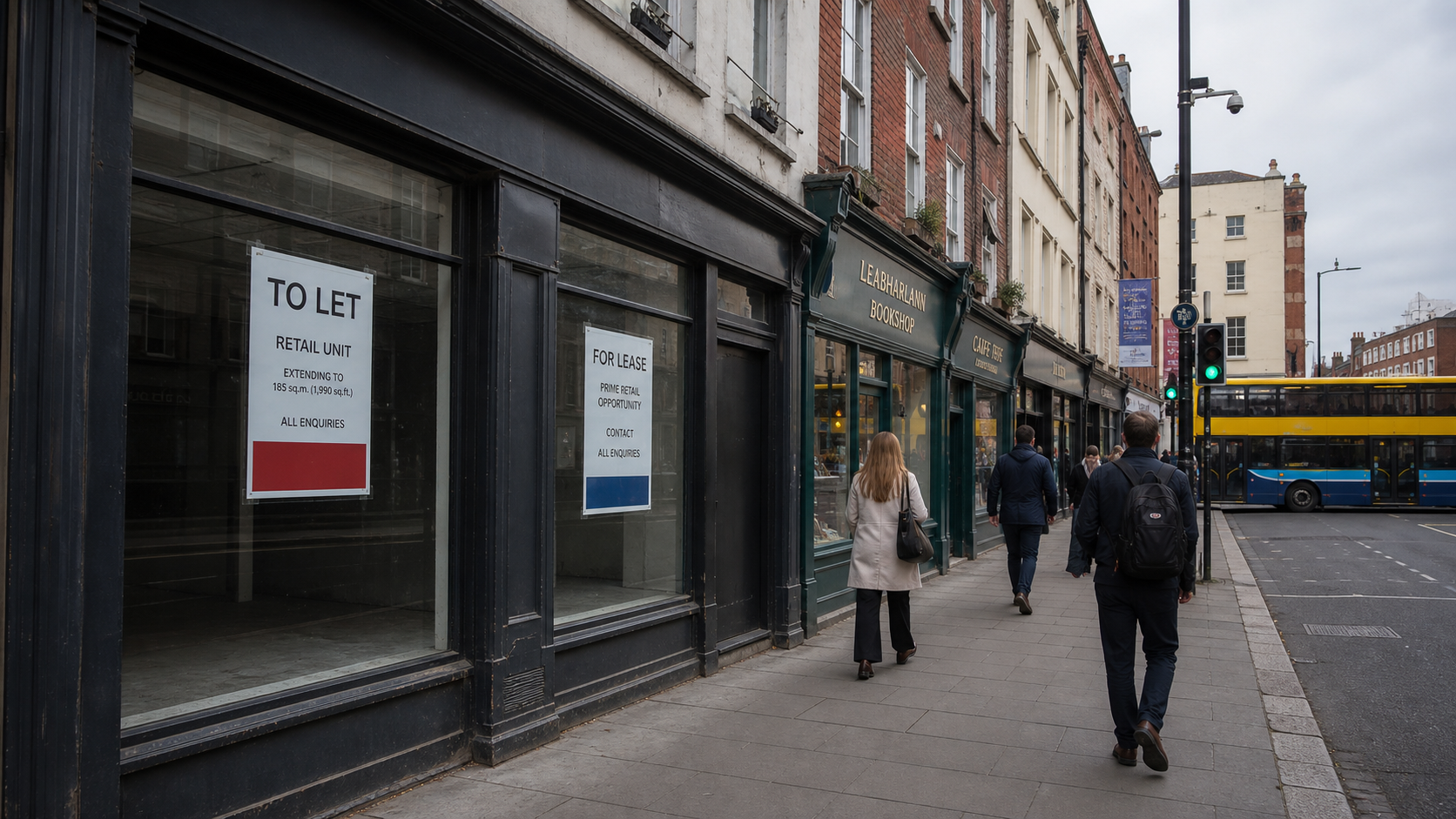
The closure has also prompted a broader conversation about the future of Limerick's city centre retail sector. The city has a number of significant commercial properties that have been vacant for extended periods, and the addition of the House Limerick premises to that list will increase pressure on the council and on the government to develop a coherent strategy for addressing commercial vacancy.
Limerick Chamber of Commerce has called for a review of commercial rates in the city centre, arguing that the current level of rates is making it difficult for businesses to remain viable in a challenging trading environment. The chamber has also called for greater flexibility in planning regulations to allow vacant commercial premises to be converted to alternative uses, including residential accommodation.
Why It Matters
The closure of House Limerick matters because it is symptomatic of a broader challenge facing Irish city centres. The retail and hospitality sectors, which have historically been the economic engines of urban commercial districts, are under sustained pressure from a combination of structural and cyclical factors that show no sign of abating. The growth of online retail, the rising cost of commercial rents and energy, and the changing preferences of consumers — who are increasingly choosing to spend their discretionary income on experiences rather than goods — are all contributing to a difficult trading environment for city centre businesses.
Limerick's experience is not unique. Cork, Galway, Waterford, and Dublin have all seen significant commercial closures in recent years, and the challenge of maintaining vibrant, economically active city centres is one that local authorities and the national government are grappling with across the country. The solutions — a combination of rate relief, planning flexibility, investment in public realm, and support for the creative and cultural sectors that can generate footfall — are well understood, but their implementation requires sustained political will and financial commitment.
Local Impact
The 300 workers affected by the House Limerick closure are predominantly from Limerick city and the surrounding areas of County Limerick. Many are in entry-level and semi-skilled positions in retail and hospitality — sectors where alternative employment is available but where the transition to a new job can take time and where the loss of income in the interim can cause real hardship. The Department of Social Protection's Intreo service in Limerick has indicated that it will prioritise the processing of claims from affected workers and will provide dedicated employment support services. Limerick and Clare Education and Training Board has also indicated that it will offer retraining opportunities for workers who wish to develop new skills.
What's Next
The immediate priority is the processing of redundancy payments for affected workers, which is expected to be completed within the statutory timeframe of six weeks. Limerick City and County Council is expected to convene an emergency meeting of its economic development committee to discuss the implications of the closure and to identify potential new uses for the vacant premises. The council has indicated that it is in contact with potential investors and operators who may be interested in taking over the site, though no specific proposals have been announced. A broader review of commercial vacancy in Limerick city centre is expected to be commissioned before the end of the year.