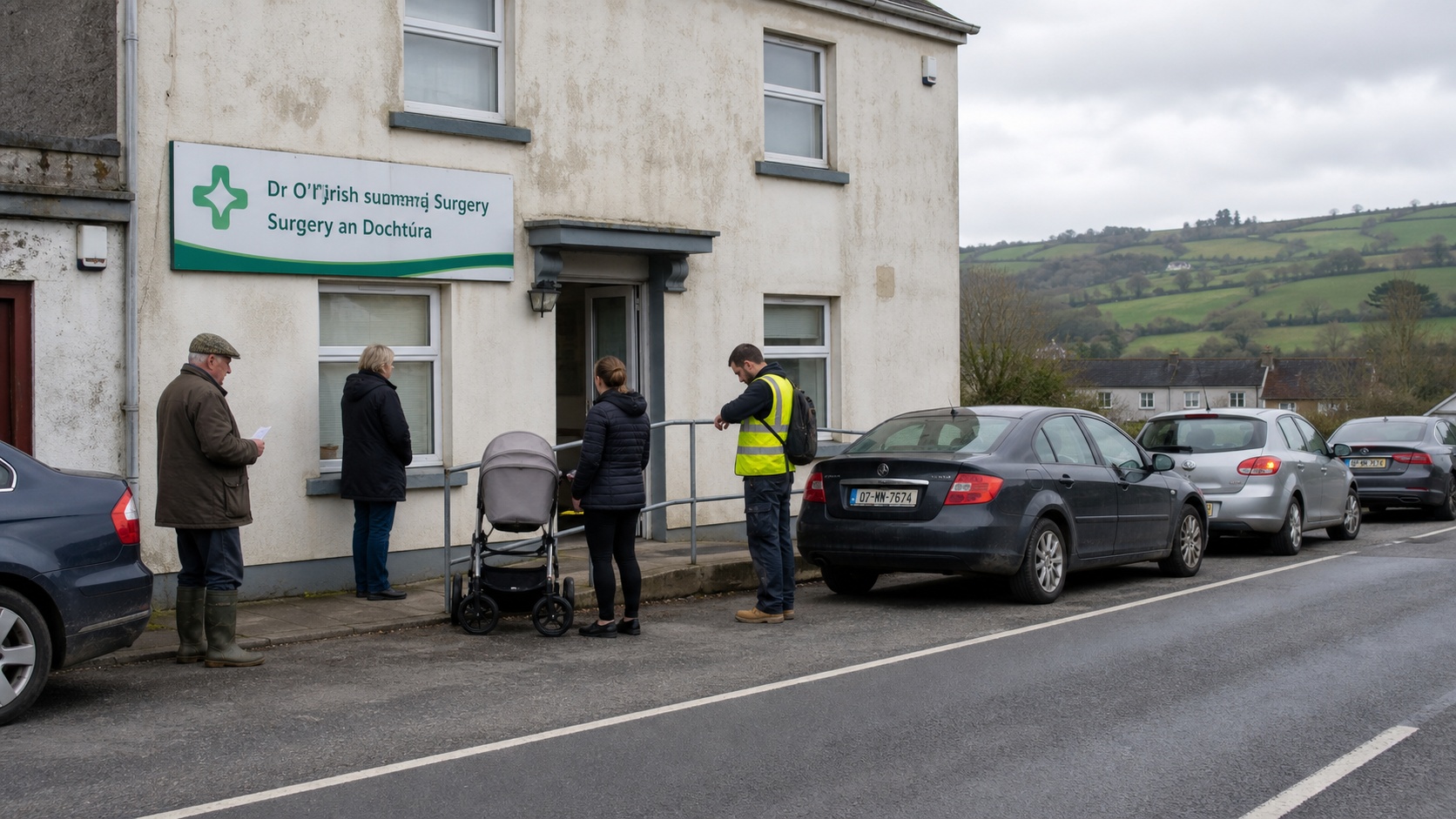
GP Shortage Crisis: Monaghan Has Lowest Doctor Coverage in Ireland as Rural and Commuter Belt Gaps Widen
Ireland's general practitioner shortage has reached a critical juncture, with the Irish College of General Practitioners estimating that more than 6,000 GPs are needed to meet current patient demand against an actual workforce of approximately 4,900 — a shortfall of more than 1,000 doctors that is being felt most acutely in rural areas along the western seaboard, in rapidly growing commuter belt counties, and in areas of urban deprivation. New data published by The Irish Times on Tuesday reveals that Monaghan has the lowest GP coverage per capita in the country at 50 to 52 GPs per 100,000 people, followed by Roscommon, Kilkenny, and Meath, while counties including Sligo, Westmeath, and Galway maintain significantly higher ratios.
Background
General practice is the foundation of Ireland's health system, providing the first point of contact for the vast majority of patients and managing the bulk of the country's healthcare needs outside of hospitals. A well-functioning GP system reduces pressure on emergency departments, manages chronic conditions before they become acute, and provides the continuity of care that is essential for good health outcomes. When GP access is inadequate — when patients cannot get appointments, when practices are overwhelmed, when GPs retire without successors — the consequences ripple through the entire health system.
Ireland's GP workforce has grown by approximately 10% over the past five years, reaching around 4,900 practitioners. But this growth has not kept pace with a 9% increase in the population over the same period, nor with the rising prevalence of chronic illnesses — diabetes, cardiovascular disease, mental health conditions — that require intensive primary care management. The result is a system under sustained and growing pressure, with waiting times for GP appointments increasing and an increasing number of patients unable to register with a GP at all.
The problem is not evenly distributed. Some parts of Ireland have adequate GP coverage; others are in genuine crisis. The new data published by The Irish Times provides the most detailed picture yet of where the shortages are most acute and what is driving them.
Key Developments
The data identifies three primary pressure points in Ireland's GP system. The first is rural and remote areas, particularly along the western seaboard, where low population density and an ageing GP workforce create a particularly challenging environment. Many older doctors in these areas work in single-handed practices, and when they retire — as a significant number are approaching retirement age — finding successors is extremely difficult. The HSE has been relying on locum cover in some areas, but this is an expensive and unsustainable solution.
The second pressure point is the commuter belt. Counties including Kildare, Meath, and parts of Wicklow have experienced rapid and sustained population growth over the past decade, driven by the expansion of housing development in areas within commuting distance of Dublin. This population growth has significantly outpaced the development of primary care infrastructure and the recruitment of new GPs, leaving many new residents without access to a local GP.
The third pressure point is urban deprivation. In areas like Dublin's northside, patients often present with complex, multi-morbid health conditions and develop chronic diseases a decade earlier than those in more affluent areas, placing a disproportionate administrative and clinical burden on local GPs. These practices are often under-resourced relative to the complexity of the needs they are managing.
The workforce data reveals stark geographic disparities. Monaghan has the lowest GP coverage per capita in the country at 50 to 52 GPs per 100,000 people, followed by Roscommon, Kilkenny, and Meath. Approximately 13.5% of GPs are aged 65 or older, and 5.9% are 70 or older — a demographic profile that suggests a significant wave of retirements in the coming years that will further strain an already stretched system.
Why It Matters
The GP shortage is not an abstract policy problem — it has direct and serious consequences for the health and wellbeing of Irish people. Patients who cannot access a GP in a timely manner are more likely to present at emergency departments with conditions that could have been managed in primary care, contributing to the overcrowding that has become a defining feature of Irish hospital emergency departments. They are also more likely to have chronic conditions that go unmanaged, leading to deterioration and more serious health crises down the line.
The geographic concentration of the shortage in rural areas and commuter belt counties raises particular concerns about health equity. People living in Monaghan or rural Roscommon should have the same access to primary care as people living in Dublin 4 or Cork city, but the data shows that they do not. This is a fundamental failure of the health system's commitment to universal access.
The ageing GP workforce is a ticking clock. With 13.5% of GPs aged 65 or older, the system faces a significant wave of retirements in the next five to ten years. Unless the pipeline of new GPs is dramatically expanded — and unless the conditions of practice are improved to make general practice an attractive career choice for medical graduates — the shortage will worsen significantly before it improves.
Local Impact
The impact of the GP shortage is felt most directly by patients who cannot get appointments, who are turned away from practices that are not taking new patients, or who face waiting times of weeks for non-urgent consultations. In Monaghan, Roscommon, and other counties with the lowest coverage, the situation is particularly acute, with some communities effectively without a local GP following retirements. In the commuter belt counties of Kildare and Meath, new housing estates have been built without adequate primary care infrastructure, leaving thousands of new residents without access to a local GP. The HSE's International Medical Graduate rural GP programme has recruited over 200 doctors to work in rural communities, providing some relief, but the scale of the challenge far exceeds what this programme alone can address.
What's Next
The Department of Health is conducting a strategic review of general practice, with recommendations expected before the end of 2026. The annual intake for the GP training programme has been expanded to 400 places in 2026, which will help to address the long-term deficit, but the effects of this expansion will not be felt for several years. The HSE is also offering relocation packages of up to €4,710 for non-EU candidates to attract GPs to work in Ireland. The ICGP has called for a comprehensive workforce plan that addresses not only the number of GPs but the conditions of practice, the administrative burden, and the supports available to GPs working in challenging environments.