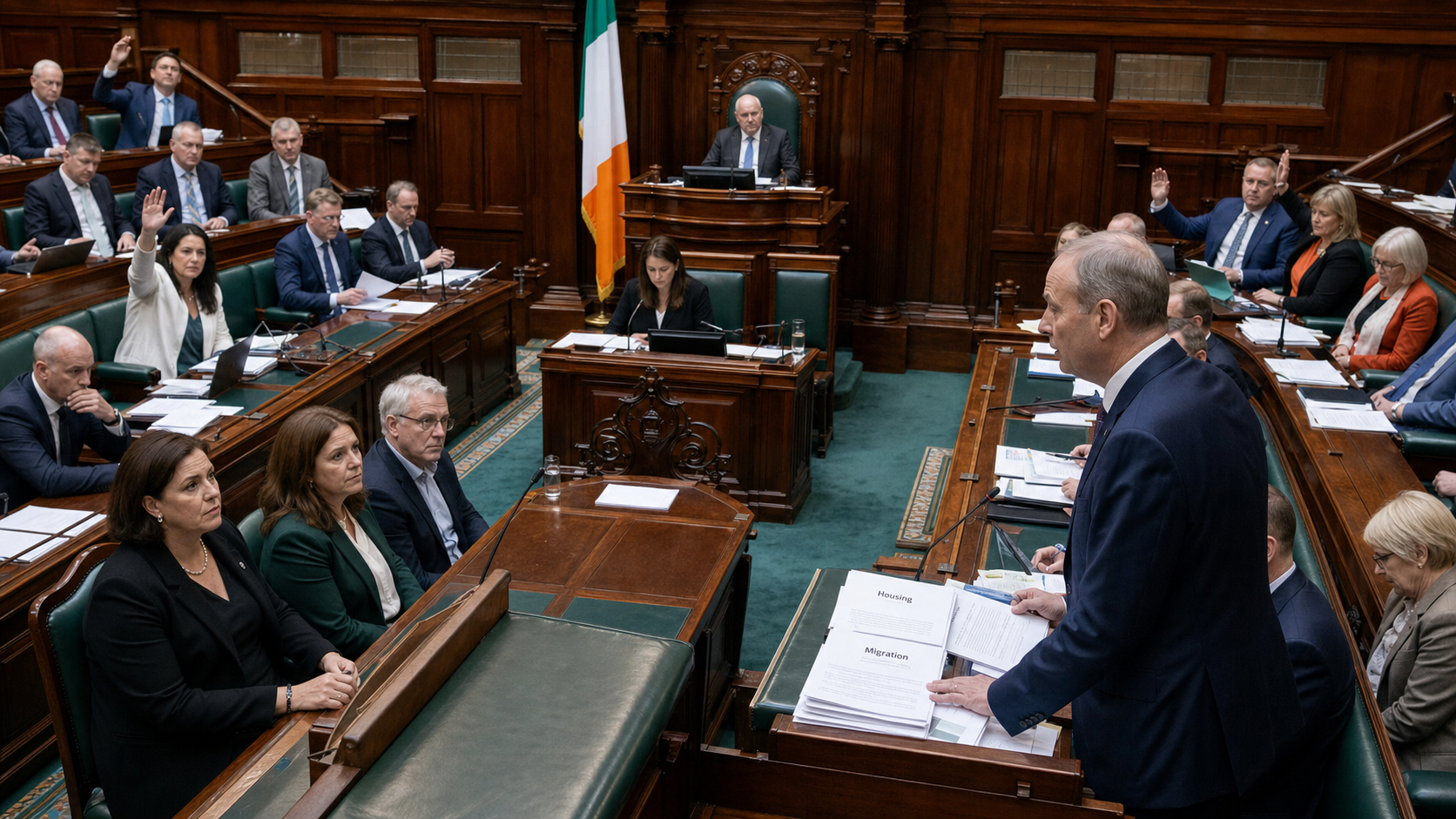
Government Fast-Tracks Bill to Lift Dublin Airport Passenger Cap Before Dáil Summer Recess
Transport Minister Darragh O'Brien is fast-tracking legislation to remove the 32-million-passenger annual cap at Dublin Airport, with the government determined to pass the bill before the Dáil rises for its summer recess in mid-July — a move that has reignited a long-running battle between aviation interests, local residents, and environmental campaigners.
Background
The passenger cap at Dublin Airport has been one of the most contentious planning and transport policy issues in Ireland for several years. The cap — which limits the airport to 32 million passengers per year — was imposed by Fingal County Council as a condition of planning permission for the airport's expansion. It was intended to address concerns about noise, traffic, and environmental impact in the communities surrounding the airport, particularly in north County Dublin.
The airport operator, daa, has argued consistently that the cap is an artificial constraint that prevents Dublin Airport from fulfilling its potential as a major European hub and that it damages Ireland's economic competitiveness. The government has broadly shared this view, arguing that connectivity is essential for a small, open economy like Ireland's and that restricting the airport's capacity limits the country's ability to attract investment, tourism, and trade.
The cap became a live political issue when passenger numbers began to approach the limit in 2024 and 2025, with daa warning that it would be forced to turn away airlines and passengers if the restriction was not lifted. The government's response has been to pursue legislative action to override the planning condition — a step that has been criticised by local residents' groups and environmental organisations as an inappropriate use of primary legislation to circumvent the planning process.
Key Developments
Minister O'Brien confirmed on 18 June that the government intends to pass the legislation before the Dáil summer recess, which is expected in mid-July. The bill will effectively remove the 32-million cap and replace it with a new framework for managing airport capacity that the government argues will be more flexible and better suited to Ireland's long-term aviation needs.
The minister argued that the cap is a "restrictive measure" that limits Ireland's economic growth, connectivity, and tourism potential. He pointed to the economic contribution of Dublin Airport — which supports tens of thousands of jobs directly and indirectly — as justification for the urgency of the legislative action.
Environmental groups have responded with concern, arguing that lifting the cap will lead to a significant increase in aviation emissions at a time when Ireland is already struggling to meet its climate targets. The Climate Action Plan commits Ireland to reducing emissions across all sectors, and aviation is one of the most difficult sectors to decarbonise. Critics argue that the government cannot credibly claim to be serious about climate action while simultaneously removing restrictions on airport growth.
Why It Matters
The Dublin Airport passenger cap debate encapsulates a broader tension in Irish policy between economic development and environmental sustainability. The government's decision to fast-track legislation to lift the cap signals a clear prioritisation of economic connectivity over the concerns of local residents and environmental advocates — a choice that will have implications for how the government's climate commitments are perceived.
For the aviation sector, the removal of the cap is a significant victory that will allow Dublin Airport to plan for growth with greater certainty. Airlines that have been reluctant to commit to new routes or increased frequencies because of the cap uncertainty will now be able to make longer-term decisions about their Dublin operations.
For the communities around the airport — in Swords, Malahide, Portmarnock, and the wider north Dublin area — the removal of the cap means more flights, more noise, and more traffic. Residents' groups have been vocal in their opposition and are likely to pursue legal challenges to the legislation if it is enacted.
Local Impact
The immediate practical impact of lifting the cap will be felt most directly by the communities in north County Dublin that live under the flight paths of Dublin Airport. Increased passenger numbers will mean more flights, and more flights will mean more noise — particularly during the early morning and late evening hours when noise impacts are most significant. Fingal County Council, which imposed the original cap, has expressed concern about the government's approach and has called for meaningful engagement with local communities before the legislation is enacted.
For the wider Dublin economy, the removal of the cap offers the prospect of increased connectivity — more direct routes to more destinations — that could benefit businesses, tourists, and the broader economy. The airport is a major employer in north Dublin, and its growth would support additional jobs in the aviation and hospitality sectors.
What's Next
The bill is expected to be published in the coming days and will be fast-tracked through the Oireachtas committee stage and remaining stages before the summer recess. Opposition parties have indicated they will seek to scrutinise the legislation carefully, and environmental groups have signalled they will engage with the committee process to raise their concerns. If enacted before the recess, the cap could be lifted as early as September 2026, allowing daa to begin planning for increased capacity immediately.