UK and Ireland at Odds Over Common Travel Area as NI Riots Trigger Border Security Debate
The violent riots that swept across Northern Ireland earlier this month have ignited a political firestorm over the future of the Common Travel Area, with the DUP demanding tighter border controls, the Irish government defending the open border as non-negotiable, and the UK announcing plans to surge intelligence-led immigration operations along CTA routes — all while both governments scramble to negotiate a bilateral returns agreement that neither has yet managed to conclude.
Background
The Common Travel Area is one of the oldest and most consequential bilateral arrangements between the United Kingdom and Ireland. Established in 1923, it allows citizens of both countries to move freely between the two states without passport checks, and it underpins the open border on the island of Ireland that is a central element of the Good Friday Agreement. The CTA survived Brexit — a remarkable achievement given the complexity of the negotiations — and is explicitly protected under the Withdrawal Agreement and the Windsor Framework.
The CTA has always had a security dimension. Both governments operate intelligence-led operations to identify individuals who may be using the arrangement to circumvent immigration controls, and there is a framework for information sharing between the UK Home Office and the Irish Department of Justice. However, the arrangement has never involved systematic passport checks at the Irish border, and both governments have consistently maintained that such checks would be incompatible with the Good Friday Agreement and with the spirit of the CTA itself.
The riots that erupted in Northern Ireland following a knife attack in north Belfast on 8 June brought the CTA's security dimension into sharp political focus. The suspect in the attack, a Sudanese national, had entered Northern Ireland via the Republic of Ireland. This fact was seized upon by DUP leader Gavin Robinson and others as evidence that the open border was being exploited for immigration purposes, and it triggered a debate that has exposed deep disagreements between the UK and Irish governments about how the CTA should be managed.
Key Developments
DUP leader Gavin Robinson met with UK Prime Minister Keir Starmer to press the case for tighter controls on the CTA, describing the border as "open and porous" and calling for a bilateral returns agreement that would allow the UK to remove individuals who had entered illegally via the Republic. Robinson's position has been supported by other unionist politicians and by some commentators who argue that the current arrangements are inadequate to prevent the CTA from being used as a back door into the UK.
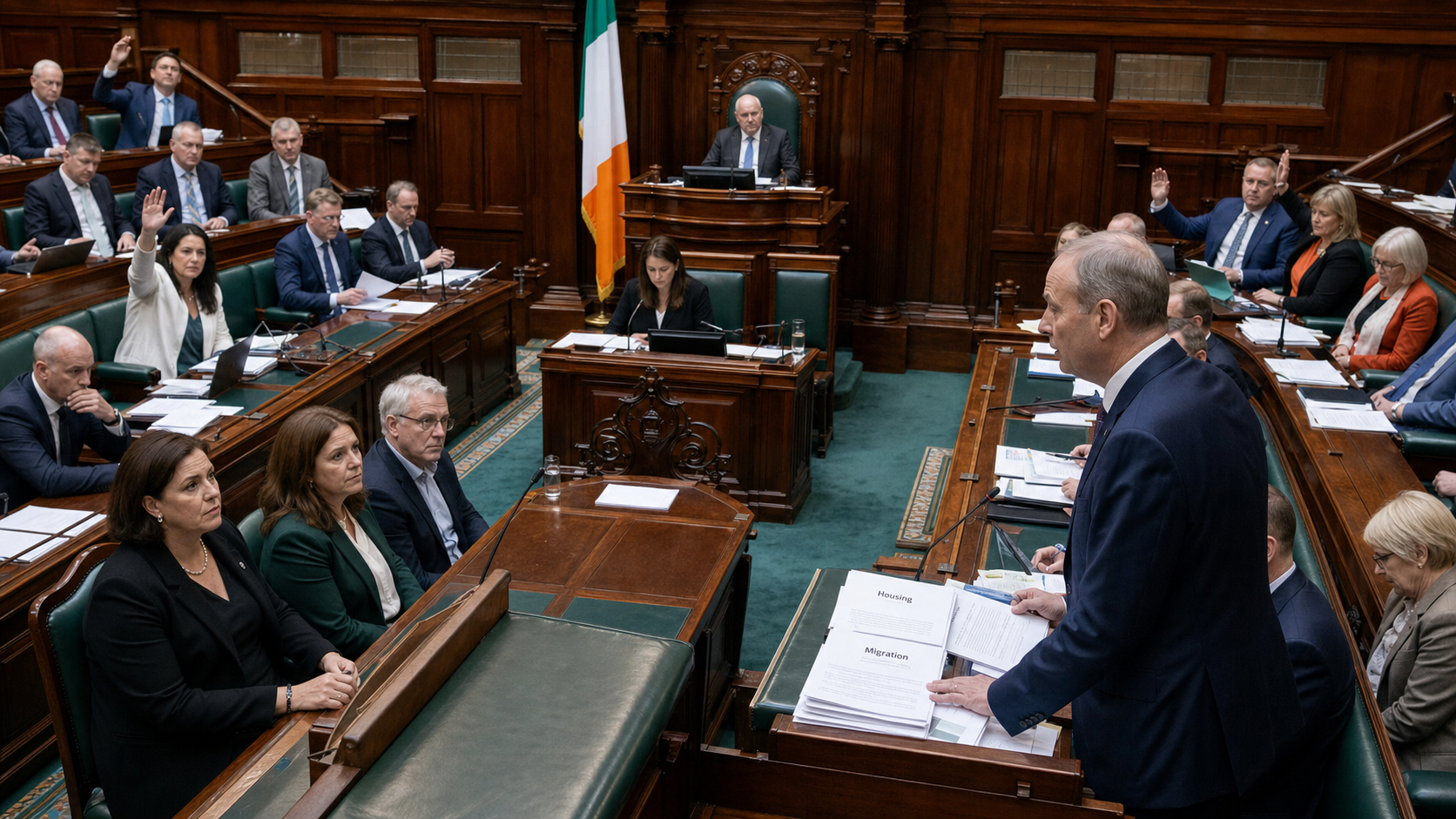
The Irish government has responded with a firm defence of the open border. Taoiseach Micheál Martin acknowledged the need to manage the CTA to prevent abuse but stated that the border itself is "non-negotiable" and that any solution must be based on cooperation and data sharing rather than physical controls. The Irish government has proposed a joint working group to develop enhanced information-sharing arrangements and to explore the possibility of a bilateral returns agreement — a mechanism that would allow both countries to return individuals to each other's territory in certain circumstances.
Northern Ireland Secretary Hilary Benn stated that Irish authorities had "questions to answer" regarding the suspect's movements, a comment that was interpreted in Dublin as an attempt to shift responsibility for the riots onto the Irish government. Sinn Féin's Matt Carthy criticised the EU Migration Pact for failing to account for the island's division and called for a bilateral returns arrangement, while SDLP leader Claire Hanna dismissed DUP calls for a harder border as "bunkum."
Why It Matters
The CTA debate is about much more than immigration policy. It goes to the heart of the relationship between the UK and Ireland, the future of the Good Friday Agreement, and the political stability of Northern Ireland. Any move to introduce systematic checks on the Irish border — even if framed as an immigration measure rather than a customs or trade measure — would be seen by nationalists and republicans as a fundamental breach of the peace settlement and would risk reigniting political tensions that have been carefully managed for more than two decades.
The DUP's position is understandable in political terms: the party is under pressure from its own base to be seen to be responding to the riots, and border security is an issue on which it can differentiate itself from other parties. But the practical reality is that a hard border on the island of Ireland is not achievable without tearing up the Good Friday Agreement, and no responsible government in London or Dublin is prepared to do that. The debate is therefore likely to resolve itself around enhanced intelligence cooperation and a bilateral returns agreement — measures that address the security concern without requiring physical border infrastructure.
Local Impact
The CTA debate has immediate practical implications for the tens of thousands of people who cross the Irish border every day for work, education, healthcare, and family reasons. In border communities from Derry~Londonderry to Newry, from Enniskillen to Dundalk, the open border is not an abstract political concept but a daily reality that shapes how people live their lives. Any move towards border checks — even if temporary or limited in scope — would disrupt these communities in ways that are difficult to quantify but easy to imagine. The cross-border economy, which has grown significantly since the Good Friday Agreement and which now accounts for billions of euros in annual trade, would also be affected by any deterioration in the CTA arrangements.
What's Next
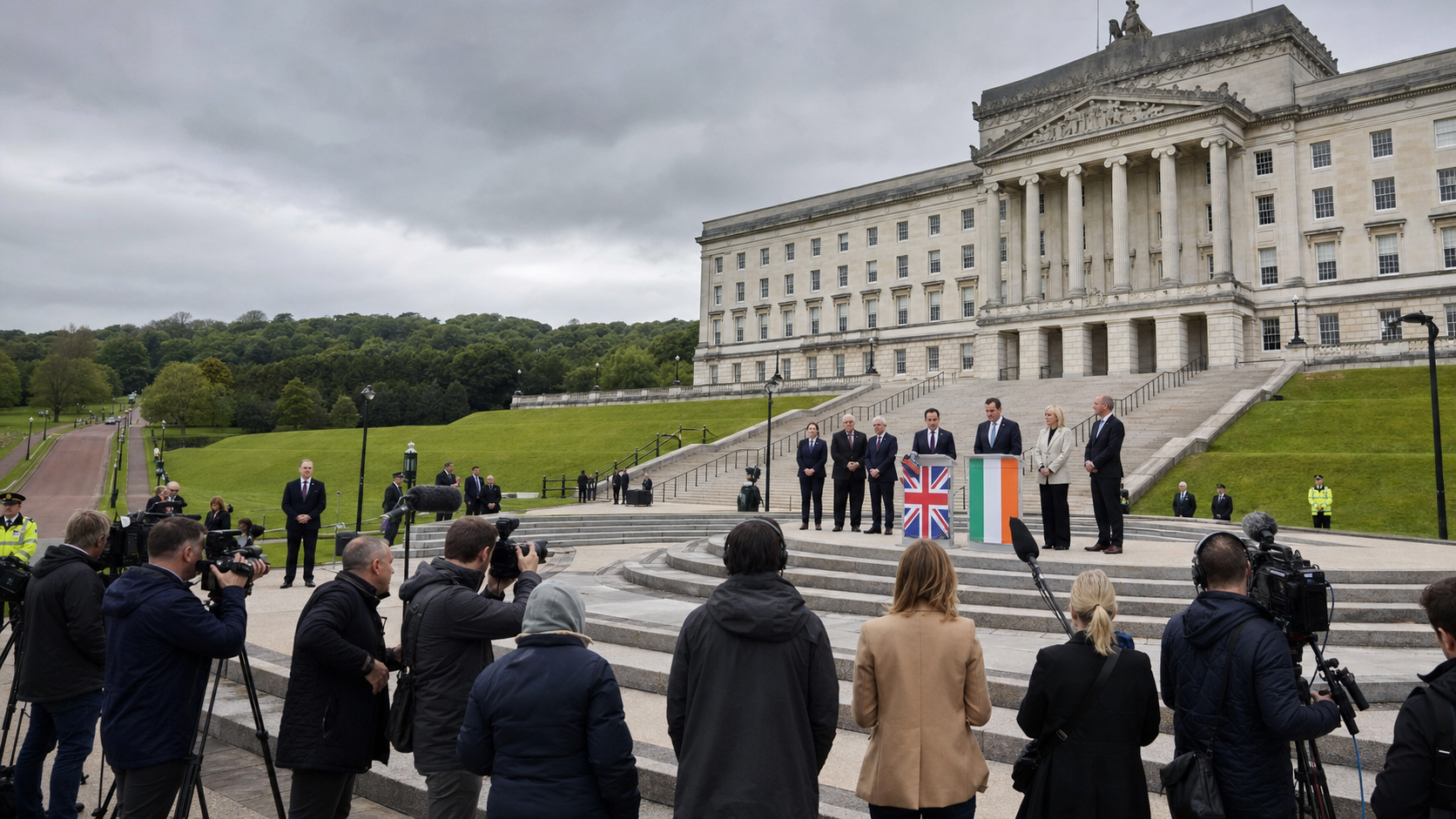
The UK and Irish governments are engaged in bilateral discussions about immigration data sharing and returns, with a joint statement expected before the end of June. The discussions are taking place at official level, with ministers from both sides expected to meet in the coming weeks. The DUP has indicated that it will continue to press for a bilateral returns agreement and for enhanced intelligence operations along CTA routes. The Irish government has said it is open to discussing enhanced cooperation but will not accept any measures that undermine the open border or the Good Friday Agreement. The outcome of the negotiations will be closely watched by all parties in Northern Ireland and by the European Commission, which has an interest in ensuring that the Windsor Framework is not undermined by unilateral security measures.