UK Treasury's 'Open Book NI' Review Finds Per-Capita Spending 52% Above England — O'Neill and Little-Pengelly Reject Findings
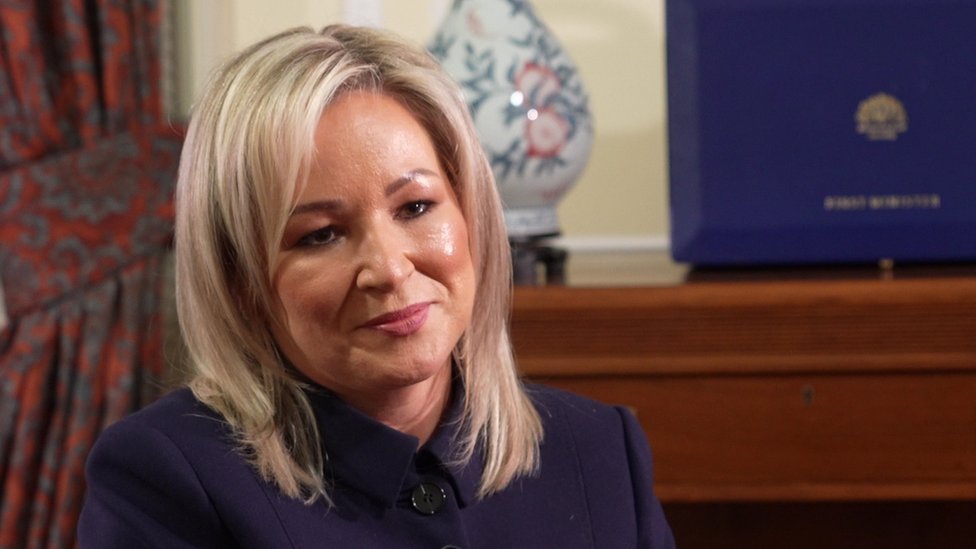
A UK Treasury review of public spending in Northern Ireland has found that per-capita expenditure is 52% higher than in England for health, 66% higher for policing, and 40% higher for schools, with the report suggesting that efficiency reforms could unlock up to £3.3 billion per year — findings that have been jointly and forcefully rejected by First Minister Michelle O'Neill and Deputy First Minister Emma Little-Pengelly, who argue the analysis fundamentally misrepresents Northern Ireland's structural needs.
Background
The relationship between Northern Ireland's public spending and the UK block grant has been a source of political tension for decades. Northern Ireland receives a higher per-capita allocation from Westminster than England, Scotland, or Wales — a differential that reflects the Barnett formula's application to a jurisdiction with a smaller population and, historically, greater public service needs arising from the legacy of the Troubles and the structural weaknesses of the local economy.
The Treasury's 'Open Book NI' review was commissioned as part of a broader UK Government effort to understand the drivers of public spending across the devolved nations and to identify opportunities for efficiency improvements. The review drew on detailed data from Northern Ireland's departments and agencies, comparing spending levels and outcomes with equivalent services in England and other parts of the UK.
The publication of the review's findings has reignited a long-standing debate about the adequacy and efficiency of public spending in Northern Ireland. Supporters of the current spending levels argue that the higher per-capita figures reflect genuine need — a health service dealing with the consequences of decades of underinvestment, a police service managing the ongoing legacy of the conflict, and an education system serving a divided community with two parallel school systems. Critics argue that the higher spending reflects structural inefficiencies that have been allowed to persist because of the political sensitivity of reform.
Key Developments
The Treasury review's headline findings — 152% of England's per-capita health spending, 166% for policing, and 140% for schools — have been presented by some commentators as evidence of significant inefficiency in Northern Ireland's public services. The report's suggestion that efficiency reforms could unlock up to £3.3 billion per year has been seized upon by those who argue that Northern Ireland's public services need fundamental restructuring rather than simply more money.
The joint response from First Minister O'Neill and Deputy First Minister Little-Pengelly has been unusually united for two leaders from parties that are, in most respects, political opponents. Both leaders have argued that the Treasury's analysis fails to account for the unique structural factors that drive higher spending in Northern Ireland — including the costs of maintaining two parallel education systems, the ongoing security costs associated with the legacy of the Troubles, and the particular health needs of a population that has experienced decades of conflict-related trauma and deprivation.
Permanent Secretary Mike Farrar has separately warned that the £26 billion health allocation in the draft multi-year budget is insufficient without fundamental reform of how health services are delivered. Farrar's intervention has added a further layer of complexity to the budget debate, with the Treasury review and the Permanent Secretary's warning both pointing in the direction of significant structural change — but without providing a clear roadmap for how that change should be achieved.
Why It Matters
The Treasury review matters because it frames the political debate about Northern Ireland's public finances in a way that could have significant consequences for future block grant settlements. If the UK Government accepts the review's framing — that Northern Ireland's higher spending reflects inefficiency rather than need — it could use this as justification for reducing the block grant in future spending reviews, placing additional pressure on an already strained public sector.
The joint rejection of the review's findings by O'Neill and Little-Pengelly is politically significant. The two leaders, from Sinn Féin and the DUP respectively, rarely agree on anything, and their united front on this issue sends a clear message to Westminster that the Executive will not accept a narrative that frames Northern Ireland's public spending as wasteful. The cross-party unity also provides political cover for both leaders domestically — neither can be accused of being soft on the Treasury's position.
The efficiency question is, however, not entirely without merit. Northern Ireland's two parallel school systems — maintained (largely Catholic) and controlled (largely Protestant) — do generate duplication of costs that would not exist in a single integrated system. The health service's hospital-heavy model, with relatively underdeveloped community and primary care, is widely acknowledged to be less efficient than the models being pursued in other parts of the UK. These are genuine structural issues that the Executive will need to address, regardless of the Treasury review's framing.
Local Impact
The Treasury review's findings have been received with considerable anxiety by public sector workers and trade unions across Northern Ireland. The suggestion that £3.3 billion per year could be saved through efficiency reforms has been interpreted by many as a precursor to significant job cuts and service reductions. NIPSA, the largest public sector union in Northern Ireland, has called for a full public debate on the review's findings and has warned against any attempt to use the review as a justification for cuts to frontline services.
In communities across Northern Ireland — from the Shankill Road to the Falls, from Derry's Bogside to Newry's Derrybeg estate — the prospect of public service cuts is a source of genuine fear. These are communities where public services are not a luxury but a lifeline, and where the consequences of reduced investment are felt immediately and acutely.
What's Next
The UK Government is expected to respond formally to the Executive's rejection of the review's findings in the coming weeks. A meeting between the Secretary of State for Northern Ireland and the First and Deputy First Ministers is expected to be arranged to discuss the review and its implications for the block grant settlement. The Stormont Assembly's Finance Committee has announced it will hold a series of evidence sessions on the review, inviting economists, public service leaders, and community representatives to contribute to a comprehensive assessment of its findings and recommendations.