Ireland's New Diaspora Strategy Broadens Definition of 'Irishness' to Embrace Affinity Community
The Irish government has launched its 2026-2030 Diaspora Strategy, introducing a significant conceptual shift by formally recognising the "affinity diaspora" — people who are not of Irish descent but who have developed a deep and lasting connection to Ireland through having lived, worked, or studied here — and signalling a more expansive and inclusive vision of what it means to be part of the global Irish community.
Background
Ireland's relationship with its diaspora is one of the defining features of the country's national identity and foreign policy. With an estimated 70 million people worldwide claiming Irish descent — a figure that dwarfs the island's population of approximately seven million — the diaspora has long been a source of cultural pride, political influence, and economic connection. The Irish government has maintained a dedicated diaspora policy since the 1990s, when the scale and significance of the global Irish community began to be formally recognised as a strategic asset.
Previous diaspora strategies have focused primarily on the heritage diaspora — those with Irish ancestry, particularly in the United States, Britain, Australia, and Canada, where the largest concentrations of Irish-descended people are found. The Irish-American community, in particular, has been a significant factor in Irish foreign policy, most notably in the context of the Northern Ireland peace process, where the political influence of Irish-Americans in Washington played an important role.
But the nature of the Irish diaspora has been changing. Emigration patterns have shifted, with significant numbers of Irish people now living in continental Europe, the Middle East, Asia, and Africa. And the concept of connection to Ireland has evolved — there are many people around the world who have no Irish ancestry but who have lived in Ireland, worked for Irish companies, studied at Irish universities, or developed a deep affinity with Irish culture and values.
Key Developments
The 2026-2030 Diaspora Strategy, launched on 19 June, formally recognises the "affinity diaspora" as a distinct and valued component of the global Irish community. This group — people who are not of Irish descent but who have a strong, lasting connection to Ireland — is explicitly included in the strategy's vision and in the programmes it proposes to support.
The strategy reflects a recognition that Ireland's global network is broader than its genealogical connections, and that the goodwill and advocacy of those who have experienced Ireland directly — even without ancestral ties — is a genuine asset that the state should cultivate. The inclusion of the affinity diaspora also reflects the reality that Ireland has become a country of immigration as well as emigration, and that many of those who have come to Ireland and then moved on carry a connection to the country that is no less real for being recent.
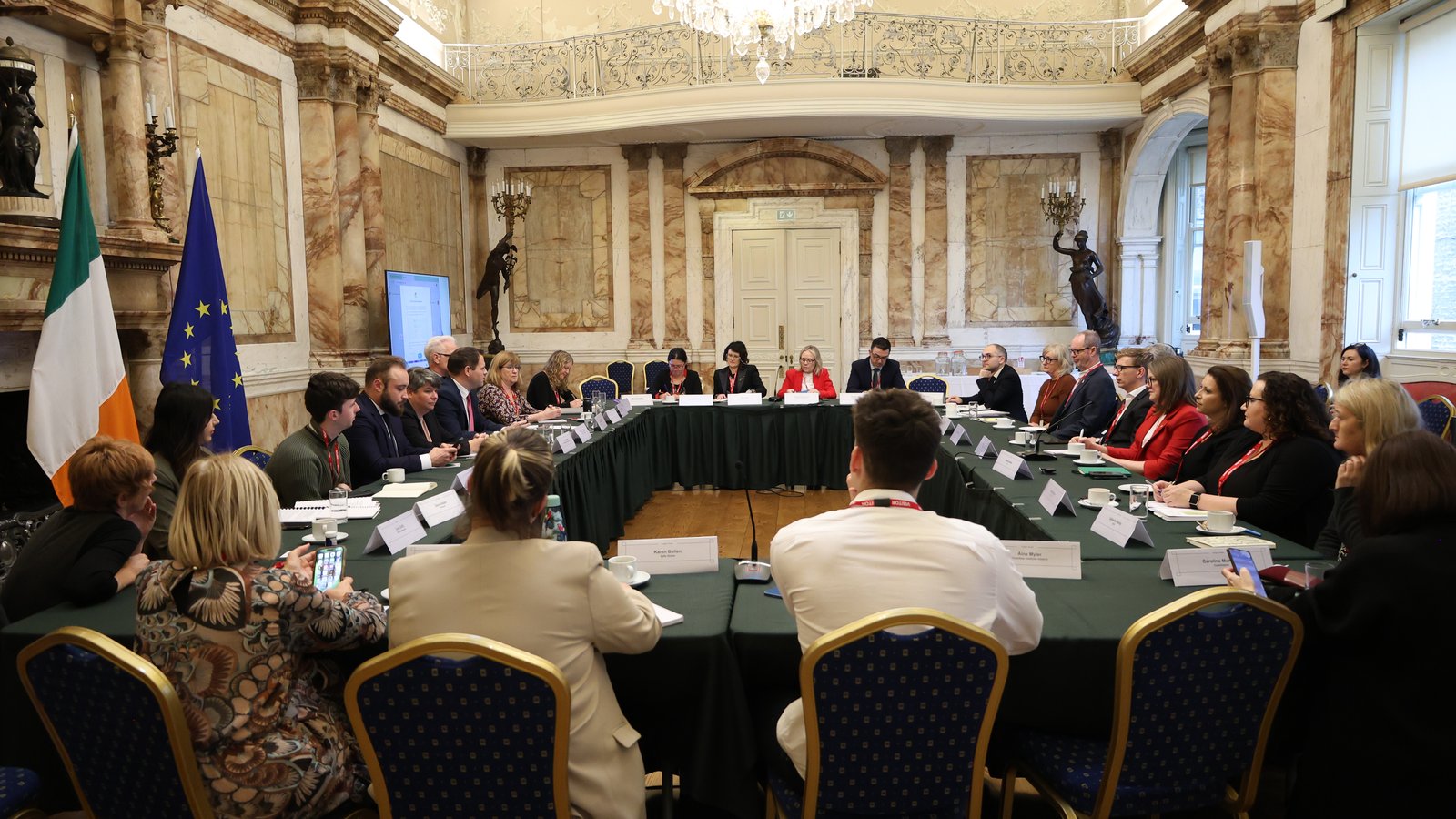
The global consultations that informed the strategy were held in a diverse range of locations, including Nairobi — a signal that the government is thinking beyond the traditional US-centric model of diaspora engagement and recognising the growing Irish presence in Africa and other emerging regions.
Why It Matters
The recognition of the affinity diaspora matters because it reflects a more honest and inclusive understanding of what Ireland's global community actually looks like. The traditional focus on heritage and ancestry, while important, has sometimes obscured the reality that Ireland's connections to the world are more diverse and more dynamic than a simple genealogical map would suggest.
For Irish foreign policy, the expansion of the diaspora concept has practical implications. A broader definition of the Irish community means a broader network of potential advocates, partners, and allies — people who may not have Irish grandparents but who have Irish friends, Irish colleagues, or Irish experiences that give them a genuine stake in Ireland's reputation and wellbeing.
The strategy also has implications for how Ireland thinks about its own identity. A country that defines its diaspora purely in terms of ancestry is, implicitly, defining Irishness in ethnic terms. A country that includes the affinity diaspora is making a more civic and inclusive statement about what it means to be connected to Ireland.
Local Impact
Within Ireland, the new strategy will be implemented through the Department of Foreign Affairs and the network of Irish embassies and consulates worldwide. The Emigrant Support Programme, which funds Irish community organisations overseas, will be reviewed to ensure it reflects the broader definition of the diaspora. New programmes to engage the affinity diaspora — including alumni networks for those who studied at Irish universities and professional networks for those who worked for Irish companies — are expected to be developed as part of the strategy's implementation.
For Irish communities in Britain, the United States, Australia, and elsewhere, the strategy reaffirms the government's commitment to supporting their welfare and maintaining their connection to Ireland. The Emigrant Support Programme, which provides funding for Irish community organisations in these locations, will continue to be a central element of diaspora policy.
What's Next
The Department of Foreign Affairs will publish an implementation plan for the 2026-2030 strategy in the autumn, setting out the specific programmes and initiatives that will be developed to deliver on its objectives. A new diaspora advisory forum, including representatives of both the heritage and affinity diaspora, is expected to be established to provide ongoing input into the strategy's implementation. The first formal review of progress against the strategy's objectives is planned for 2028.