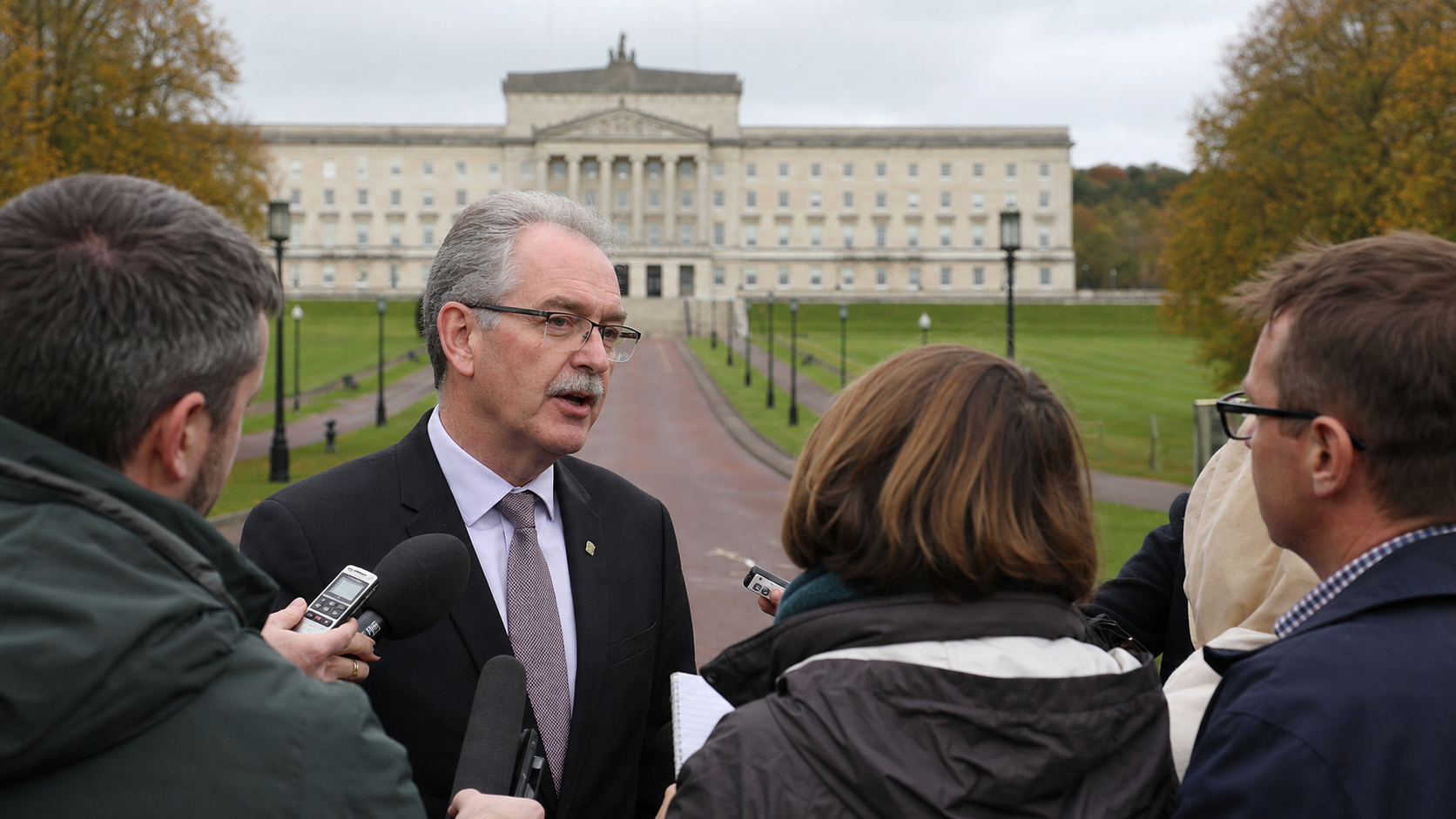
Gerry Kelly to Stand Down at Next Stormont Election After Three Decades as North Belfast MLA
Veteran Sinn Féin MLA Gerry Kelly has confirmed he will not contest the next Stormont Assembly election, bringing to an end a political career spanning three decades that included a central role in the negotiations leading to the Good Friday Agreement, service as a junior minister at Stormont, and representation of North Belfast through some of the most turbulent and transformative periods in the history of the six counties.
Background
Gerry Kelly's political career is inseparable from the history of the peace process in Northern Ireland. Born in North Belfast in 1953, Kelly became involved in republican politics at a young age and was convicted in 1973 for his role in the Old Bailey bombing in London, for which he received two life sentences. He subsequently led the 1983 Maze Prison escape, one of the most dramatic events in the history of the Troubles, before being recaptured in the Netherlands in 1986. He was released under the terms of the Good Friday Agreement in 1998.
Kelly's transition from prisoner to politician was one of the most striking personal journeys of the peace process era. He became involved in the Northern Ireland Forum in 1996 and was a key member of the Sinn Féin negotiating team during the talks that led to the Good Friday Agreement in 1998. His presence at the negotiating table — a man who had served time for some of the most serious offences of the Troubles — was itself a symbol of the transformation that the peace process represented. He was first elected to the Northern Ireland Assembly in 1998 and has held his North Belfast seat through every subsequent election.
During his time in the Assembly, Kelly served as a junior minister in the Office of the First Minister and Deputy First Minister from 2007 to 2011, a period that coincided with the first sustained period of power-sharing between Sinn Féin and the DUP under the St Andrews Agreement. He has been a consistent advocate for Irish unity and has played a significant role in Sinn Féin's outreach to unionist and loyalist communities, a dimension of his work that has been less visible than his more combative political interventions but arguably more significant in the long term.
Key Developments
Kelly announced his decision not to contest the next election on 22 July 2026, stating that he was looking forward to spending more time with his family while remaining an activist in the broader republican movement. At 73, he is one of the oldest serving MLAs and has indicated that the time is right for a new generation to take on the responsibilities of elected representation. First Minister Michelle O'Neill and other Sinn Féin leadership figures acknowledged his "decades of dedicated service" and his commitment to the goal of Irish unity.
Sinn Féin has indicated that it is in the process of selecting candidates for various constituencies to replace outgoing representatives, and the North Belfast seat will be a priority given its political significance. The constituency, which includes areas such as the Ardoyne, New Lodge, and Tiger's Bay, has been a Sinn Féin stronghold for many years, though the party will need to work to maintain its vote share in the face of competition from the SDLP and, increasingly, the Alliance Party.
Kelly's departure is part of a broader generational transition within Sinn Féin, as the party's founding generation of peace process politicians makes way for a younger cohort that has grown up in the post-Agreement era. The party's leadership in both the North and the South is increasingly drawn from this younger generation, and the transition is being managed carefully to maintain continuity while bringing fresh energy and perspectives to the party's work.
Why It Matters
Gerry Kelly's retirement from electoral politics marks the end of an era in Northern Ireland politics. He is one of the last serving MLAs whose political formation was shaped by the Troubles rather than by the peace process, and his departure from the Assembly will remove a figure whose personal history embodies both the violence of the conflict and the possibility of transformation. His role in the Good Friday Agreement negotiations, his service as a minister, and his three decades of constituency work in North Belfast represent a contribution to the peace process that is difficult to quantify but impossible to ignore. The question of how Sinn Féin manages the transition from the peace process generation to the next cohort of leaders will be one of the defining challenges for the party in the years ahead.
Local Impact
In North Belfast, Kelly's retirement will be felt most acutely in the communities he has represented for three decades. The Ardoyne, New Lodge, and surrounding areas have been among the most contested and at times most violent parts of Belfast during the Troubles and the early years of the peace process, and Kelly's presence as their MLA has been a source of continuity and stability during a period of profound change. His successor will inherit a constituency that has been transformed by the peace process but that continues to face significant challenges in terms of deprivation, educational attainment, and community relations. The selection of that successor will be one of the most closely watched internal Sinn Féin processes of the coming months.
What's Next
Kelly will continue to serve as an MLA for North Belfast until the next Stormont Assembly election, which is expected by May 2027. Sinn Féin's candidate selection process for North Belfast is expected to begin in the autumn of 2026, with the party's internal structures determining who will contest the seat. The broader question of how Sinn Féin manages the generational transition in its Assembly team — with several other long-serving MLAs also approaching the end of their careers — will be a significant internal challenge for the party in the run-up to the next election.