Gerry Hutch's Byelection Bid Sparks Transparency Row Over Hidden Property Assets
The independent candidacy of Gerry "The Monk" Hutch in the Dublin Central byelection has ignited a major political controversy, as he refuses to disclose the extent of his property holdings until after the election. The move has drawn sharp criticism from rival candidates, who are demanding full transparency amid ongoing criminal investigations into Hutch's financial affairs in both Ireland and Spain.Background
Gerry Hutch, a figure long associated with organised crime in Dublin, has formally entered the political arena as an independent candidate for the 22 May byelection. This is not his first foray into politics; he came surprisingly close to winning a Dáil seat in the 2024 general election, securing a significant number of first-preference votes that shocked the political establishment. His decision to run again has thrust his controversial past and opaque financial dealings directly into the campaign spotlight.
Hutch's candidacy is shadowed by serious legal issues. Spanish authorities have recently frozen his property assets on the island of Lanzarote as part of a money-laundering investigation. Simultaneously, in Ireland, the Director of Public Prosecutions (DPP) is considering whether to bring charges against him following a lengthy Garda investigation into allegations that he controlled a criminal organisation. Despite these mounting legal pressures, Hutch has remained defiant, expressing confidence that he will be exonerated of all wrongdoing.
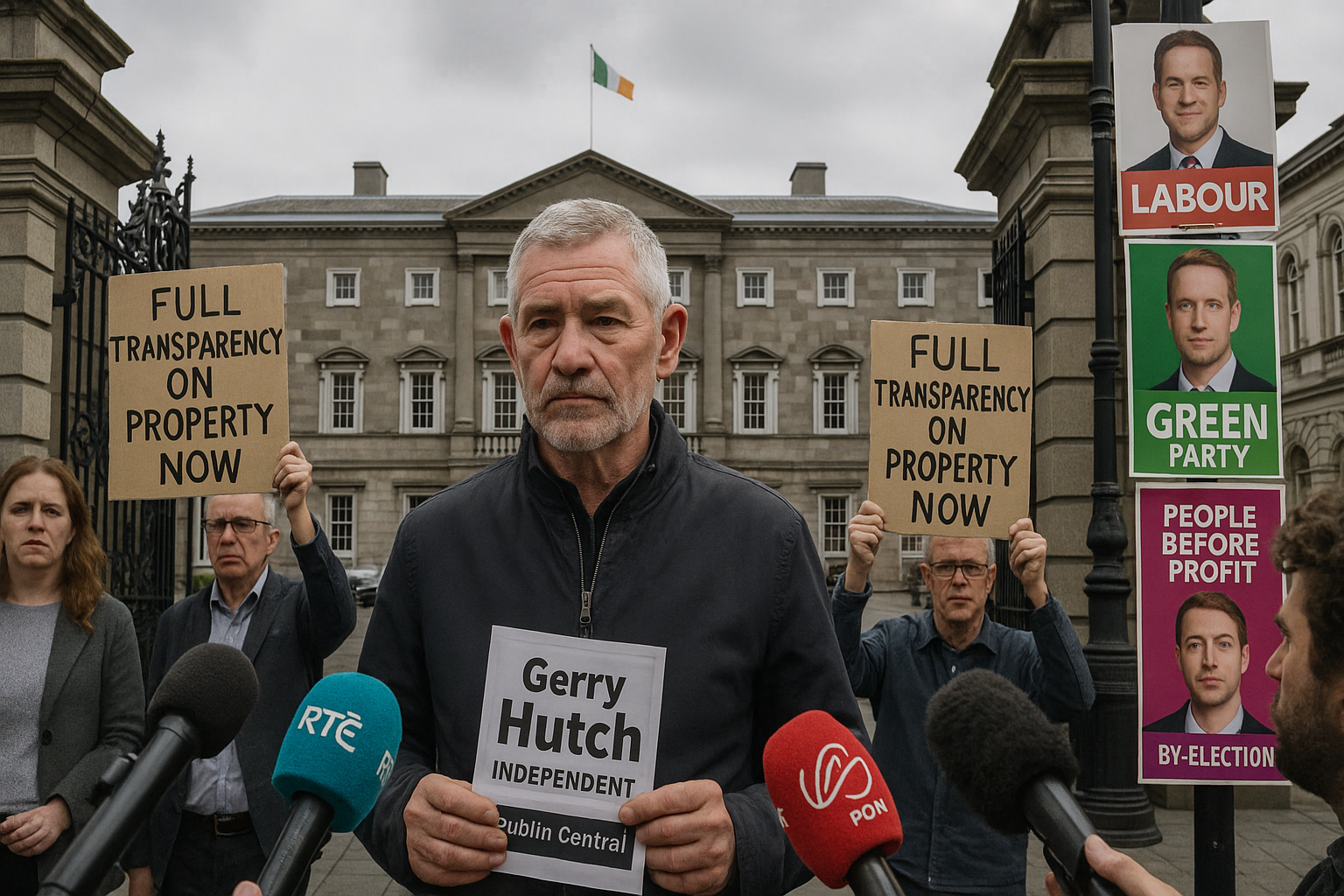
The core of the current controversy lies in his refusal to provide any details about his property portfolio. In a recent interview conducted from Lanzarote, Hutch stated that he considers his assets a private matter and would only make a disclosure if he were to be elected, provocatively suggesting he might be the wealthiest TD in the Dáil. This stance has created a significant political flashpoint, particularly in a constituency grappling with a severe housing and rental crisis.
Key Developments
Hutch's refusal to be transparent about his property assets has prompted a unified chorus of condemnation from his political opponents in Dublin Central. Labour's candidate, Ruth O'Dea, argued that voters "deserve full transparency," stating that openness about property ownership is essential for voters to see where candidates stand on housing "not just in policy, but in practice." She confirmed that, aside from her family home, she owns no other property.
This sentiment was echoed by other candidates. The Green Party's Janet Horner emphasised the importance of "integrity and transparency" in politics. People Before Profit's Eoghan Ó Ceannabháin, who is a renter himself, declared it was crucial for voters to know whether they are "voting for a landlord or not," given the extreme difficulties faced by tenants in the constituency. Even fellow independent Mannix Flynn called for all candidates to disclose their assets, stating, "It's that simple."
The controversy has highlighted a significant grey area in electoral law, which does not compel non-elected candidates to make the same level of financial disclosure as sitting TDs. Hutch's campaign is effectively testing the boundaries of these regulations, forcing a public debate on what level of transparency should be required of those seeking public office.
Why It Matters
The row over Gerry Hutch's assets goes to the heart of fundamental questions about ethics and accountability in public life. In an era of declining trust in political institutions, the demand for transparency from elected officials has never been greater. Hutch's defiance challenges the very principle that those who seek to make laws on behalf of the public should be open to scrutiny about their own financial affairs. His candidacy raises the uncomfortable question of whether a significant personal fortune, potentially derived from illicit activities, should be a barrier to holding public office.
Furthermore, the issue has a particular resonance in the context of Ireland's ongoing housing crisis. With rents soaring and homeownership out of reach for many, the question of whether a candidate is a major landlord is not a trivial one. It speaks directly to potential conflicts of interest and the ability of a representative to legislate impartially on housing policy. This is the third time in recent years that questions of candidate transparency have dominated an Irish electoral contest — the pattern suggests a growing public appetite for reform of disclosure rules. The level of support Hutch receives will be a telling indicator of public attitudes on this critical issue.
Local Impact
In Dublin Central, a constituency at the epicentre of the capital's housing crisis, the debate over Hutch's property portfolio is not an abstract one. For the thousands of residents struggling with exorbitant rents, insecure tenancies, and the near impossibility of buying a home, the issue is deeply personal. The demand for transparency from candidates on their property interests is a direct reflection of the community's anxieties. Voters will be asking themselves whether a candidate with significant, undisclosed property wealth can genuinely represent the interests of those who are most vulnerable in the housing market. The controversy may also have a polarising effect on the local electorate, with some drawn to Hutch's anti-establishment appeal and others deeply troubled by the ethical questions surrounding his candidacy.
What's Next
As the byelection campaign continues, the pressure on Gerry Hutch to disclose his assets is likely to intensify. The media will continue to scrutinise his financial background, and his opponents will ensure the issue remains at the forefront of the political debate. The DPP's decision on whether to press charges against him could also have a dramatic impact on the race, although the timing of any such announcement is uncertain. Ultimately, it will be up to the voters of Dublin Central to deliver their verdict on 22 May. Their decision will be a powerful statement about the standards they expect from their elected representatives and the importance they place on transparency and accountability in modern Irish politics.
Sources: The Irish Times | The Irish Times