Gardaí to Begin High-Risk Vehicle Pursuit Training for First Time as Government Moves on Wrong-Way Driving Legislation
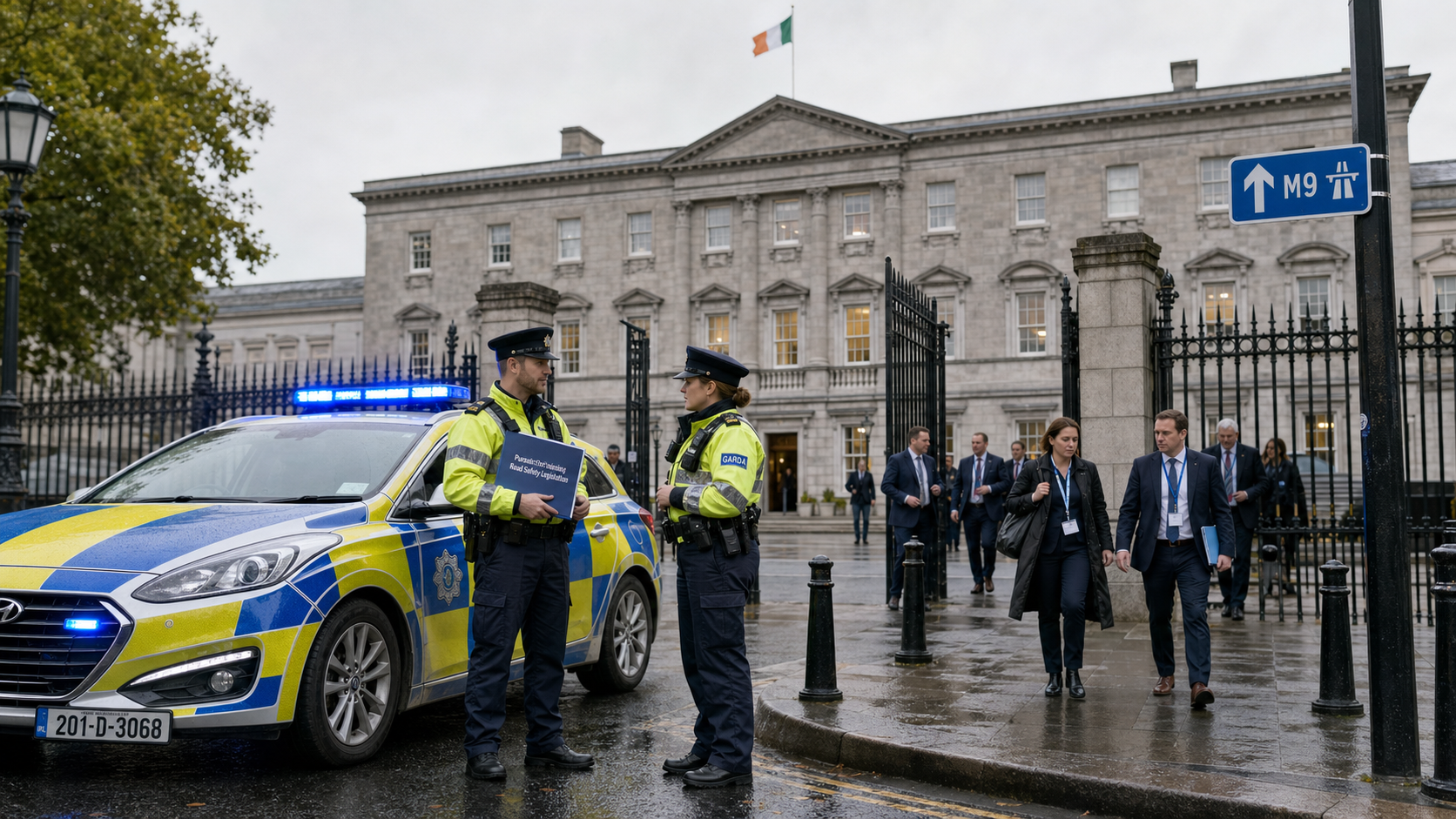
Gardaí are to receive specialist high-risk vehicle pursuit training for the first time in the force's history, with Garda Commissioner Justin Kelly confirming the programme will begin before the end of 2026 following the M9 motorway tragedy that claimed five young lives last week, as the government simultaneously moves to draft legislation making wrong-way driving a standalone criminal offence.
Background
The M9 motorway crash, in which a car drove the wrong way along the motorway in County Kildare and collided with oncoming traffic, killing five teenagers and seriously injuring four others, has prompted the most urgent review of road safety policy in Ireland in years. The tragedy exposed a specific gap in Garda operational capacity: the absence of any formal training for officers in how to respond to vehicles travelling the wrong way on motorways and dual carriageways.
The current Garda policy on vehicle pursuits is cautious — officers are generally instructed not to pursue vehicles in circumstances where the risk to public safety is deemed too high. That policy, while defensible in principle, has been criticised in the aftermath of the M9 crash as leaving Gardaí without the tools to intervene effectively when dangerous drivers are identified. The question of whether a pursuit of the M9 vehicle would have been appropriate — and whether it might have prevented the crash — has been raised but not definitively answered.
The broader context is one of rising concern about dangerous driving, particularly among young people. Social media platforms have been identified as a significant factor, with videos of reckless driving — including wrong-way motorway driving — circulating widely and apparently incentivising imitation. The government's response has been multi-pronged: pursuit training, new legislation, and pressure on platforms to remove harmful content.
Key Developments
Minister for Justice Jim O'Callaghan confirmed to the Dáil that Garda Commissioner Justin Kelly had personally assured him that pursuit training would begin for the first time this year. The training programme, which will be developed in partnership with UK police forces that have more extensive experience in this area, will equip a cohort of Garda officers with the skills to manage high-risk vehicle situations safely and effectively.
The Irish Times reported that Gardaí have already begun specialist training in the UK, with a group of officers attending courses run by British police forces that have developed sophisticated pursuit protocols over many years. The knowledge gained will be used to develop an Irish-specific training programme tailored to the road network and operational context of An Garda Síochána.
On the legislative front, the government is drafting provisions that would make wrong-way driving on motorways and dual carriageways a standalone criminal offence, separate from the existing dangerous driving provisions. The Minister for Justice has described driving the wrong way as "using a vehicle as a weapon" — language that signals an intention to treat such behaviour with the same seriousness as other forms of dangerous conduct.
Why It Matters
The introduction of pursuit training represents a significant shift in Garda operational doctrine. The force has historically been cautious about pursuits, and for good reason — high-speed chases carry their own risks to public safety, and the evidence on their effectiveness as a deterrent is mixed. But the M9 tragedy has demonstrated that the absence of any pursuit capability leaves Gardaí unable to intervene in situations where intervention might save lives.
The challenge is to develop a training programme that equips officers to make rapid, evidence-based judgements about when pursuit is appropriate and when it is not — a skill that requires not just driving ability but situational awareness, risk assessment, and clear command structures. The UK experience, where pursuit training has been refined over decades, provides a useful model, but adaptation to Irish conditions will be essential.
The legislative response — creating a standalone wrong-way driving offence — addresses a gap in the current framework that has allowed some defendants to argue that existing dangerous driving provisions do not adequately capture the specific nature of their conduct. A dedicated offence, with appropriate penalties, sends a clearer signal about the gravity with which the state regards this behaviour.
Local Impact
For communities along Ireland's motorway network — from the M1 in the north to the M8 in the south — the policy changes offer some reassurance that the state is taking the wrong-way driving threat seriously. The M9 tragedy was not the first such incident on Irish roads, and without effective countermeasures, it will not be the last.
In County Kildare, where the crash occurred, the response from local communities has been one of grief combined with a determination that the deaths should not be in vain. Local TDs have been active in pressing the government for action, and the speed of the policy response — pursuit training confirmed within days of the crash — reflects the political pressure that has been applied.
What's Next
The pursuit training programme is expected to begin before the end of 2026, with an initial cohort of officers completing the course before Christmas. The wrong-way driving legislation is expected to be published in draft form before the Dáil's autumn recess, with a view to enactment before the end of the year. The government has also indicated that it will engage with social media platforms about the removal of dangerous driving content, with regulatory action possible if voluntary cooperation is insufficient.