Fuel Protests Disrupt Belfast as Farmers and Drivers Demand Relief from Soaring Costs
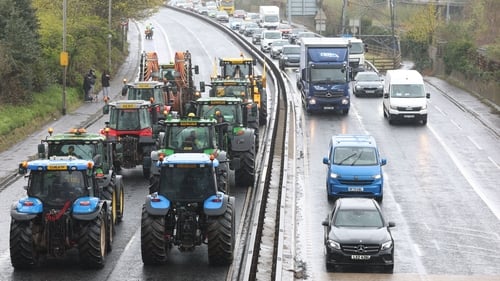
Northern Ireland experienced significant disruption on 14 April 2026 as widespread protests against rising fuel prices brought convoys of tractors, lorries, and vans onto the roads of Belfast and other towns, causing major traffic delays and drawing police attention across the region.
The demonstrations, which mirrored similar protests in the Republic of Ireland, reflected deep public anger over the cost-of-living crisis and the impact of soaring fuel prices on farmers, hauliers, and ordinary households. Fines were issued and public order cautions handed out as police managed the disruption across multiple routes.
Background
Fuel prices in Northern Ireland have risen sharply in recent weeks, driven by the disruption to global energy supplies caused by the US-Iran conflict and the closure of the Strait of Hormuz. Diesel had risen to over 185 pence per litre, while red diesel — essential for agricultural machinery — had seen an 80 per cent price spike, peaking at nearly 130 pence per litre in March 2026. One foodservice business reported its weekly fuel bill had increased by £20,000 as a direct result of the price surge.
Farmers and hauliers, who are particularly exposed to fuel cost increases, have been among the most vocal critics of the government's response. The Ulster Farmers' Union (UFU) described the situation as placing "unsustainable pressure on farm businesses" and issued a formal call for immediate government intervention, demanding a temporary reduction in fuel duty, a one-off fertiliser support scheme, and the extension of energy cost relief to agricultural businesses. The union highlighted that unlike France, Spain, and the Republic of Ireland, the UK government had failed to provide specific support for the agricultural sector, creating a competitive disadvantage for local producers.
Key Developments
On 14 April 2026, convoys of slow-moving vehicles caused significant traffic disruption in Belfast, including a major demonstration on the Sydenham Bypass and on the main road between Belfast and Derry/Londonderry. Protests also affected the M2, A1, and Westlink. One farmer who participated in the Belfast protest told the Belfast Telegraph: "We are being extorted." Organisers in Strabane urged participants to conduct lawful demonstrations that did not block emergency access, but police still issued a number of traffic offence fines and public order cautions.
A separate but related issue was also highlighted during the protests: plans for social housing on a peaceline site in North Belfast, at the interface between the Tiger's Bay and New Lodge areas, have been stalled due to "water connection issues" — with NI Water citing limited sewer capacity in the area. Infrastructure Minister Liz Kimmins acknowledged in March 2026 that the wastewater network is operating at or beyond capacity in over 100 towns and villages across Northern Ireland, with the estimated funding deficit for NI Water standing at £2 billion for the next investment period.
Why It Matters
The fuel protests highlight the acute pressure that rising energy costs are placing on Northern Ireland's farming and haulage sectors, as well as on ordinary households. Northern Ireland already faces significant structural economic challenges: median weekly income after housing costs has declined in recent years, 17 per cent of individuals live in relative poverty, and economic inactivity stands at 26.4 per cent — well above the UK average of 20.8 per cent. The fuel crisis is not an isolated shock but a flashpoint in a broader and deeply entrenched cost-of-living emergency that is hitting the region's most vulnerable communities hardest.
Local Impact
For Belfast and the wider province, the convergence of soaring fuel costs, a £2 billion NI Water funding gap, and a projected £1 billion health budget shortfall represents a perfect storm of public service pressure. The stalled North Belfast housing project is emblematic of a wider problem: chronic underinvestment in infrastructure is impeding housing development across the region at precisely the moment when demand is highest. Stormont ministers are under pressure to respond to both the fuel crisis and the infrastructure funding gap with concrete measures, not just warm words. The UFU has made clear that without targeted support, farm businesses across Northern Ireland face an existential threat.
What's Next
Protests are expected to continue until meaningful relief is delivered. Stormont ministers are under pressure to engage with Westminster on emergency fuel duty relief and targeted agricultural support. Full reporting on the protests is available from BBC News, and the UFU's policy paper calling for government action is available at ufuni.org. Further coverage is available from the Belfast Telegraph.
\