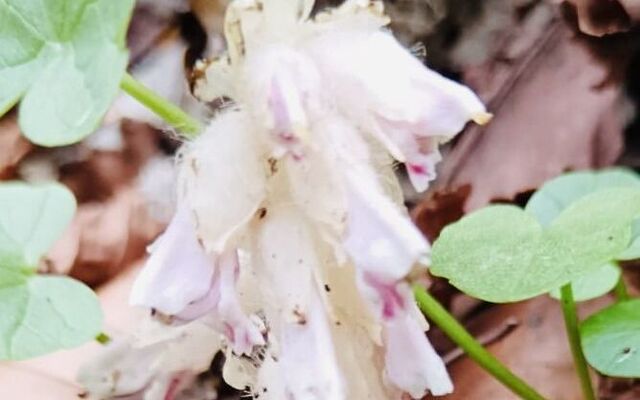
Rare Parasitic Plant Spotted in Belfast's Falls Park for First Time in Nearly 200 Years
A rare and remarkable plant has been rediscovered in Belfast's Falls Park — the first recorded sighting of the toothwort (Lathraea squamaria) in the area in almost two centuries, connecting the park's living ecosystem to botanical records stretching back to the early 19th century and reminding us that nature continues to surprise, even in the heart of the city.
Background
The toothwort is one of the most unusual plants found in the British Isles. Known in Irish as slánú fiacal, it contains no chlorophyll and is entirely incapable of photosynthesis. Instead, it is a full parasite, drawing all its nutrients from the roots of host trees — primarily hazel and alder. Because it has no green leaves and spends the vast majority of its life underground, it only becomes visible above ground in April, when it sends up its distinctive pale, pinkish-white flowers. This brief window of visibility makes it easy to miss and difficult to record, which partly explains why official sightings are so rare.
Falls Park, a 55.2-acre green space in West Belfast that opened in 1873, is one of the city's most beloved public parks. Its established woodlands, streams — including the Ballymurphy Stream — and varied habitats make it a significant pocket of urban biodiversity. The park's mature hazel and alder trees provide exactly the conditions that toothwort requires to survive underground, suggesting the plant may have been present for far longer than the official records indicate.
The last recorded presence of toothwort in Falls Park was in 1828, noted by botanist George Hyndman — making this rediscovery the first in 198 years. The toothwort was also recorded in the nearby Bog Meadows in 1797 by botanist John Templeton, suggesting a long historical presence in the wider Falls area of Belfast that predates the park itself.
Key Developments
The find was made by David McNeill, the county recorder for Antrim of the Botanical Society of Britain and Ireland, who had specifically sought out the plant during a dedicated botanical survey of the park. After making the initial discovery, McNeill challenged Fr Martin Magill — who regularly walks in Falls Park — to find the plant himself. Fr Magill successfully spotted it near the wall of the Translink depot, on the far side of the stream. The find has been confirmed and formally recorded by the Botanical Society of Britain and Ireland, and will be entered into its national database.
McNeill noted that the infrequent recording of such plants means that while people may have seen it over the years, official records are scarce. The toothwort's presence in Falls Park suggests that the park's ecosystem has maintained the right conditions to support the plant's underground existence for potentially centuries — a testament to the ecological continuity of this urban green space.
Why It Matters
The rediscovery of the toothwort in Falls Park is a reminder that Belfast's parks and green spaces harbour remarkable biodiversity, much of it hidden from view. In an era of rapid urban development and biodiversity loss, the survival of a plant that was last officially recorded nearly 200 years ago is genuinely extraordinary. It speaks to the ecological value of maintaining mature woodland habitats within cities — habitats that support not just charismatic wildlife but the quiet, hidden world of parasitic plants, fungi, and invertebrates that underpin healthy ecosystems. The find also highlights the importance of dedicated botanical recording and the value of citizen science in documenting the natural world. Without McNeill's survey and his challenge to Fr Magill, this discovery might have gone unnoticed for another generation.
Local Impact
For Belfast residents, the toothwort's reappearance is a quiet but genuinely exciting piece of local natural history. Falls Park is a community resource used daily by thousands of people from across West Belfast, and the knowledge that a plant last recorded in the era of George IV is flowering there today adds a remarkable dimension to an already cherished space. The discovery connects the park's present-day visitors to the botanists who walked the same ground nearly two centuries ago — and serves as a powerful argument for the protection and enhancement of urban green spaces across the city. Wildlife Wellbeing Walks, connecting people with nature and teaching about plants and wildlife, are scheduled in Belfast parks from April through June 2026, offering residents the chance to learn more about the city's remarkable natural heritage.
What's Next
The Botanical Society of Britain and Ireland will formally record the sighting in its national database, adding to the growing body of knowledge about toothwort's distribution across the island of Ireland. Local naturalists are encouraging residents to keep an eye out for the plant during its brief April flowering window — and to report any sightings to the Society. The discovery may also prompt a broader survey of Belfast's parks to identify other rare or overlooked species that may be quietly thriving in the city's green spaces.
Sources: Belfast Media — toothwort discovery; Belfast Media — Dúlra column; Visit West Belfast — Falls Park.