Noah Donohoe Inquest: Expert Says Teenager 'Likely' Climbed Into Culvert Before Drowning
The inquest into the death of 14-year-old Belfast schoolboy Noah Donohoe has heard expert evidence suggesting it is "very likely" he climbed through bars into a storm drain culvert and became disorientated in the dark, creating the conditions that led to his drowning in June 2020 — with a PSNI expert adviser also criticising the infrastructure's 2017 risk assessment as "inadequate."
Background
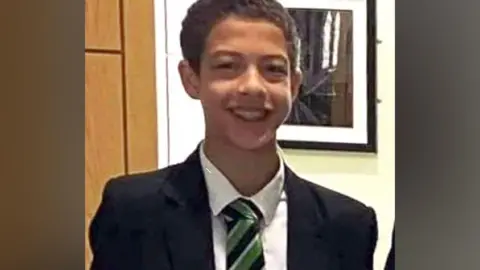
Noah Donohoe, a 14-year-old pupil at St Malachy's College in north Belfast, went missing on the evening of Sunday 21 June 2020. He had left his home on his bicycle, reportedly to meet with friends. A large-scale search operation was launched, and six days later, on 27 June 2020, his naked body was discovered deep inside a storm drain system in north Belfast. A post-mortem examination determined the cause of death was drowning.
The circumstances of his disappearance and death have been the subject of intense public interest and deep distress for his family, who have campaigned tirelessly for a full and transparent inquest. Noah's mother, Fiona Donohoe, has led a prominent and determined campaign — often under the banner of #NoahsArmy — calling for a "full and fearless" inquest that thoroughly examines all the circumstances surrounding her son's disappearance and death. Thousands have attended rallies in Belfast in support of the family's quest for answers.
The inquest, which has been hearing evidence for several months before a jury, is examining every aspect of the events leading to Noah's death, including the design and safety of the drainage infrastructure, the emergency response, and the search operation.
Key Developments
The inquest resumed on Monday 13 April after an Easter break. Civil engineer Brian Pope and risk assessment expert Dr Mark Cooper testified that it was "most likely" Noah entered the culvert through a metal grille at Northwood Linear Park, where a gap between the bars measured approximately 180mm — wide enough for a child or young person to squeeze through. Dr Cooper described a photograph of an adult squeezing through the same bars as "very persuasive" evidence that entry was possible. Other potential entry points, such as manhole covers, were dismissed as being too difficult to lift without special keys.
Professor Carolyn Roberts testified that the culvert's interior was smooth concrete with joints every few metres, and that its layout prevented light from illuminating its course, making disorientation possible. She stated that during high tide, the culvert near the discovery site was almost completely filled with slowly moving water. The most probable time for high tide after Noah entered the culvert was between 11:30pm and midnight on 21 June — and that in darkness, with cold conditions and a complex network of pipes, Noah would likely have become confused, leading to his drowning.
Dr Mark Cooper, a PSNI Expert Adviser, criticised a 2017 Department for Infrastructure risk assessment for the culvert, calling it "inadequate." He stated it failed to sufficiently consider the need for a security screen, noting that the bar spacing allowed an adult to squeeze through. He described the department's response to questions about the culvert as demonstrating a "head in the sand" approach, and said he was "quite certain" there was a "public safety issue" at the culvert entrance — one that was foreseeable even without the benefit of hindsight.
Why It Matters
The Noah Donohoe inquest is one of the most significant and closely followed legal proceedings in Northern Ireland in recent years. For Noah's family, and for the many people across Belfast and beyond who have followed the case, the inquest represents the best opportunity to understand what happened to a young boy whose death left a community in grief. The evidence about the culvert's design and the adequacy of the risk assessment raises important questions about public safety infrastructure and the responsibilities of government departments to protect members of the public from foreseeable hazards. If the inquest finds that the risk was foreseeable and the response inadequate, it will have significant implications for how drainage infrastructure across Northern Ireland is assessed and managed.
Local Impact
For Belfast and Northern Ireland, the Noah Donohoe case has been a source of profound collective grief and, for many, deep frustration at the pace of the search for answers. The inquest has brought the family's pain back into sharp focus, but it has also provided a forum for the systematic examination of evidence that the family has long sought. The criticism of the 2017 risk assessment will be of particular concern to the Department for Infrastructure and to local councils responsible for similar drainage infrastructure across the region. The case has also prompted broader conversations about the safety of urban waterways and drainage systems — and whether enough is being done to protect children and young people from hidden hazards in public spaces.
What's Next
The inquest is expected to continue hearing expert evidence in the coming weeks, with further testimony anticipated on the search operation, the emergency response, and other aspects of the case. The coroner will ultimately produce findings that will be scrutinised closely by Noah's family, the public, and policymakers. For the Donohoe family, the inquest remains the most important process in their long search for truth and accountability.
Sources: Belfast Telegraph — inquest resumes; BBC News — Noah Donohoe inquest; RTÉ News — public safety issue at culvert.