Fuel Protests Cause Major Disruption Across Northern Ireland as Fines Issued
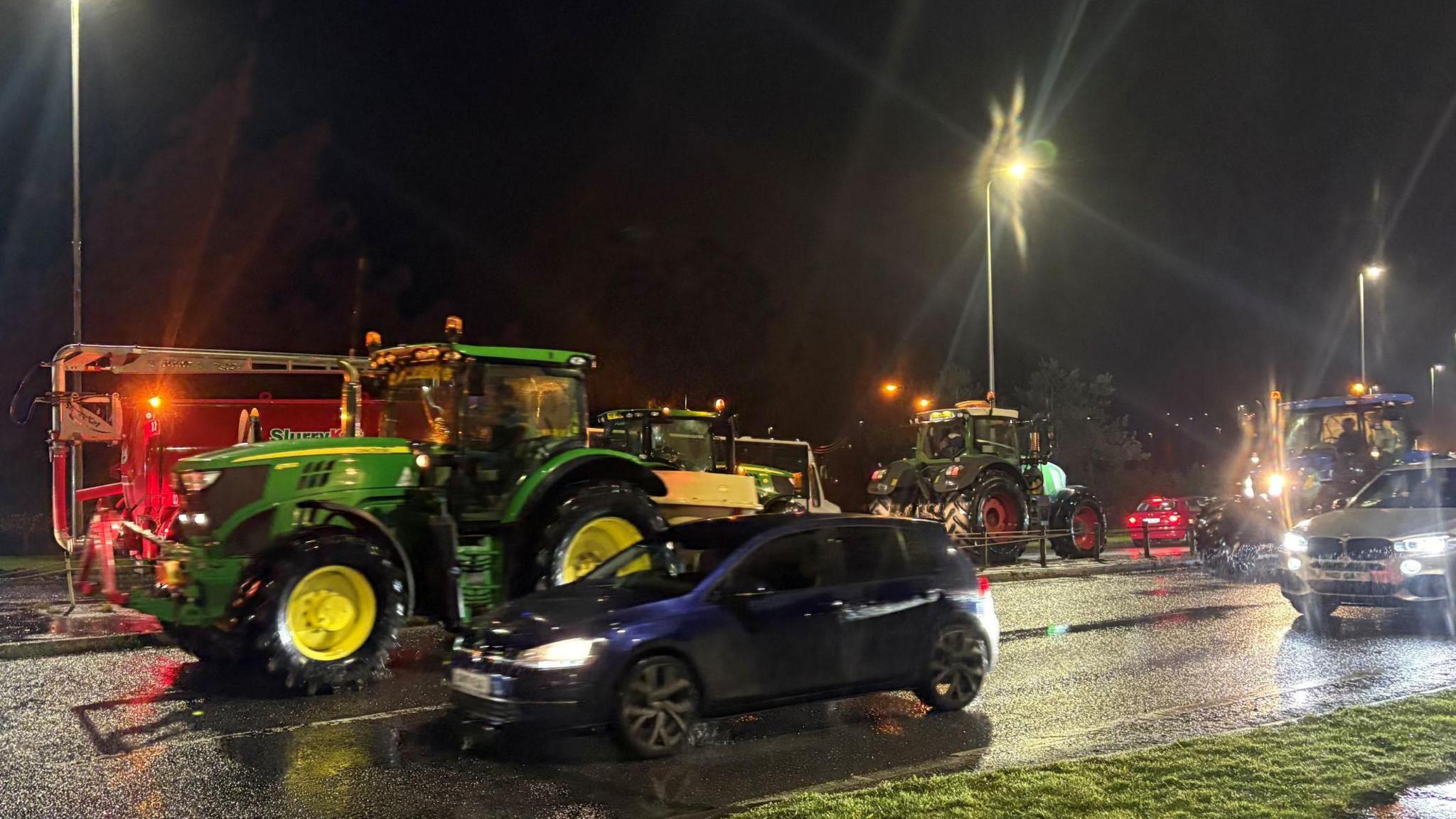
Convoys of tractors and lorries staged go-slow protests across Northern Ireland on Tuesday and Wednesday, causing significant traffic disruption on major routes including the M1, M2, Westlink, and Sydenham Bypass in Belfast, as the PSNI confirmed that fines and cautions were issued to a number of participants — with diesel prices hitting 185.6p per litre and farmers warning their businesses are on the brink.
Background
The protests, organised in solidarity with larger demonstrations in the Republic of Ireland that began on April 7th, were a direct response to the dramatic surge in fuel costs triggered by the ongoing conflict in Iran and the related crisis in the Strait of Hormuz. Since the start of the Iran conflict in late February 2026, fuel prices in Northern Ireland have surged sharply: by the time of the protests on April 14th, average prices had reached approximately 153.1p per litre for petrol and a staggering 185.6p per litre for diesel — up from pre-war prices of around 124.8p for petrol and 132.6p for diesel. Analysis by The Guardian indicated that Northern Ireland had experienced the fastest percentage increase in fuel prices of any UK region since the war began, with petrol rising 19% and diesel 35%, compared to UK averages of 16% and 30% respectively.
Key Developments
The protests saw convoys of agricultural and heavy goods vehicles deliberately slow traffic on key arterial routes across Northern Ireland. The PSNI confirmed that a number of drivers were issued with fines for road traffic offences, and others received cautions for public order offences during the demonstrations. Major disruption was centred on the Sydenham Bypass near George Best Belfast City Airport, the Westlink, and the M2 motorway in Belfast, as well as the A1 at Sprucefield, the A6 at Toome, and the Ballygawley roundabout in County Tyrone. Some airline passengers reportedly left their vehicles and walked along the road to reach the airport. A convoy of up to 40 tractors and trucks was reported near Ballygawley.
The protests drew criticism from some quarters, with a disability campaigner speaking out after the disruptions forced her to cancel a hospital appointment for her daughter. The Belfast News Letter captured the desperation of some participants, highlighting the story of a farmer who "cycled to protest because he 'can't afford to put diesel in tractors.'" Dairy farmer Sam Hanna articulated the protesters' core grievance: "Fuel's not really that dear if you take the tax off."
Why It Matters
The fuel protests reflect deep frustration among farmers, hauliers, and ordinary motorists who feel that rising energy costs are making their livelihoods and daily lives unsustainable. With Northern Ireland having no devolved control over fuel duty — which remains a reserved matter for Westminster — local politicians face limited tools to address the crisis directly. The contrast with the Republic of Ireland's response has been stark: the Irish government announced a €505 million support package, including a temporary cut in excise duty on fuel, which was repeatedly cited by NI protesters and politicians as the standard the UK government should follow. DUP leader Gavin Robinson noted that the decisive action taken by the Irish government showed that "levers" were available to governments.
Local Impact
First Minister Michelle O'Neill and Deputy First Minister Emma Little-Pengelly have written jointly to UK Prime Minister Keir Starmer urging action on fuel costs, calling for an immediate reduction in fuel duty, a comprehensive cost-of-living support package, and targeted financial aid for the haulage and agriculture sectors. The cross-community letter reflects the widespread nature of the economic pain being felt across Northern Ireland, cutting across traditional political divides. The UK government's response was muted: a Treasury spokesperson highlighted that fuel duty was already frozen until September and pointed to a previously announced £17 million for a home heating oil support scheme in Northern Ireland, but made no commitment to an immediate duty cut. Protest organisers have indicated that further demonstrations could follow if Westminster fails to respond.
What's Next
The joint letter from O'Neill and Little-Pengelly to Starmer is expected to be followed by formal representations through the Northern Ireland Executive, as pressure mounts on Westminster to act. For the latest on the protests and their impact, see BBC News NI's coverage of the Northern Ireland fuel protests and The Guardian's analysis of the fuel price surge in Northern Ireland.