Ireland Faces Confidence Vote as Fuel Protests Grip the Country and Ambulance Workers Prepare to Strike
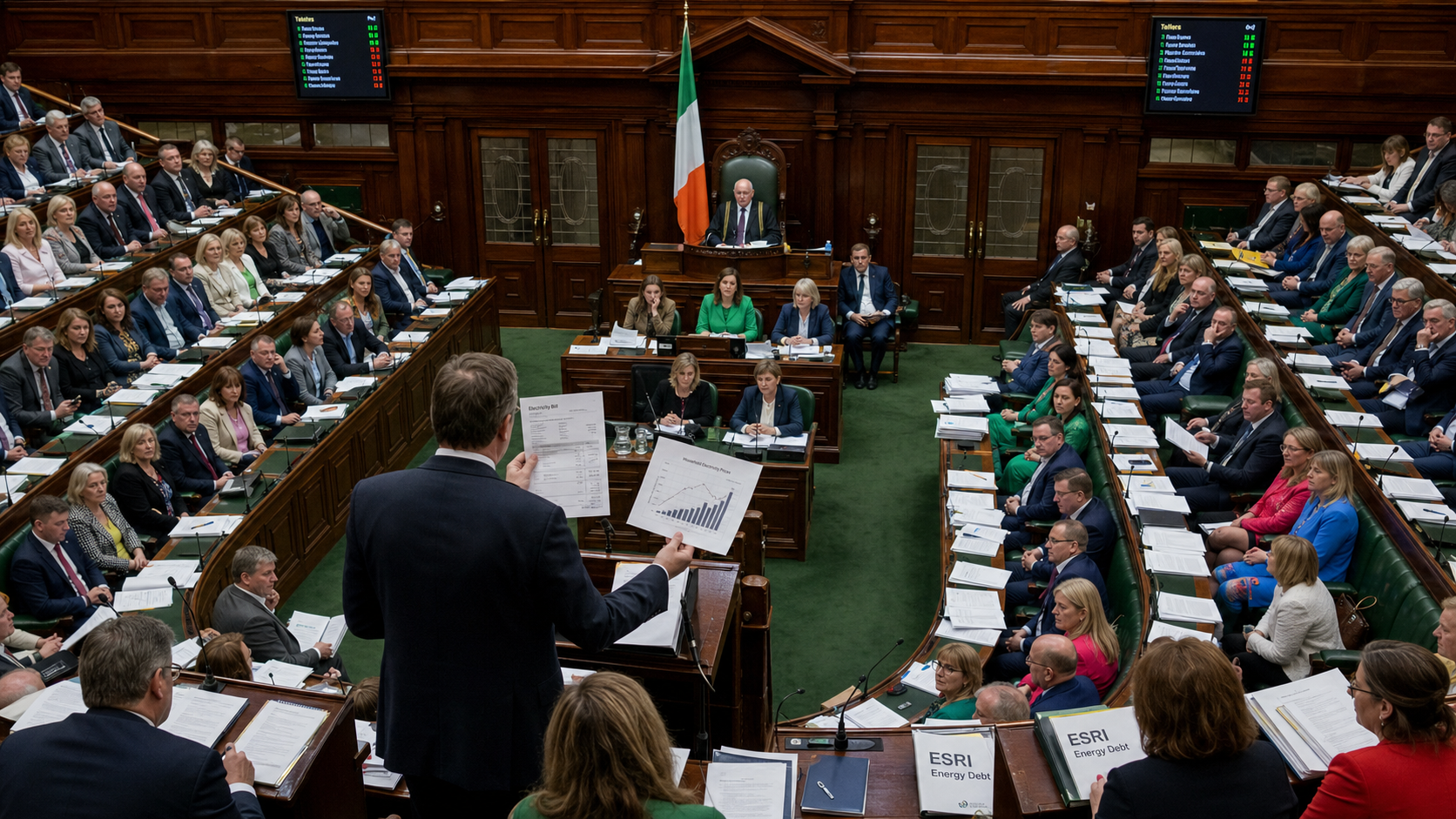
The Irish government faces a Sinn Féin confidence motion in the Dáil today as fuel protests continue to disrupt the country, with Gardaí warning of potential radicalisation among demonstrators — and more than 2,000 frontline ambulance workers announcing strike action over pay, adding further pressure to Ireland's health service.
The confidence motion, tabled by Sinn Féin leader Mary Lou McDonald, comes after days of disruptive protests by HGV drivers and farmers that brought major roads to a standstill, blockaded fuel depots, and caused shortages at up to 600 of Ireland's 1,500 filling stations. The government has announced a €505 million support package in response, but opposition parties argue the measures are too little, too late.
Background
The fuel protests were ignited by a dramatic surge in prices driven by the global energy crisis following the Iran conflict and the disruption to oil supplies through the Strait of Hormuz. By April 2026, average prices in Ireland had reached €1.91 per litre for petrol and €2.14 per litre for diesel — increases of approximately 25% and 28% respectively since the conflict began. High domestic taxation compounds the pressure: taxes and levies account for approximately 57% of the cost of petrol and 48% of diesel at the pump.
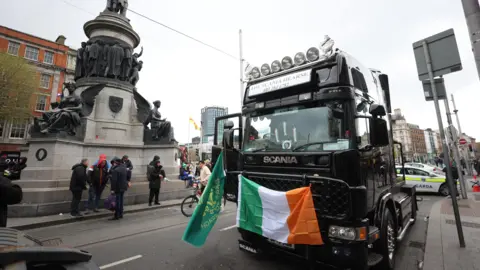
Beginning on 7 April, a coalition of HGV drivers, farmers, and agricultural contractors launched disruptive protests across the country, employing go-slow convoys and strategic blockades of critical infrastructure. Dublin's M50 motorway and O'Connell Street were brought to a standstill. More significantly, protesters blockaded ports, multiple fuel depots, and Ireland's only oil refinery at Whitegate, County Cork — with many participants sleeping in their vehicles to maintain the blockades over several days.
The impact was immediate and severe. At the peak of the disruption, up to 600 filling stations had run out of fuel. Fire and ambulance services were curtailed, medical appointments were cancelled, and medicine deliveries were delayed. The courier company DPD suspended all delivery services. Protesters' demands included a cap on fuel prices, suspension of the carbon tax, further cuts to excise duty, and direct financial support for businesses and households.
Key Developments
The government condemned the protests, with Taoiseach Micheál Martin describing the blockade of the Whitegate refinery as an "act of national sabotage." An Garda Síochána were deployed to make arrests, and in an exceptional move, the Irish army was called in to help clear protesters from fuel depots. Pepper spray was used during scuffles at Whitegate. By 12 April, most major blockades had been cleared.
The government's €505 million support package includes a 10 cent per litre reduction in excise duty for both diesel and petrol, postponement of a planned carbon tax increase, a reduction in the NORA levy, and targeted support schemes worth €220 million for hauliers and farmers. Taoiseach Martin argued the total package of €775 million went "beyond anything being done elsewhere." Tánaiste Simon Harris dismissed the no-confidence motion as a "stunt."
Gardaí have raised serious concerns about the radicalisation of some individuals involved in the protests and the exploitation of the movement by extremist elements. Garda Commissioner Justin Kelly confirmed "attempts in person and online to threaten and intimidate gardaí" and expressed shock at content being shared online. Minister for Justice Jim O'Callaghan warned that "outside actors," including British far-right figures, were "manipulating" protesters to "damage Ireland." Security has been increased for senior politicians as a result.
Why It Matters
The confidence motion and the fuel protests together represent the most significant political and social crisis the Irish coalition government has faced since taking office. The government's narrow survival of the vote — 92 to 78 — provides a temporary reprieve but does not resolve the underlying popular discontent with the cost of living. Two independent TDs who had previously supported the government voted against it, including junior minister Michael Healy-Rae, who subsequently resigned citing the Taoiseach's "condescending" speech and the government's detachment from ordinary people.
The infiltration of legitimate protests by radical elements presents a distinct threat to democratic discourse and public safety. The pattern echoes the Dublin riots of November 2023, which Garda Commissioner Drew Harris described as having an "element of radicalisation" driven by social media. The current crisis suggests that trend is continuing and adapting to new public grievances — a challenge that requires a nuanced response from state authorities.
Local Impact
The fuel protests and their consequences are being watched closely in Northern Ireland, where similar pressures — high fuel costs, cost-of-living strain, and public sector pay disputes — are building. The cross-border dimension is significant: disruption to fuel supply chains in the Republic has knock-on effects for businesses and consumers in Northern Ireland, particularly in border counties where fuel purchasing patterns span both jurisdictions.
The ambulance workers' dispute is also relevant to Northern Ireland's health service, which faces its own severe workforce pressures. Over 2,000 National Ambulance Service members — including EMTs, paramedics, and supervisors — are set to begin escalating strikes in May 2026, with a 24-hour stoppage planned for 12 May, followed by 48-hour and 72-hour stoppages in subsequent weeks. The dispute stems from the long-standing failure to implement the recommendations of a 2020 independent review recognising the evolving clinical role of ambulance personnel.
What's Next
The government's ability to manage public anger, address the economic concerns of its citizens, and resolve long-standing industrial disputes will be critical to restoring stability in the months ahead. The potential for further unrest remains high as fuel prices stay elevated and the ambulance workers' dispute escalates. For full coverage of the confidence vote, see BBC News' report on the government surviving the motion. For background on the fuel protests, see The Irish Times' report on Gardaí radicalisation concerns.