Ireland Fuel Protests: Blockades Cleared After Major Garda Operation as Government Announces €505m Package
Major fuel blockades across Ireland have been cleared following a large-scale Garda operation, as the government announced a €505 million support package including a 10-cent excise duty cut on petrol and diesel — but protest organisers have vowed to regroup, and opposition parties have tabled a joint no-confidence motion in the coalition that survived by just 14 votes.
Background
The fuel protests that erupted across Ireland on 7 April 2026 were a direct consequence of the global oil price surge triggered by the 2026 Iran conflict and the crisis in the Strait of Hormuz. Diesel prices in Ireland rose by 28% and petrol by 25% in a matter of weeks — increases that fell hardest on hauliers, farmers, fishermen, and rural communities who have no alternative to private vehicles and diesel-powered machinery. The protests were not spontaneous: they reflected months of mounting frustration with the cost of living and a sense that the government was not moving quickly enough to protect ordinary people from the consequences of a crisis they did not create.
The blockade of the Whitegate oil refinery in Cork — Ireland's only such facility — was the most dramatic flashpoint. Taoiseach Micheál Martin described the obstruction of the refinery as "an act of national sabotage," while Tánaiste Simon Harris called the blockades "a despicable attack on Irish society and the Irish economy." The Irish Road Haulage Association, by contrast, welcomed the government's eventual support package, stating that it would help mitigate the effects of rising fuel prices on the industry.
The protests caused fuel shortages at approximately 600 filling stations across the country and severe traffic congestion on major routes including Dublin's M50. The disruption was so widespread that the Department of Education was forced to defer Leaving Certificate and Junior Cycle practical examinations that had been scheduled during the week of the protests — a decision that added to the sense of a country in crisis.
Key Developments
An Garda Síochána declared an "exceptional event" on 10 April, mobilising all available officers. On 12 April, a large-scale operation involving over 200 officers, the Public Order Unit, and support from the Defence Forces cleared blockades in Dublin, Galway, and other key locations. The operation at the Whitegate refinery resulted in some clashes and arrests. By the end of the day, the major blockades had been cleared and fuel supplies were beginning to be restored to affected filling stations.
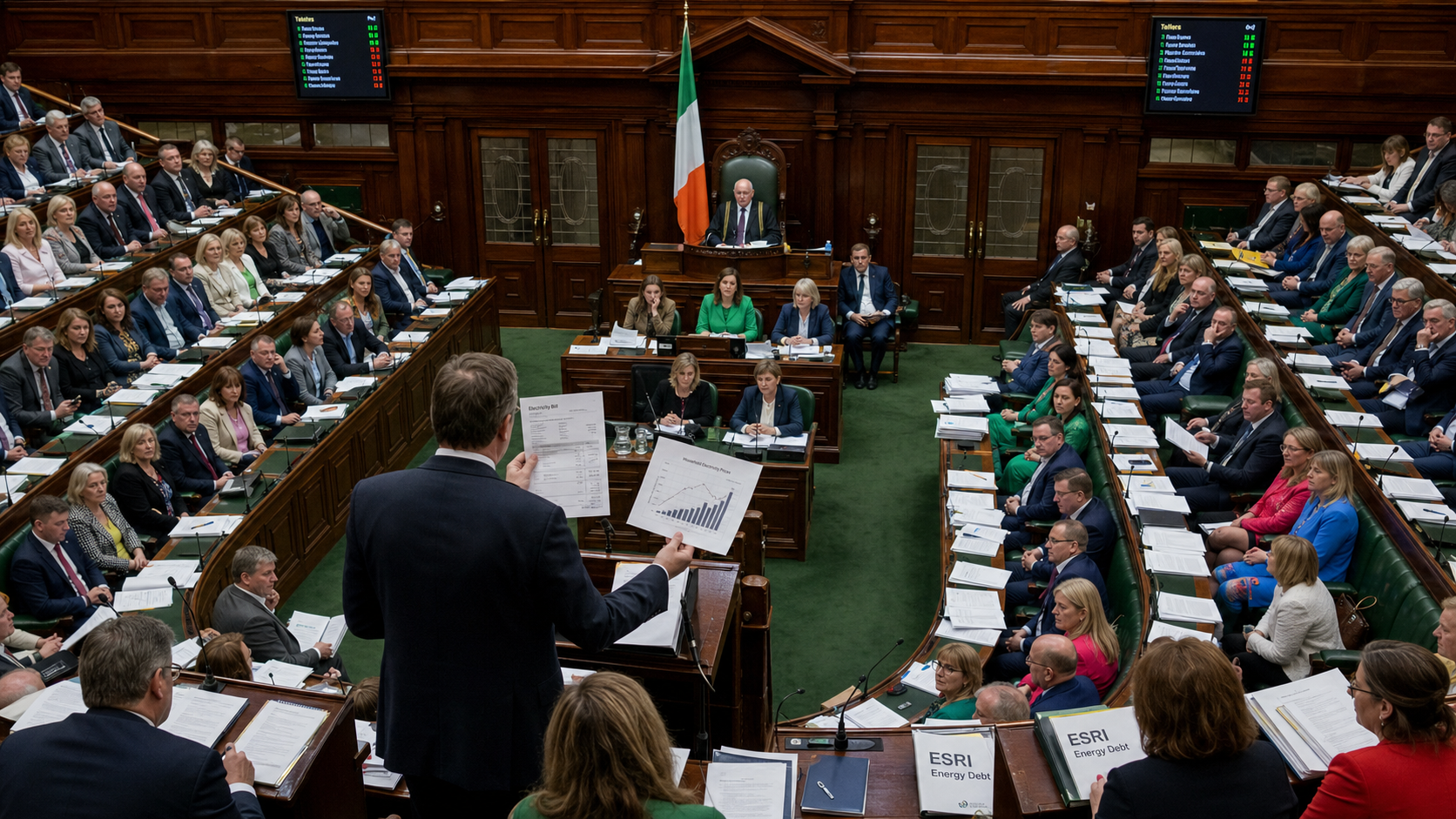
The government's €505 million support package, announced on the same day, included a further 10-cent per litre reduction on petrol and diesel, an extension of the temporary excise duty reduction until the end of July, a 2.4-cent reduction on marked gas oil (green diesel), postponement of a planned carbon tax increase until October, and direct financial support for hauliers, bus operators, farmers, agricultural contractors, and the fisheries sector. The package came on top of a €250 million package introduced in March 2026. The no-confidence motion tabled by Sinn Féin and supported by Independent Ireland, Aontú, People Before Profit, and the Social Democrats was defeated by 92 votes to 78 — a margin that underlined the fragility of the coalition's political position.
Why It Matters
The fuel protests represent a significant political moment for Ireland. The speed with which blockades spread across the country — and the willingness of protesters to obstruct critical national infrastructure — reflects a depth of public frustration that goes beyond fuel prices alone. The cost-of-living crisis, housing shortages, and a sense that the benefits of Ireland's economic success are not being shared equitably have created a volatile political environment in which the government's authority can be challenged rapidly and effectively. The narrow survival of the no-confidence vote is a warning that the coalition cannot afford further missteps.
The deferral of Leaving Cert examinations is a particularly resonant symbol of the disruption caused. For thousands of students who have spent years preparing for these examinations, the uncertainty and disruption caused by the protests is a reminder that political and economic crises have real human costs that extend far beyond the immediate flashpoints.
Local Impact
In Northern Ireland, the fuel protests south of the border were watched with a mixture of sympathy and concern. The same global oil price surge that drove Irish protesters onto the streets is being felt acutely in Belfast and across the province, where petrol prices have also risen sharply. The border between Northern Ireland and the Republic creates a complex dynamic: fuel tourism — the practice of crossing the border to buy cheaper fuel — has historically been a feature of life in border communities, and the current price pressures are likely to intensify cross-border movements in both directions depending on which jurisdiction offers better prices at any given time. Community groups and political representatives across Northern Ireland have called on the Stormont Executive to consider similar support measures for households and businesses struggling with rising fuel costs.
What's Next
Protest organisers have vowed to regroup and have not ruled out further action if the government's support package proves insufficient to address the underlying cost pressures. The coalition will be acutely aware that its political survival depends on demonstrating that the €505 million package delivers tangible relief to the households and businesses most affected. The Leaving Cert examinations will need to be rescheduled, adding further complexity to an already difficult situation for students and schools. Ireland's political and economic landscape has been fundamentally altered by the events of the past week, and the coming months will test the resilience of both the government and the country. RTÉ News: Government announces €505m fuel support package | Irish Times: Fuel protests and government response