Ireland's Emergency Cabinet Convenes as Fuel Protests Enter Sixth Day
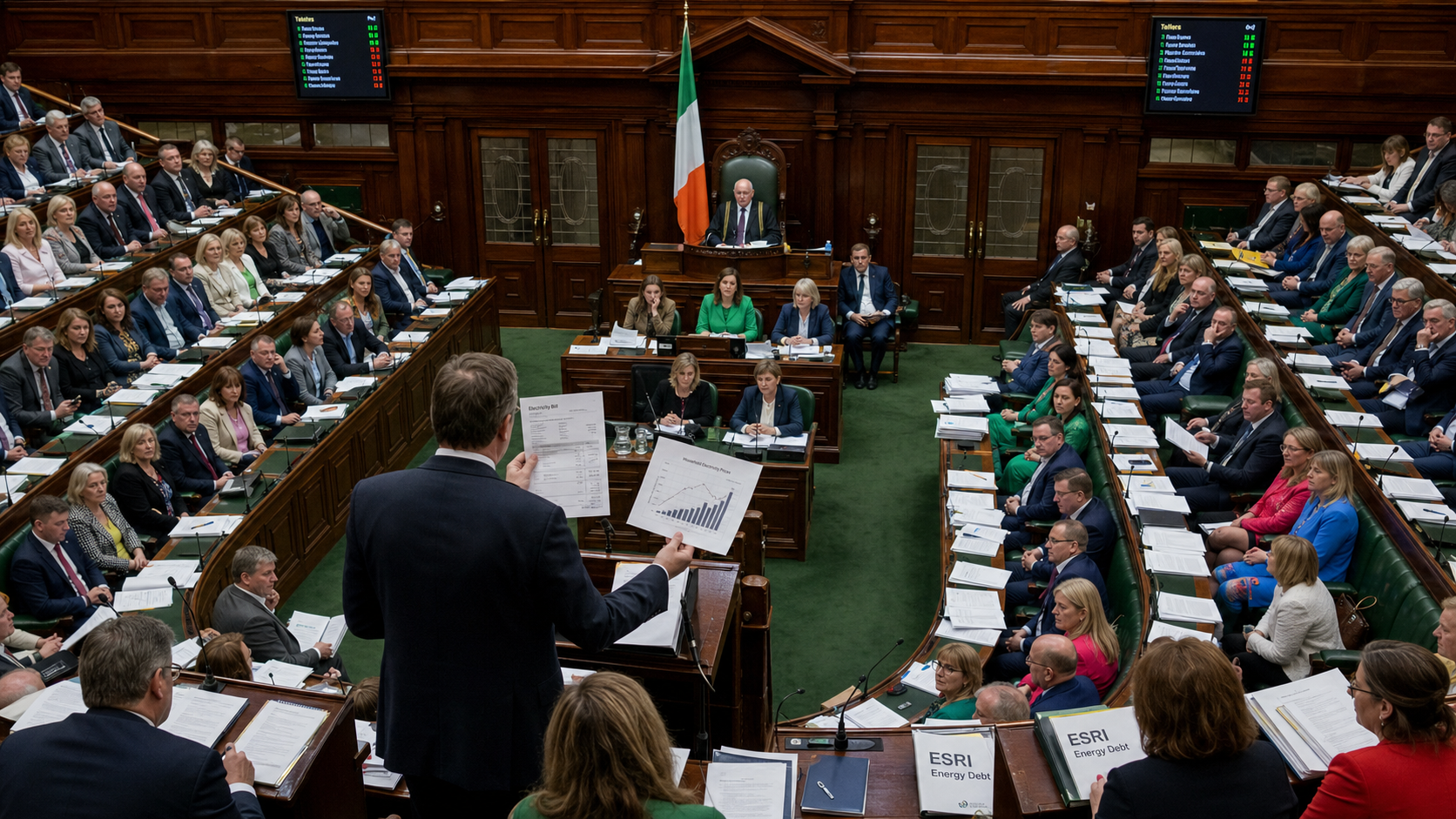
Taoiseach Micheál Martin called an emergency Cabinet meeting on Saturday as fuel protests across Ireland entered their sixth day, with around 600 of the country's 1,500 filling stations running dry and emergency services severely disrupted by blockades at fuel depots, motorways, and the country's only oil refinery.
The Irish Road Haulage Association indicated a deal with the government was within reach, with a support package for hauliers and farmers expected to be finalised following the emergency session. The protests, driven by soaring fuel prices linked to the 2026 Middle East conflict, have paralysed parts of the country and prompted the government to put the army on standby.
Background
The protests began in early April as global oil prices surged in the wake of the 2026 Iran war and the resulting crisis in the Strait of Hormuz, a critical chokepoint for global oil supplies. Fuel taxation in Ireland — accounting for approximately 57% of the price of petrol and 48% of diesel — compounded the impact, with hauliers, farmers, and transport-dependent workers arguing that a previous government package to reduce fuel duty was wholly insufficient.
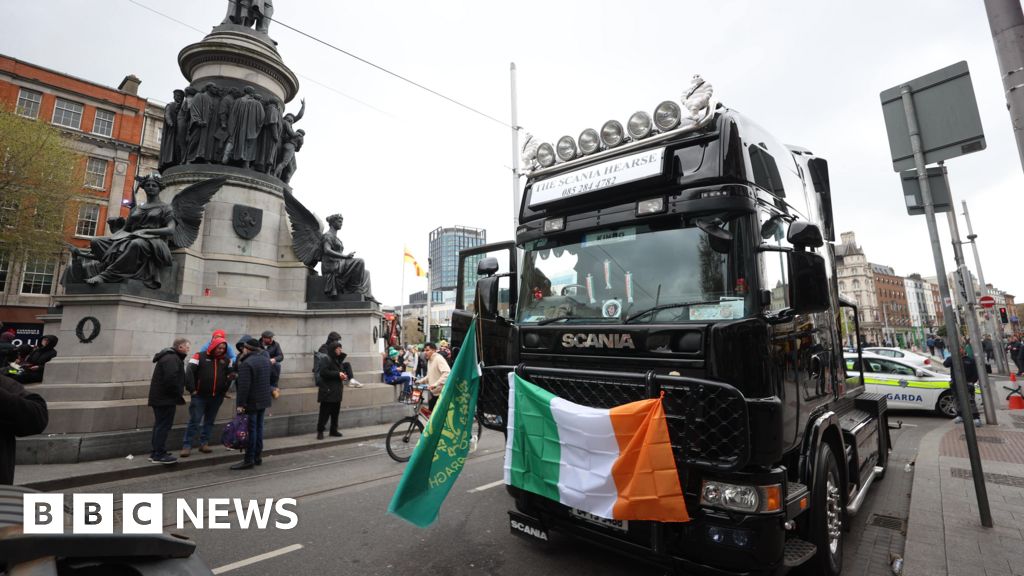
What began as localised demonstrations quickly escalated into a nationwide movement. Tractors and trucks blockaded the M50 in Dublin, the M7, and other major motorways, while protesters occupied O'Connell Street in the capital. The blockade of the Whitegate oil refinery in County Cork — the only refinery in Ireland — was described by the government as an "act of national sabotage." Public transport in Dublin was suspended or rerouted, and the deferral of Leaving Certificate practical examinations underscored the scale of the disruption.
By the sixth day, an estimated 600 filling stations had run dry, fire and ambulance services were being curtailed, and DPD had suspended all deliveries across the country. The Garda Commissioner vowed further enforcement action, and the Defence Forces were deployed to assist in clearing blockades.
Key Developments
The emergency Cabinet meeting on Saturday produced a €505 million support package, announced by Taoiseach Micheál Martin. The deal included a further reduction in excise duty of 10 cents per litre on petrol and diesel, a 2.4 cent per litre reduction on marked gas oil, the postponement of a planned carbon tax increase from May until the October budget, the extension of existing fuel excise reduction measures until the end of July, and a fuel subsidy scheme for farmers and the fishing industry.
Gardaí launched a major operation on Saturday to clear blockades in Dublin and at the Port of Galway, with the Public Order Unit deployed and several arrests made at the Whitegate refinery. While some sporadic protests continued, the main large-scale disruptions were concluded by April 13th, with the Irish Road Haulage Association confirming it was standing down its members following the government's announcement.
Why It Matters
The fuel protests of April 2026 represent one of the most significant episodes of civil unrest in Ireland in recent decades. They exposed the acute vulnerability of a modern economy to energy price shocks and the limits of government policy in cushioning their impact. The €505 million package — on top of a €250 million package announced in March — represents a substantial fiscal commitment, and raises questions about the long-term sustainability of Ireland's fuel taxation model in an era of volatile global energy markets.
The protests also highlighted the particular pressures facing rural Ireland, where dependence on private transport and agricultural machinery makes fuel price increases disproportionately damaging. The government's response, while welcomed by hauliers and farmers, has been criticised by environmental groups who argue that excise duty reductions undermine Ireland's climate commitments.
Local Impact
The protests had a direct and immediate impact on Northern Ireland. Solidarity demonstrations took place in Belfast, with slow-moving convoys reported in Strabane and other border areas. Some convoys crossed into Donegal, reflecting the deep economic and social ties between communities on both sides of the border. However, the protests in Northern Ireland were more muted than in the Republic, partly because the devolved government at Stormont lacks the authority to set tax policy, limiting the scope of protesters' demands.
The fuel crisis nonetheless intensified pressure on the Northern Ireland Executive, which was already grappling with diesel prices approaching £2 per litre at some forecourts. First Minister Michelle O'Neill and Deputy First Minister Emma Little-Pengelly had written to Prime Minister Keir Starmer calling for urgent action, and the Stormont Executive subsequently approved a £100 heating oil payment for up to 340,000 lower-income households.
What's Next
While the immediate crisis has been resolved, fuel protest organisers have threatened further action if prices do not fall. Full details of the government's support package are available via BBC News. Analysis of the protests and their aftermath can be found at The Guardian.