Ireland's Eye Care Crisis: 47,000 Patients Waiting as Consultant Shortage Reaches Breaking Point
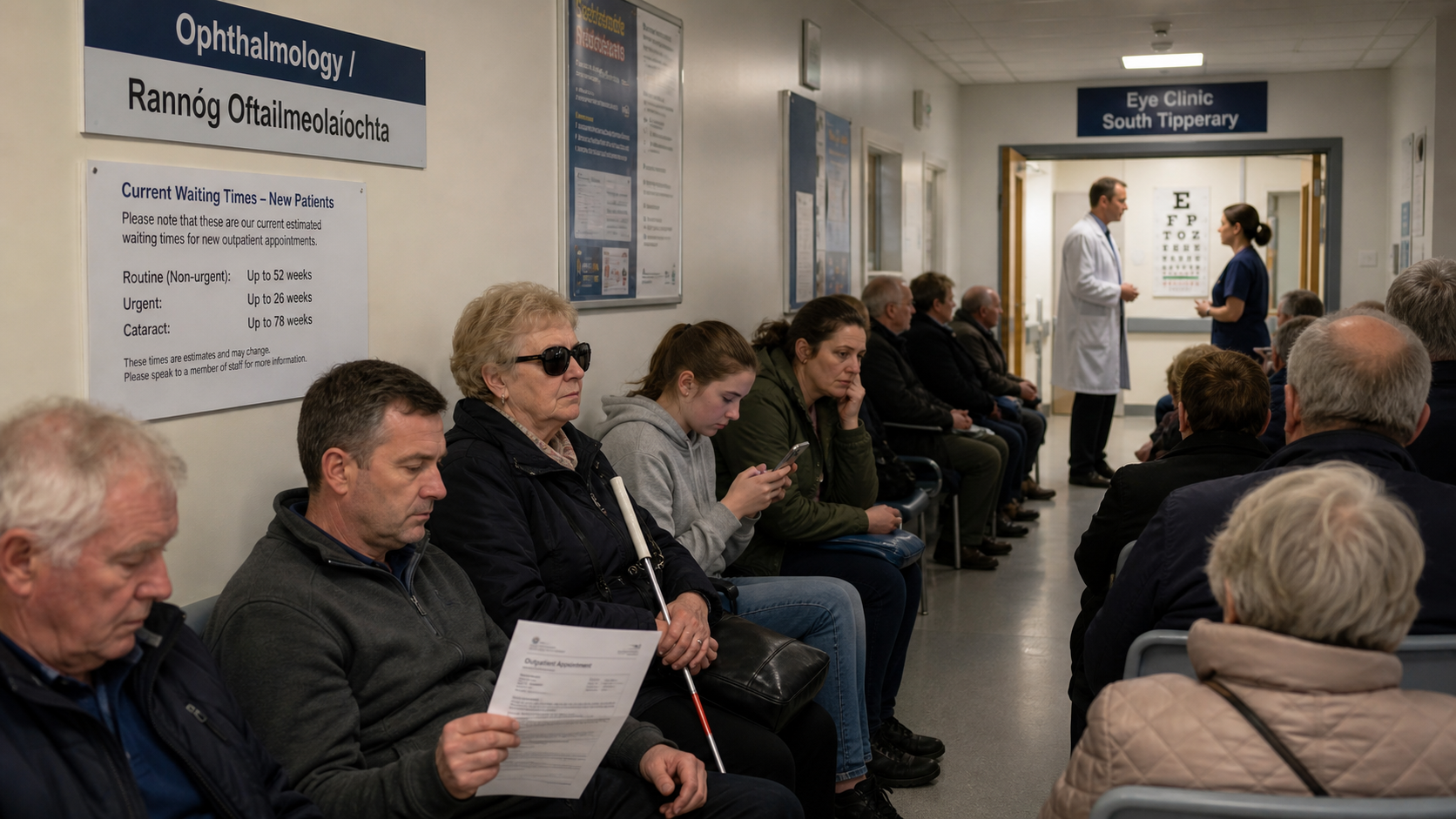
More than 47,000 patients are waiting for ophthalmology appointments across Ireland's public health system, with some facing waits of up to five years due to a critical shortage of consultant ophthalmologists — a crisis that is most acutely felt in regions like South Tipperary, where a consultant vacancy unfilled since autumn 2024 has left more than 2,000 people waiting for appointments, including 1,449 children under the age of four.
Background
Ophthalmology — the branch of medicine concerned with the diagnosis and treatment of eye disorders — is one of the most demand-intensive specialties in the Irish health system. The ageing of Ireland's population has driven a significant increase in the prevalence of conditions such as age-related macular degeneration, glaucoma, and diabetic retinopathy, all of which require specialist assessment and ongoing management. At the same time, the demand for paediatric ophthalmology services has grown as awareness of childhood eye conditions — including amblyopia (lazy eye) and strabismus (squint) — has increased and as the importance of early intervention for these conditions has become better understood.
The HSE has struggled for years to recruit and retain sufficient numbers of consultant ophthalmologists to meet this growing demand. The specialty is highly competitive internationally, and Irish-trained ophthalmologists have historically been attracted to positions in the United Kingdom, Australia, and North America, where salaries and working conditions are often more favourable than in the Irish public health system. The result is a persistent gap between the number of consultants needed and the number available, a gap that has widened as demand has grown.
A major national report on ophthalmology services, published earlier in 2026, found that Ireland requires significantly more consultant ophthalmologists and a substantial expansion of community-based eye care services to handle the projected population growth, which is expected to exceed six million by 2040. The report called for a fundamental restructuring of how eye care is delivered in Ireland, with a greater emphasis on community optometrists and orthoptists taking on tasks that are currently performed by hospital-based consultants.
Key Developments
The situation in South Tipperary is among the most acute in the country. A consultant ophthalmologist position at South Tipperary General Hospital has been vacant since autumn 2024, following the departure of the previous post-holder. Despite three recruitment campaigns since October 2024, the position remains unfilled — a reflection of the difficulty of attracting candidates who meet the necessary eligibility criteria for a public consultant post in Ireland. As of June 2026, more than 2,000 people in the South Tipperary area were waiting for ophthalmology appointments, including 1,449 children under the age of four — a figure that is particularly alarming given the importance of early intervention for childhood eye conditions.
The HSE has engaged in discussions with private service contractors and is collaborating with regional centres, including University Hospital Waterford, to facilitate patient reviews. However, these measures have not been sufficient to prevent the waiting list from growing, and the HSE has acknowledged that the situation in South Tipperary is "unacceptable." A validation of the existing waiting list is under way to ensure data accuracy, but the underlying problem — the absence of a permanent consultant — remains unresolved.
Nationally, the picture is similarly concerning. Public ophthalmology waiting lists exceed 47,000 patients, and the average wait time for a first outpatient appointment has been growing steadily. In some areas, patients are being told that they may wait up to five years for a routine appointment — a timeframe that, for conditions like glaucoma or diabetic retinopathy, can result in significant and irreversible vision loss.
Why It Matters
The ophthalmology waiting list crisis is a microcosm of the broader challenges facing Ireland's public health system. The combination of growing demand, insufficient consultant numbers, and a recruitment and retention environment that makes it difficult to attract and keep the specialists needed is a pattern that repeats itself across multiple specialties. The consequences for patients are real and serious: delayed diagnosis and treatment of eye conditions can result in permanent vision loss, with all the personal, social, and economic costs that entails.
The particular vulnerability of children on the waiting list is a cause for urgent concern. Conditions like amblyopia are highly treatable if identified and addressed early, but the window for effective intervention is narrow — typically the first seven or eight years of life. A child who waits two or three years for an ophthalmology appointment may miss that window entirely, with consequences that will affect their vision and their quality of life for the rest of their lives. The 1,449 children under four waiting in South Tipperary alone represent a significant public health failure that demands an urgent response.
Local Impact
The impact of the ophthalmology waiting list crisis is felt differently in different parts of Ireland, but it is most acute in regions — like South Tipperary — where the loss of a single consultant has a disproportionate effect on the availability of services. In urban areas, where multiple consultants and private providers offer some degree of redundancy, the impact of a single vacancy is less severe. But in rural and regional areas, where public hospital services are often the only realistic option for patients who cannot afford private care, the loss of a consultant can effectively eliminate access to specialist eye care for an entire community. The HSE's regional health offices have been asked to develop contingency plans for managing consultant vacancies in ophthalmology, but the fundamental solution — recruiting and retaining more consultants — remains elusive.
What's Next
The HSE is expected to publish a national ophthalmology action plan in the autumn of 2026, setting out the steps it will take to address the waiting list crisis and the consultant shortage. The plan is expected to include measures to expand community-based eye care services, to increase the number of consultant posts, and to improve the recruitment and retention of ophthalmologists in the public system. The Oireachtas Health Committee is expected to hold hearings on the ophthalmology crisis in September 2026, with the HSE and the Department of Health expected to appear before the committee to account for the current situation and to outline their plans for improvement.