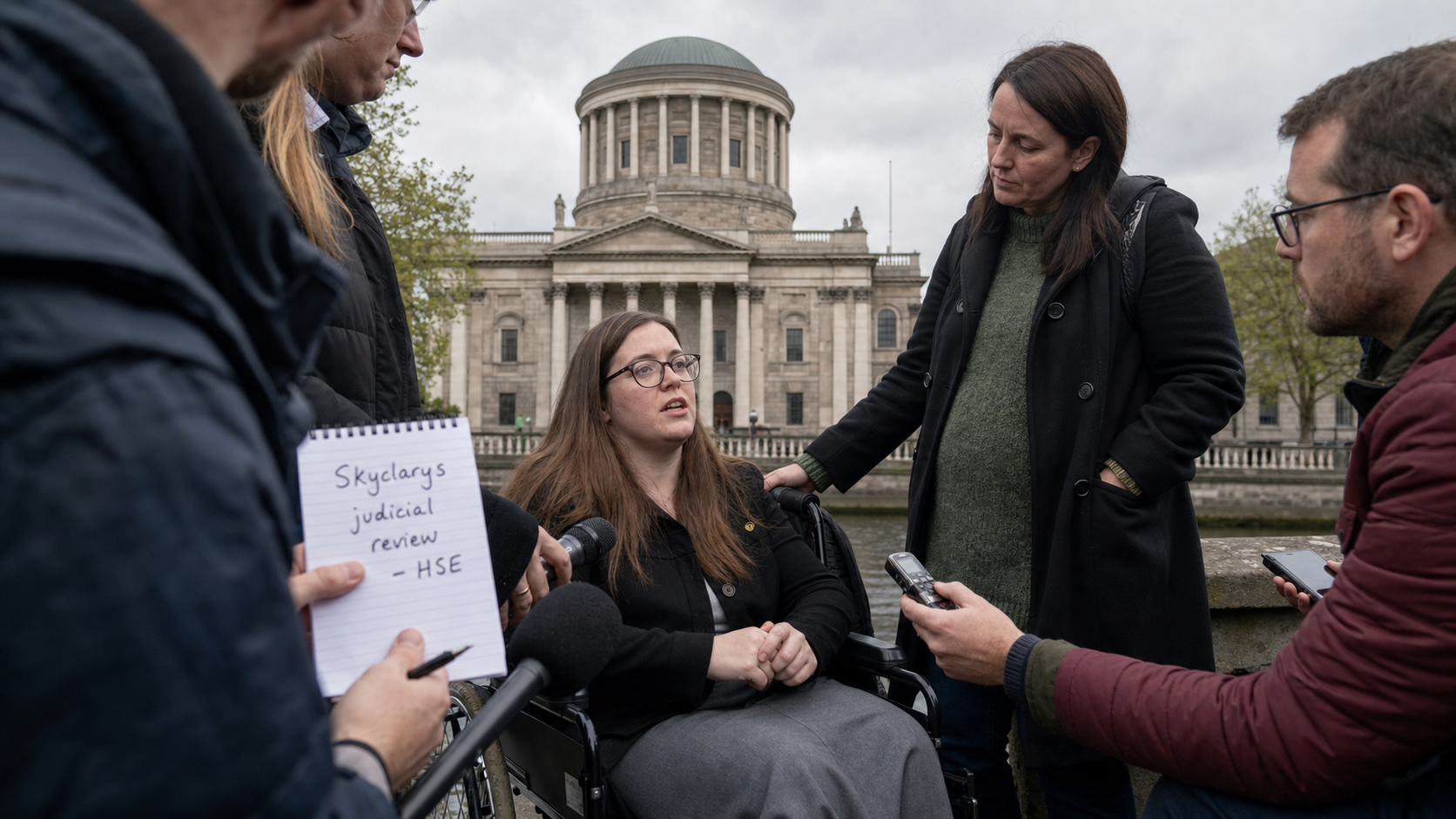
Emily Felix Wins High Court Leave to Challenge HSE Over Refusal to Reimburse Rare Disease Drug Skyclarys
Emily Felix, a 28-year-old trainee solicitor from Co Kilkenny who suffers from Friedreich's ataxia — a rare, progressive neurological disease — has been granted permission by the High Court to seek a judicial review against the Health Service Executive over its continued failure to make a decision on whether to approve or reimburse Skyclarys, the first treatment available for her condition. Mr Justice Cian Ferriter, presiding over the case on Monday, acknowledged the urgency of the matter and the 'difficult position' Ms Felix is in, given that her condition is both progressive and irreversible, and that every month of delay represents a further deterioration in her health.
Background
Friedreich's ataxia is a rare inherited neurological condition that causes progressive damage to the nervous system, resulting in impaired muscle coordination, loss of sensation in the limbs, and, in many cases, heart disease. The condition typically begins in childhood or adolescence and progresses over time, with most people with Friedreich's ataxia requiring a wheelchair within 10 to 15 years of diagnosis. There is no cure, and until the development of Skyclarys — the brand name for omaveloxolone — there was no approved treatment that could slow the progression of the disease.
Skyclarys was approved by the European Medicines Agency in 2023 and represents a significant advance in the treatment of Friedreich's ataxia. Clinical trials have shown that the drug can slow the progression of the disease and improve some measures of neurological function, offering patients with Friedreich's ataxia a genuine prospect of maintaining their quality of life for longer than would otherwise be possible. However, the drug is expensive, and its reimbursement by national health systems has been the subject of protracted negotiations in several countries.
In Ireland, Biogen — the manufacturer of Skyclarys — submitted a reimbursement application to the HSE in August 2024. The application has been under review for almost a year, during which time the HSE Drugs Group has deferred a decision on multiple occasions, most recently on 14 July 2026, when it referred the matter for further clinical input. Emily Felix's legal team argues that this pattern of deferral amounts to an unlawful failure to make a decision within a reasonable time.
Key Developments
The High Court granted Ms Felix leave to seek a judicial review on Monday, with Mr Justice Ferriter acknowledging the urgency of the case and the serious consequences of further delay for her health. Ms Felix is also seeking to quash a decision made on 17 July 2026 by the Minister for Health, which denied her access to Skyclarys through the Treatment Abroad Scheme — a mechanism that allows patients to access treatments in other EU countries that are not available in Ireland.
Ms Felix's legal team argued that the HSE's continued failure to make a decision on the reimbursement application — despite the application having been under review for almost a year — interferes with her constitutional rights, including her right to life. They characterised the HSE's approach as prioritising 'price bargaining' over the health and wellbeing of a patient whose condition is deteriorating with every passing month.
The case has attracted significant public attention and has been welcomed by patient advocacy groups representing people with rare diseases in Ireland, who have long argued that the HSE's reimbursement process is too slow and too opaque, leaving patients in limbo while their conditions progress. The Irish Rare Disease Alliance has called on the HSE to expedite its decision on Skyclarys and to put in place a more transparent and timely process for the reimbursement of rare disease treatments.
Why It Matters
Emily Felix's case is significant not only for her personally but for the broader question of how Ireland's health system treats patients with rare diseases. The HSE's reimbursement process has been criticised for years as being too slow, too opaque, and insufficiently responsive to the urgency of patients' situations. The fact that a patient with a progressive, irreversible neurological condition has had to go to the High Court to compel the HSE to make a decision on a treatment that has been available in other EU countries for three years is a damning indictment of the current system.
The case also raises important questions about the Treatment Abroad Scheme, which is supposed to provide a safety valve for patients who cannot access treatments in Ireland. The Minister for Health's decision to deny Ms Felix access to Skyclarys through this scheme — a decision she is now challenging in the courts — suggests that the scheme is not functioning as intended for patients with rare diseases.
More broadly, the case is a reminder that behind every statistic about waiting lists and reimbursement delays there is a real person whose life is being affected by the decisions — or the failure to make decisions — of the health system. Emily Felix's courage in bringing this case to the courts is an act of advocacy not only for herself but for the many other patients with rare diseases who are waiting for treatments that could improve or extend their lives.
Local Impact
The case has resonated strongly in Co Kilkenny, where Emily Felix is from, and across the rare disease community in Ireland. Patient advocacy groups have been vocal in their support for Ms Felix and in their calls for systemic reform of the HSE's reimbursement process. The case is expected to be heard in the High Court in the autumn, and its outcome will have implications for the many other patients who are waiting for decisions on rare disease treatments.
What's Next
The judicial review proceedings are expected to be heard in the High Court in the autumn of 2026. In the interim, Ms Felix's legal team will be seeking to ensure that the HSE makes a decision on the Skyclarys reimbursement application as quickly as possible, given the urgency of her situation. The HSE has not commented publicly on the case, but is expected to respond to the judicial review proceedings in the coming weeks. The Department of Health is also expected to be asked to respond to the case in the Oireachtas when it returns from recess in September.