Dáil Passes Occupied Territories Bill Amid Controversy Over Exclusion of Services from Import Ban
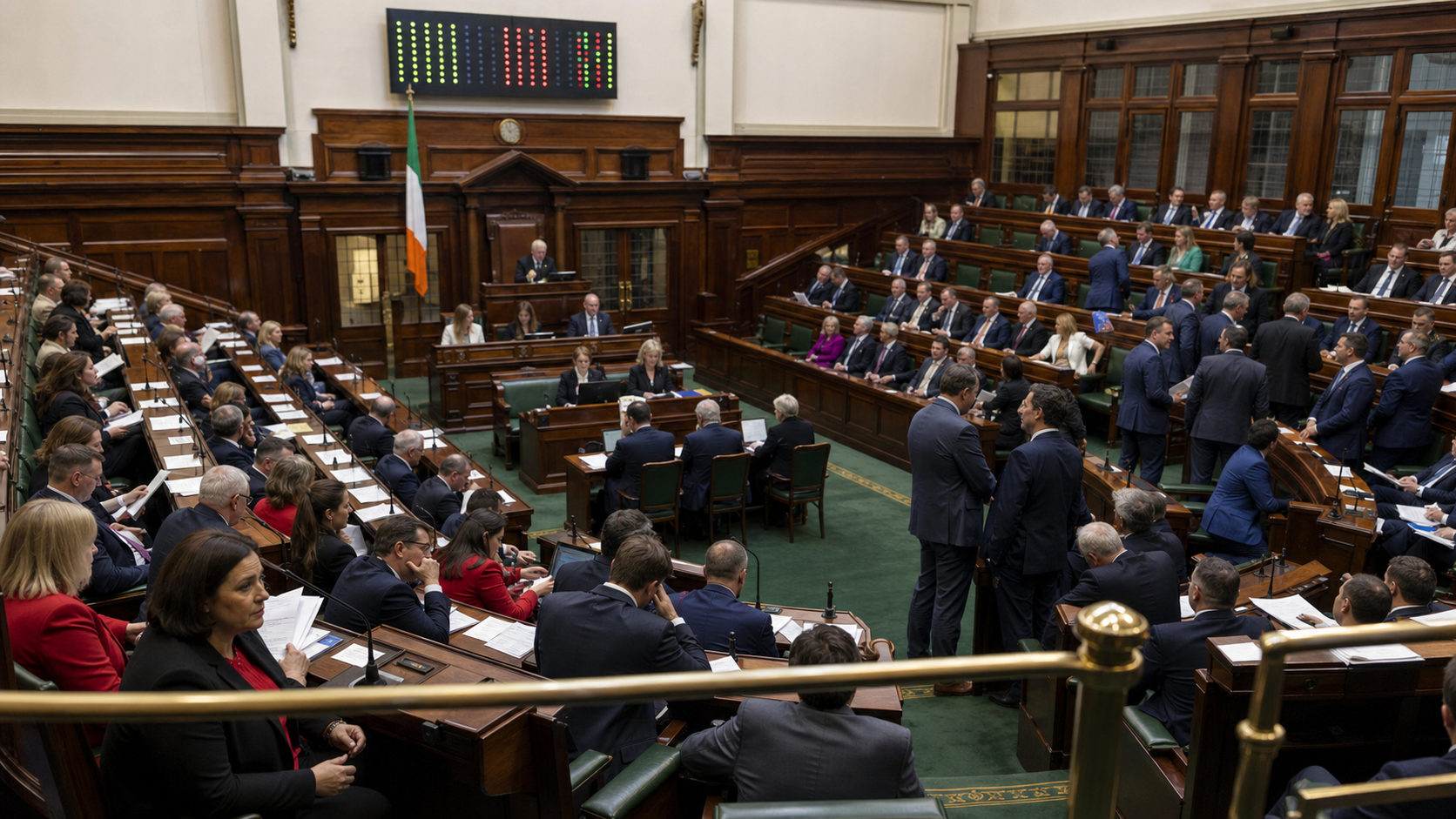
The Dáil has moved to enact the Occupied Territories Bill, a landmark piece of legislation that prohibits the importation of goods from illegal Israeli settlements in occupied Palestinian territories, with the government aiming to have the law in place before the summer recess. However, the bill has been significantly weakened by the exclusion of services from the ban — a decision that critics, including some government backbenchers and opposition parties, argue has "gutted" the legislation's impact, given that services constitute the vast majority of economic exchange with the settlements.
Background
The Occupied Territories Bill has had a long and contested history in Irish politics. First introduced as a private member's bill by Senator Frances Black in 2018, it has been debated, amended, and delayed over a period of years, reflecting the political sensitivity of the issue and the legal complexities involved in legislating on matters that intersect with EU trade law and Ireland's international obligations.
The bill's core purpose is to prohibit the importation and sale of goods produced in Israeli settlements in the occupied Palestinian territories — the West Bank, East Jerusalem, and the Golan Heights. These settlements are regarded as illegal under international law, including by the United Nations and the International Court of Justice, and the bill is intended to ensure that Ireland does not contribute to their economic viability through trade.
Ireland has been among the most vocal European countries in its criticism of Israeli settlement policy and its support for Palestinian rights. The government's recognition of Palestinian statehood in May 2024, alongside Spain and Norway, was a significant diplomatic step, and the Occupied Territories Bill is seen by its supporters as a logical complement to that recognition — a practical measure to back up Ireland's stated political position with economic action.
Key Developments
The Irish Examiner and RTÉ both reported on the Dáil's progress with the bill, noting that the government is aiming to have the legislation enacted before the summer recess. The bill has passed through the Dáil and is expected to complete its passage through the Seanad in the coming weeks.
The most significant and controversial aspect of the final version of the bill is the exclusion of services from the ban. The original bill, and the version that many supporters had hoped to see enacted, would have prohibited both the importation of goods and the provision of services to or from the settlements. The government's decision to exclude services was justified on the grounds of legal implementability under EU law and concerns about the potential impact on Irish businesses and jobs, particularly in relation to US multinational companies with operations in the settlements.
Critics of the exclusion, including some Fianna Fáil and Fine Gael backbenchers as well as opposition parties, have argued that the services exclusion fundamentally undermines the bill's purpose. Services — including financial services, legal services, technology services, and professional services — constitute a far larger proportion of economic exchange with the settlements than goods, and a ban that covers only goods while leaving services untouched is, in the view of critics, largely symbolic.
Why It Matters
The Occupied Territories Bill matters because it represents Ireland's most concrete legislative action on the Israeli-Palestinian conflict, and the controversy over the services exclusion reflects a genuine tension between Ireland's stated political values and the practical constraints of EU membership and economic self-interest.
Ireland's position on the Israeli-Palestinian conflict has been consistently more sympathetic to Palestinian rights than most other EU member states, and the Occupied Territories Bill is an expression of that position in legislative form. The bill's passage, even in its weakened form, is a significant step — no other EU member state has enacted comparable legislation — and it will have both practical and symbolic consequences for Ireland's relationship with Israel and its standing in the international community.
The controversy over the services exclusion also highlights the limits of what individual EU member states can do in the area of trade policy, which is largely an EU competence. The government's concerns about EU law compatibility are genuine, and the legal landscape in this area is genuinely complex. However, critics argue that the government has been too cautious and has used legal uncertainty as a cover for a political decision to protect economic interests.
Local Impact
In Ireland, the Occupied Territories Bill has been a significant issue for civil society organisations, human rights groups, and the Palestinian solidarity movement, which has campaigned for the legislation for many years. The bill's passage, even in its current form, is a significant achievement for these groups, though the services exclusion has tempered the celebration.
For Irish businesses that trade with Israeli settlements — a relatively small number, given the limited scale of direct trade — the bill will require adjustments to their supply chains and commercial relationships. The government has indicated that it will provide guidance to businesses on the practical implications of the legislation.
The bill's passage is also likely to have diplomatic consequences, with Israel expected to respond critically to the legislation. Ireland's relationship with Israel has been strained in recent years by the government's recognition of Palestinian statehood and its criticism of Israeli military operations in Gaza, and the Occupied Territories Bill will add another dimension to that strained relationship.
What's Next
The bill is expected to complete its passage through the Seanad in the coming weeks, with the government aiming to have it signed into law before the Dáil's summer recess. Once enacted, the legislation will require the development of implementing regulations and enforcement mechanisms, a process that is expected to take several months.
The question of whether the services exclusion can be revisited in future legislation remains open. Some government backbenchers have indicated their intention to continue pressing for a services ban, and the issue is likely to remain a point of political contention. The government's position is that the current legislation represents the maximum that is legally achievable under EU law, but critics dispute this assessment and are likely to continue challenging it.
Ireland's EU Presidency, which runs until the end of 2026, provides an opportunity to raise the issue of settlement trade at the European level, and the government has indicated its intention to use the Presidency to advance the discussion of EU-wide measures on settlement goods. Whether this will result in meaningful EU action remains to be seen.