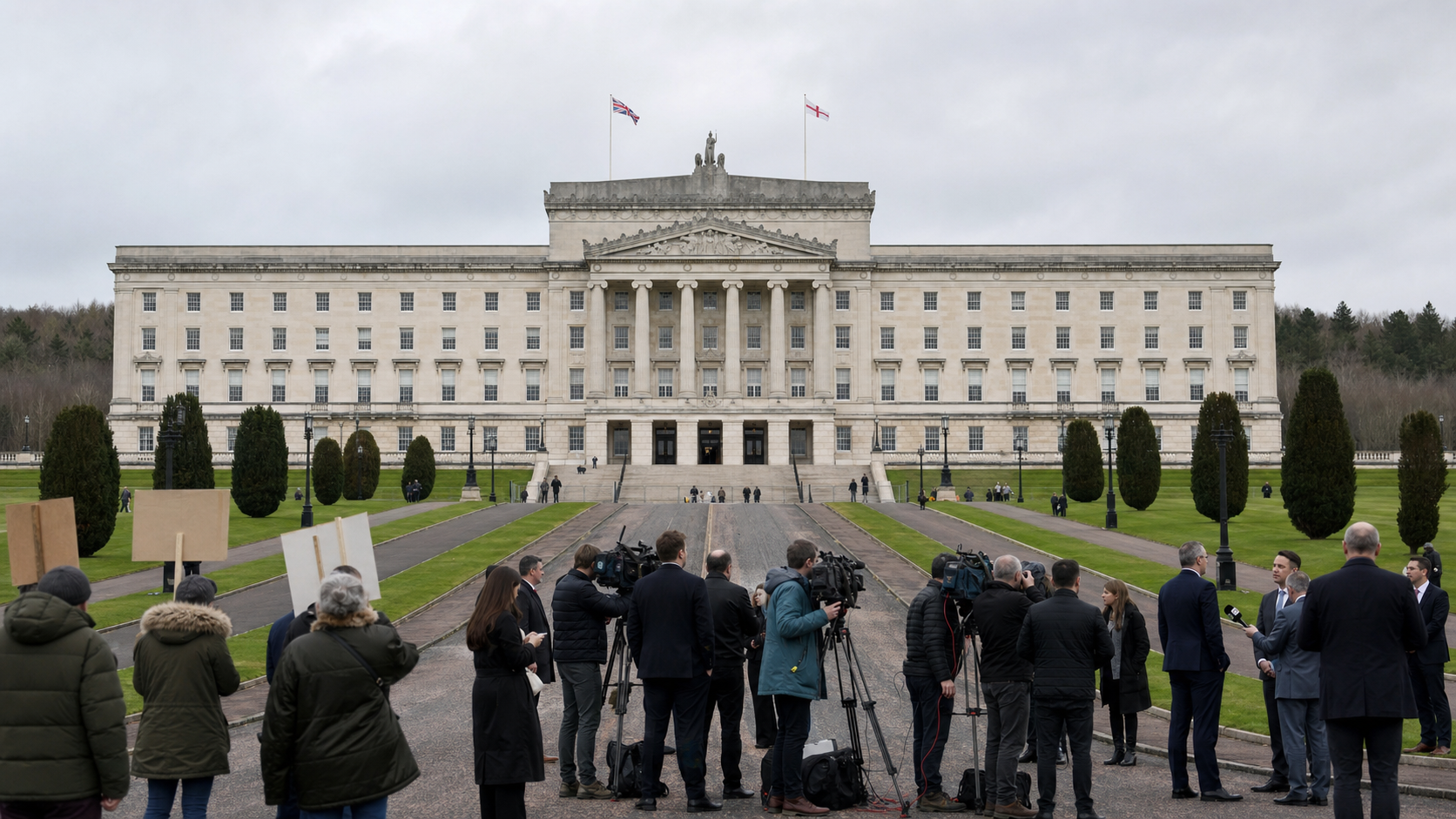
DUP Crisis Deepens as Donaldson Conviction Fallout Reshapes NI Politics
The political fallout from the conviction and imprisonment of former DUP leader Sir Jeffrey Donaldson for multiple child sex offences, including rape, continues to reverberate through Northern Ireland's political institutions, with the party undertaking an independent review of its safeguarding procedures and Assembly Speaker Edwin Poots facing mounting calls to step aside over his handling of related legislative matters.
Background
The Donaldson case has been the most damaging scandal to hit unionism in a generation. Sir Jeffrey Donaldson served as DUP leader from 2021 until his arrest in March 2024, during which time he was one of the most prominent political figures in Northern Ireland — leading his party through the negotiations that restored the Stormont Executive in February 2024 after a two-year collapse. His conviction on multiple counts of rape and other sexual offences against children has left the DUP in a state of profound institutional crisis.
The party has faced questions not only about what individual members knew or suspected about Donaldson's conduct, but about the broader culture and governance structures that allowed him to remain in a position of power. The DUP's internal processes for handling complaints and concerns about the behaviour of senior figures have come under intense scrutiny, with former party members and staff alleging that a culture of deference to leadership made it difficult to raise concerns.
Edwin Poots, who serves as Speaker of the Northern Ireland Assembly, has been a central figure in the controversy. Poots, a former DUP leader himself, has faced allegations that he took actions in his role as Speaker that were designed to protect Donaldson or to obstruct legislative proposals related to abuse inquiries. Poots has denied these allegations, but the pressure on him has intensified as more details of the case have emerged.
Key Developments
The DUP has commissioned an independent review of its safeguarding and leadership accountability procedures, to be conducted by an external firm with expertise in organisational governance. The review is expected to examine how complaints about senior figures are handled, what oversight mechanisms exist for party leadership, and whether the party's culture adequately protects vulnerable individuals. A report is expected within six months.
Alliance Party leader Naomi Long has renewed her call for Speaker Poots to step aside pending the outcome of investigations into his conduct. Long has argued that the integrity of the Assembly requires a Speaker who is above reproach, and that Poots's continued presence in the role undermines public confidence in the institution. The SDLP has expressed similar concerns, though it has stopped short of formally calling for his resignation.
Sinn Féin has been more measured in its public statements, focusing on the need for systemic reform of the Assembly's governance structures rather than on individual personnel decisions. The party has argued that the Donaldson case exposes weaknesses in the accountability mechanisms that apply to all parties and all institutions, not just the DUP.
Why It Matters
The Donaldson case matters for Northern Ireland's politics at multiple levels. At the most immediate level, it has severely damaged the DUP's electoral standing and its moral authority as a political force. The party, which has historically positioned itself as the defender of traditional values and community standards, has been profoundly embarrassed by the revelation that its leader was engaged in serious criminal conduct over an extended period.
At a deeper level, the case raises questions about the culture of deference and the absence of effective accountability mechanisms in Northern Ireland's political institutions. The Assembly and the Executive were designed to manage the transition from conflict to peace, and their governance structures reflect the priorities of that era — power-sharing, cross-community consent, and the management of competing identities. They were not designed with the same emphasis on transparency and accountability that characterises more mature democratic institutions.
The comparison with the Republic of Ireland is instructive. The Dáil has its own accountability challenges, but it has a more developed culture of parliamentary scrutiny and a more robust set of mechanisms for holding individual members to account. Northern Ireland's institutions, by contrast, have been more focused on managing inter-community relations than on individual accountability.
Local Impact
The political uncertainty generated by the DUP crisis has real consequences for the delivery of public services in Northern Ireland. The party's internal difficulties have distracted its leadership from the business of government at a time when the Executive faces acute challenges on health, education, and the economy. The budget deadlock — which the DUP's rejection of the Finance Minister's draft plan has helped to perpetuate — is directly affecting the ability of departments to plan and deliver services.
In East Belfast and other areas with strong DUP support, the party's grassroots members are grappling with a profound sense of betrayal. Many of those members have devoted years of voluntary service to the party and to their communities, and the Donaldson revelations have shaken their confidence in the institution they have served. Community workers in these areas report a palpable sense of disillusionment among traditional DUP voters.
What's Next
The independent safeguarding review is expected to report within six months, with its findings likely to have significant implications for the DUP's internal structures and potentially for the broader governance of the Assembly. Speaker Poots has indicated he will not step aside voluntarily, meaning any removal would require a formal Assembly vote — a politically complex process given the cross-community consent requirements. The ongoing criminal proceedings related to the Donaldson case are expected to continue for several more months, keeping the story in the public eye.