Diageo Confirms 150 Irish Jobs at Risk as Global $1 Billion Cost-Cutting Drive Reaches Dublin
Diageo has confirmed that approximately 150 jobs at its Irish operations are at risk as part of a sweeping global cost-cutting programme that aims to reduce the drinks giant's worldwide operating costs by $1 billion over three years — a plan presented in detail at a Capital Markets Day on Thursday that has sent a chill through the company's 1,200-strong Irish workforce and prompted calls for government intervention to protect Irish employment.
Background
Diageo is one of the world's largest producers of alcoholic beverages, with a portfolio that includes Guinness, Johnnie Walker, Baileys, Smirnoff, and dozens of other globally recognised brands. The company's Irish operations are among its most historically significant, with the St James's Gate brewery in Dublin — home of Guinness — representing one of the most iconic manufacturing sites in the country. Diageo employs approximately 1,200 people in Ireland across brewing, production, marketing, and commercial functions, making it one of the larger private sector employers in the Dublin area.
The company has been under significant financial pressure in recent years, with weakening demand for spirits in key markets including North America and China contributing to a decline in reported operating profits. The appointment of Sir Dave Lewis as CEO in January 2026 — Lewis previously led Tesco through a major turnaround — signalled that the company's board was prepared to take decisive action to restore profitability and shareholder confidence.
Lewis's restructuring strategy involves assigning cost-reduction targets to various business units rather than mandating a specific, uniform number of job cuts across the organisation. This approach gives individual units some flexibility in how they achieve their targets, but the overall direction is clear: Diageo intends to significantly reduce its global cost base, and no part of the business — including Ireland — is exempt from that process.
Key Developments
Diageo notified the Irish Department of Enterprise, Trade and Employment of its intention to implement collective redundancies in June 2026. The company confirmed at its Capital Markets Day on Thursday that approximately 150 roles within its Irish operations are at risk, representing around 12.5% of its Irish workforce. The breakdown of the potential redundancies across different functions — brewing, production, marketing, and commercial — has not been disclosed.
The Capital Markets Day presentation outlined the broader strategic rationale for the restructuring, including the need to redesign Diageo's operating framework to drive sustainable returns for shareholders and to ensure the company remains competitive in a rapidly changing global beverages market. Lewis emphasised that the cuts were not a sign of weakness but a necessary step in building a leaner, more agile organisation capable of responding to shifting consumer preferences.
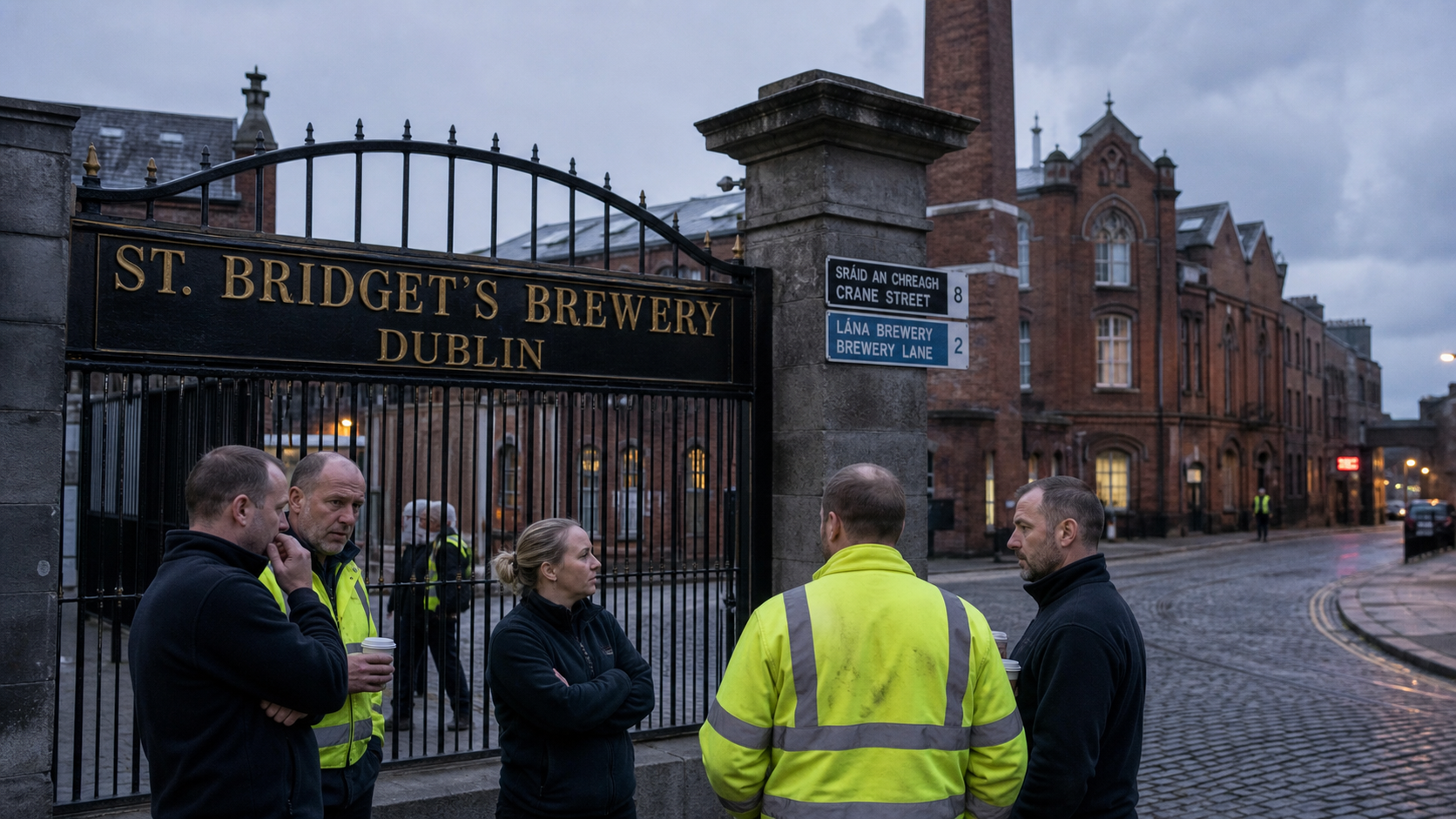
Trade unions representing Diageo workers in Ireland have expressed deep concern about the proposed redundancies and have called on the government to use its influence to protect Irish jobs. SIPTU, which represents workers at the St James's Gate brewery, has indicated that it will resist any attempt to impose compulsory redundancies and will seek the best possible terms for workers who do leave the company.
Why It Matters
The potential loss of 150 jobs at Diageo's Irish operations is significant not just in numerical terms but because of what it represents for Ireland's relationship with large multinational employers. Diageo is not a company that arrived in Ireland recently in search of a favourable tax environment — it has deep historical roots in the country, and the Guinness brand is inextricably linked with Irish identity both at home and abroad. The fact that even a company with this level of historical commitment to Ireland is not immune to global cost-cutting pressures is a reminder of the vulnerability of employment in multinational-dependent economies. The Irish government has invested heavily in attracting and retaining foreign direct investment, and the Diageo situation will test its ability to use that relationship to protect Irish workers when global corporate priorities conflict with domestic employment interests.
Local Impact
The potential job losses at Diageo will be felt most acutely in the Dublin area, where the majority of the company's Irish workforce is based. The St James's Gate brewery, located in the Liberties area of Dublin 8, is a major employer in a part of the city that has undergone significant regeneration in recent years. The loss of well-paid manufacturing and commercial jobs in this area would be a setback for the local economy and for the broader regeneration agenda. Diageo's operations in other parts of Ireland — including its Baileys production facility and its commercial offices — may also be affected, though the company has not yet provided a geographical breakdown of the proposed redundancies.
What's Next
Diageo has entered a formal consultation process with trade unions and employee representatives, which is expected to last at least 30 days. The company has indicated that it hopes to achieve the required headcount reduction through voluntary redundancy, with enhanced terms for those who come forward. The Minister for Enterprise, Trade and Employment is expected to meet with Diageo management in the coming weeks. The Oireachtas Enterprise Committee has indicated that it will seek a briefing from the company on its restructuring plans and their implications for Irish employment.