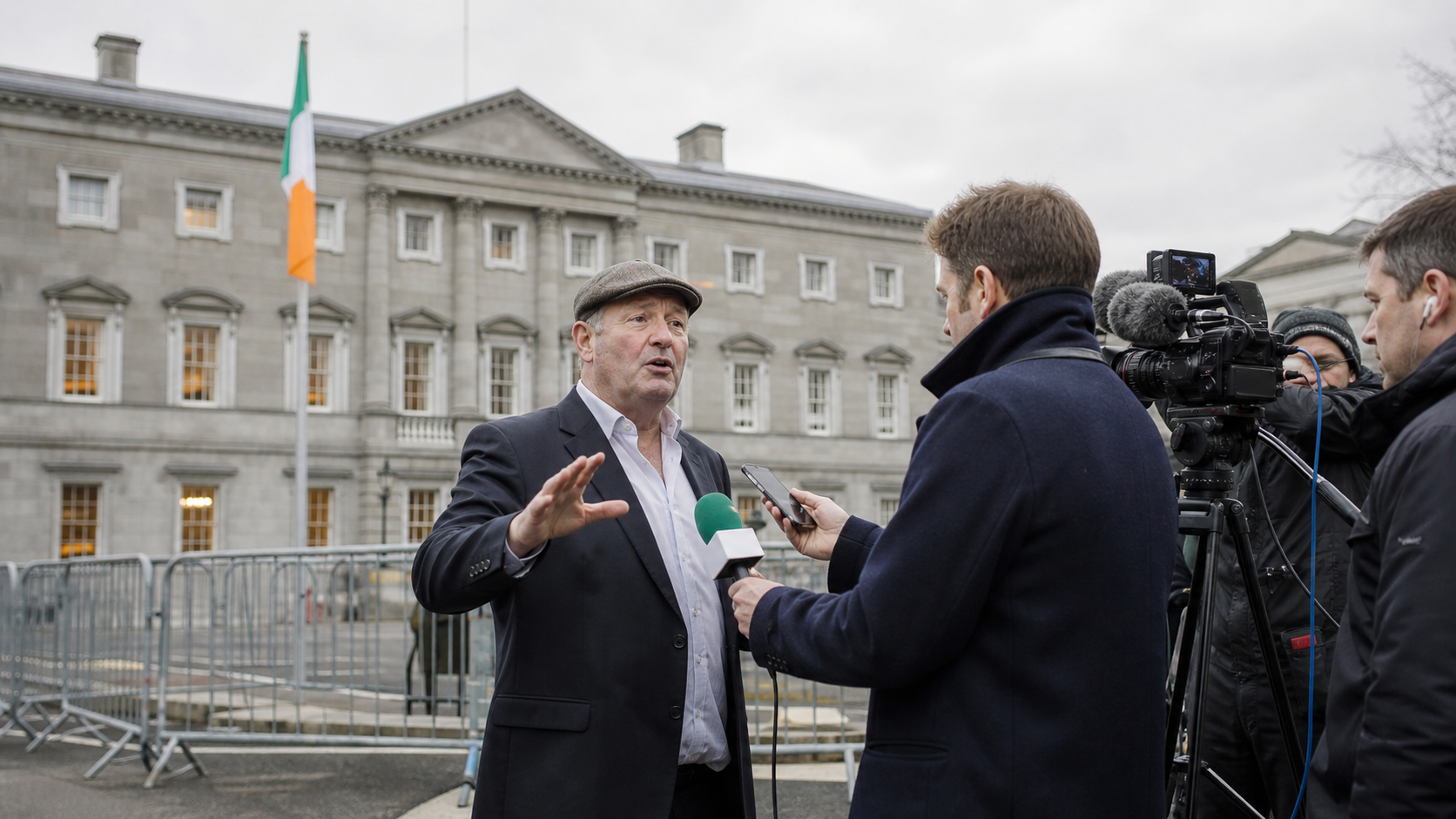
Danny Healy-Rae Insists He Had 'Nothing to Do' with Brother's Resignation as Junior Minister Row Resurfaces
Danny Healy-Rae has firmly denied any responsibility for his brother Michael's resignation as Minister of State for Agriculture in April 2026, insisting he had "nothing to do" with the decision as the controversy over the Healy-Rae brothers' role in one of the most dramatic political episodes of the year resurfaces in the national media, with Michael having previously claimed that Danny's public criticism of the government on Radio Kerry had effectively "sacked" him from his ministerial post.
Background
The Healy-Rae family has been one of the most distinctive and colourful forces in Irish politics for three decades, building a formidable political machine in County Kerry that has consistently delivered seats in the Dáil and on Kerry County Council through a combination of intense constituency service, a talent for media attention, and a willingness to take positions that mainstream parties would regard as politically risky. Michael Healy-Rae and Danny Healy-Rae have both served as TDs for Kerry, and their simultaneous presence in the Dáil has made them a uniquely powerful force in the county's political representation.
Michael Healy-Rae's appointment as Minister of State for Agriculture in the coalition government formed after the 2025 general election was a significant achievement for the family and for Kerry, giving the county a direct voice in the cabinet for the first time in many years. The appointment was welcomed by farming and rural communities in Kerry, who saw in Michael a minister who understood their concerns from the inside rather than from the remove of a Dublin-based political career.
The fuel price protests that swept through rural Ireland in the spring of 2026 — driven by rising costs associated with the conflict in Iran and the broader global energy market — created a political crisis that put enormous pressure on rural TDs and ministers. The protests reflected genuine distress among farmers, hauliers, and rural communities who felt that the government was not responding adequately to the impact of fuel costs on their livelihoods.
Key Developments
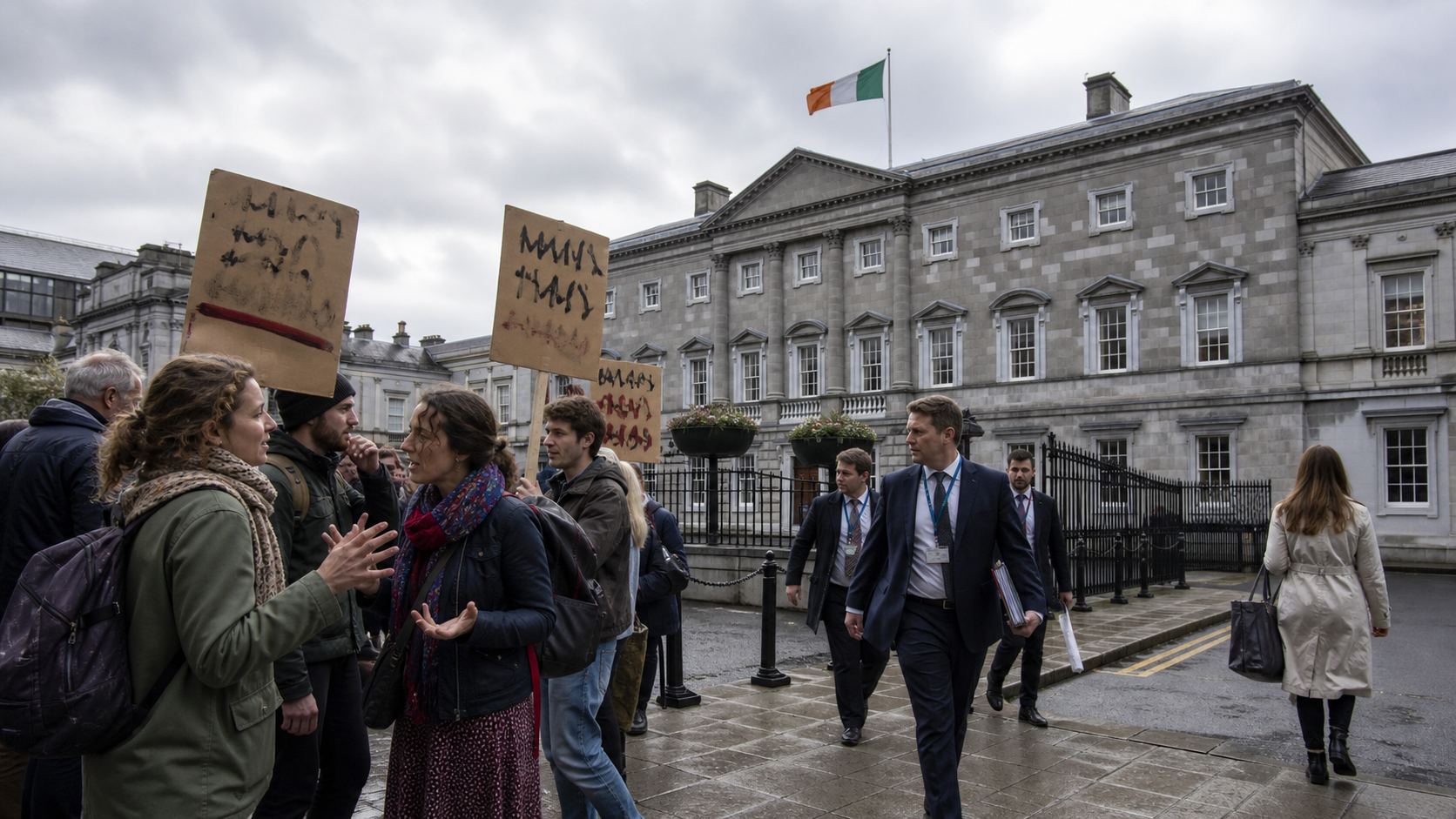
On April 14, 2026, Michael Healy-Rae announced his resignation as Minister of State at the Department of Agriculture during a Dáil session, stating that he could no longer support the government given the distress of his constituents — specifically farmers and contractors — over fuel costs. The resignation was dramatic and unexpected, and it immediately raised questions about the role of his brother Danny in the decision.
In June 2026, Michael gave a radio interview in which he stated that he had been "pulled overboard" by Danny, arguing that Danny's public criticism of the Taoiseach and Tánaiste — specifically his call for the leaders of Fianna Fáil and Fine Gael to be replaced — had made his own position as a junior minister untenable. He characterised the episode as "costing Kerry a ministry" and suggested he had been effectively "sacked on Radio Kerry" by his brother's comments. These remarks contradicted his earlier statements in April, in which he had insisted he had not been "bounced" into the decision by Danny.
Danny Healy-Rae has now responded publicly, maintaining that he had "nothing to do" with his brother's decision to resign and pointing to the reasons Michael provided in the Dáil — that the government was not listening to the concerns of the people — as the sole drivers of the resignation. Danny has not expressed regret for his own decision to withdraw support for the government during the fuel protests, maintaining that his actions were a response to the needs of his constituents in Kerry.
Why It Matters
The Healy-Rae brothers' dispute is more than a family squabble; it illuminates a fundamental tension in Irish politics between the demands of constituency representation and the obligations of government participation. Michael's resignation — whatever its precise cause — removed Kerry's direct voice from the cabinet at a time when rural communities were under significant economic pressure. The episode also raises questions about the sustainability of the current coalition government, which has faced a series of challenges from within its own ranks and from independent TDs whose support it depends upon. The fuel price protests that triggered the crisis have not gone away, and the government's response to the concerns of rural Ireland will continue to be a significant political issue in the months ahead.
Local Impact
In Kerry, the resignation and its aftermath have been the dominant political story of the year. The county's farming and rural communities, who had welcomed Michael's appointment as a minister who understood their concerns, have expressed frustration at the loss of direct cabinet representation. Kerry County Council has passed a motion calling on the government to address the impact of fuel costs on rural businesses and households, and local TDs from all parties have been under pressure to demonstrate that they are advocating effectively for the county's interests in Dublin. The Healy-Rae family's political machine remains formidable in Kerry, and the episode is unlikely to have a lasting negative impact on their electoral support in the county, where their reputation for constituency service is deeply embedded.
What's Next
The government has not indicated any intention to appoint a replacement Minister of State for Agriculture from Kerry, and the portfolio has been absorbed into the existing ministerial structure. The fuel price issue remains live, with farming organisations continuing to press for targeted supports for sectors most affected by energy costs. The Dáil returns from its summer recess in September, at which point the government will face renewed pressure on a range of issues including housing, health, and the cost of living. The Healy-Rae brothers' relationship — and their respective political strategies — will continue to be a subject of intense interest in Kerry and in the national media.